
Bio-organic NPK Compound Fertilizer Production Line: Process Innovation and Equipment Matching
In today’s global agricultural transformation towards green and sustainable practices, bio-organic NPK compound fertilizer is becoming a new market favorite. It integrates the soil-improving and nutrient-enhancing functions of organic fertilizer, the fast-acting nutrients of NPK, and the synergistic effects of beneficial microorganisms, achieving a fertilizer value of 1+1>2. However, this integration also places higher demands on the production process—how to uniformly blend fermented organic materials with inorganic NPK and granulate them while preserving microbial activity? Scientific process innovation and equipment matching are key to breaking through this challenge.
Core Process Innovation: Gentle Granulation, Microbial Protection as the Foundation
The core of bio-organic NPK production lies in “microbial protection.” High-temperature drying (above 120℃) in traditional compound fertilizer production directly kills functional bacteria such as Bacillus subtilis in organic fertilizer, resulting in a product that is “nominal but ineffective.” Therefore, the process design must revolve around “low-temperature microbial protection” for comprehensive process control.
The first step is the aerobic fermentation of organic fertilizer. The first step involves high-temperature fermentation of livestock manure and straw for 15-20 days using a trough-type or hydraulic compost turner. This process kills pathogens and weed seeds while simultaneously decomposing organic matter into stable humus. A key indicator of fermentation maturity is a carbon-to-nitrogen ratio (C/N) controlled at 20-25:1—this range ensures thorough fermentation while providing a suitable environment for subsequent microbial survival.
The second step is fine grinding. The fermented organic material is processed using a chain crusher or semi-wet material crusher to achieve a particle size ≤5mm, ensuring uniform mixing with inorganic powders. If the organic fibers are too long, the granules are prone to cracking and “exposing the white part” during granulation.
The third step is dry mixing and granulation. The organic powder is mixed with inorganic NPK raw materials such as urea, ammonium phosphate, and potassium salts according to the formula (organic content 20%-40%, total NPK content ≥20%) in a horizontal mixer for 8-10 minutes to ensure thorough integration of light and heavy materials. The mixed materials enter the granulation stage, where a disc granulator is the optimal choice for bio-organic NPK compound fertilizer. Its gentle rolling granulation method avoids mechanical damage to microorganisms caused by extrusion granulation, and the spiral guide plate design effectively prevents the separation of organic and inorganic materials. Precise humidification to a moisture content of 15%-18% is achieved through atomizing nozzles, and the granules gradually take shape during rolling.
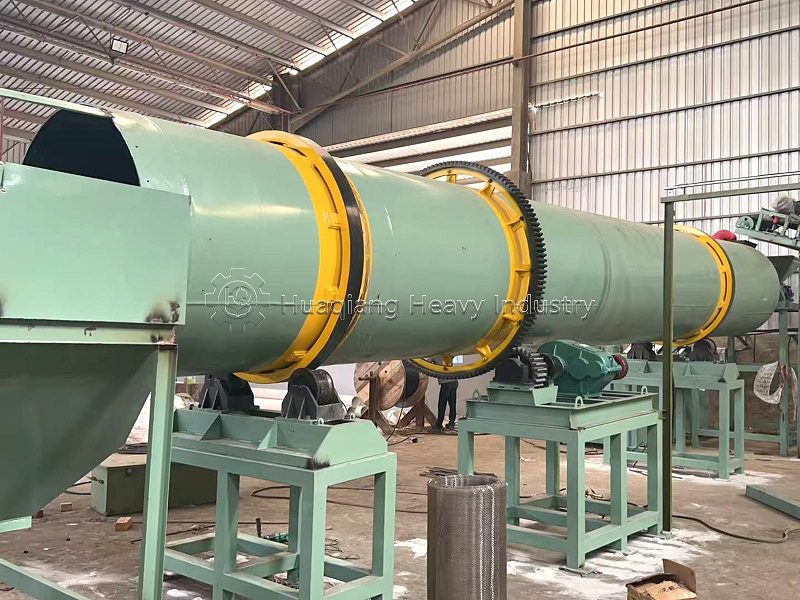
The fourth step is low-temperature drying. This is the core process for preserving microorganisms—a low-temperature dryer must be used, with hot air temperature strictly controlled at ≤60℃, material temperature not exceeding 50℃, and high-volume rapid dehumidification to a finished product moisture content of ≤12%. Under these conditions, the survival rate of functional bacteria such as Bacillus subtilis can be stably maintained above 90%.
Key Equipment Matching: Seamless Integration from Fermentation to Finished Product
A high-efficiency bio-organic NPK production line requires seamless integration of the organic fermentation and inorganic granulation systems. Core equipment configuration includes:
Fermentation equipment: trough-type or hydraulic turning machine to ensure standardized fermentation of organic raw materials;
Crushing equipment: chain crusher to finely crush fermented materials and improve mixing uniformity;
Mixing equipment: horizontal twin-shaft mixer for efficient dry mixing of organic and inorganic materials;
Pelletizing equipment: disc granulator (with spiral guide plate) for gentle granulation and protection of microbial activity;
Drying equipment: low-temperature dryer (≤60℃) for rapid drying with high airflow, protecting microbial activity;
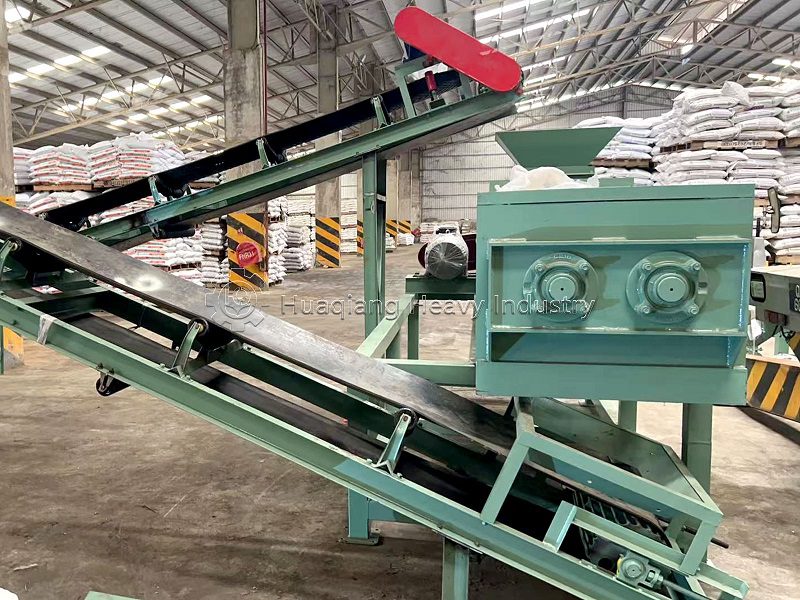
Screening and packaging: graded screening of qualified granules, and automatic packaging line for finished product encapsulation.
Quality Control Key Points
Three key indicators need to be controlled during production:
- Fermentation maturity: ensuring complete decomposition of organic materials by testing the C/N ratio and seed germination index (GI≥80%);
- Granulation moisture content: controlled between 15%-18%—too high a moisture content leads to sticking, while too low a moisture content results in low forming rate;
- Drying time: completed quickly below 60℃ to prevent microbial death due to heat.
The production of bio-organic NPK compound fertilizer is essentially a precise synergy between microorganisms and processes. Only by matching equipment and innovating processes with “microbial protection” at its core can each granule fulfill the dual mission of improving soil and providing rapid fertilization, thus offering a truly sustainable solution for global green agriculture.
The integrated process for bio-organic NPK production relies on a carefully selected suite of organic fertilizer production equipment. The journey begins with organic fertilizer raw material processing equipment. A half-wet material crusher machine is essential for reducing the particle size of the fermented organic material to ≤5mm, creating a uniform base for blending. This finely ground organic matter is then ready for the granulation stage, a critical part of organic fertilizer production granulation. For producing the uniform, gentle granules required to preserve microbial activity, an organic fertilizer disc granulation production line is the ideal choice. The disc granulator machine at its heart uses a gentle rolling action to form spherical granules, preventing the mechanical damage to microorganisms that can occur with high-pressure extrusion methods. This integrated system—from the half-wet material crusher machine that prepares the organic base to the organic fertilizer disc granulation production line that shapes the final product—is the technological foundation for producing high-quality bio-organic NPK fertilizer. The precise synergy between this upstream processing equipment and the chosen granulation technology ensures that the beneficial microorganisms are not only effectively incorporated but also survive the production process to deliver their full soil-enhancing potential in the field.