
Windrow Composting Machine: The Open Field Alchemist
Have you ever driven past a farm and seen long, dark rows of steaming material stretching across a field like earthen waves frozen in time? Those are windrows—and the machine slowly crawling along them, churning and fluffing the pile with an almost meditative rhythm, is the windrow composting machine. It doesn’t work inside a concrete trench. It works under the open sky, turning mountains of manure, crop residue, and municipal waste into rich, living soil.
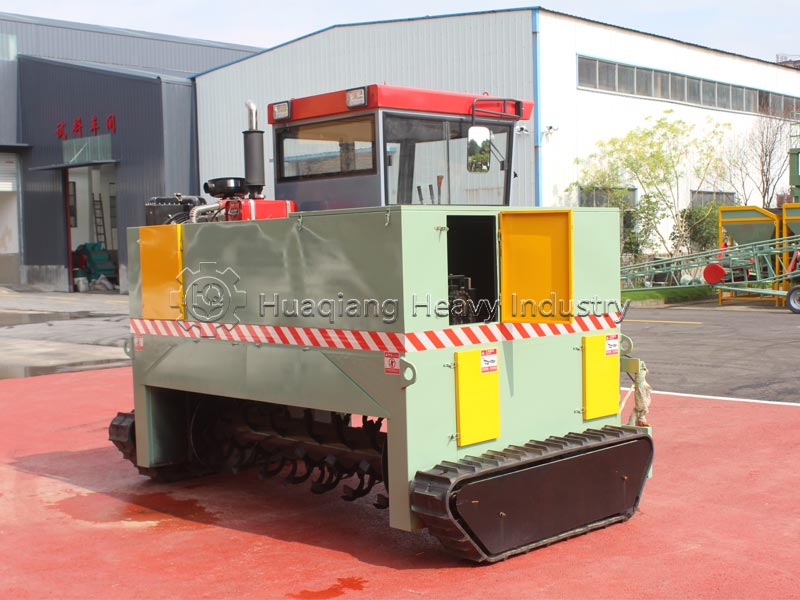
What Is a Windrow Composting Machine?
Imagine a self propelled beast with a massive rotating drum or a set of flails mounted on a horizontal rotor. It straddles a long, triangular pile of organic waste—typically 2 to 3 meters wide at the base and 1.5 to 2 meters tall—and inches forward, its rotor spinning at high speed. Paddles or teeth dig into the pile, lifting, shredding, and throwing the material into the air. The pile is turned, mixed, and aerated in a single pass, its core exposed to fresh oxygen.
This is the windrow compost turner, also known as a self propelled compost turner or a straddle turner. Unlike groove type turners that rely on concrete trenches and rails, windrow turners work directly on the ground, making them ideal for large scale, flexible operations.
How It Works: Elegant Simplicity
The machine drives along the windrow, its rotor positioned to penetrate the entire cross section of the pile. As the rotor spins, the paddles lift material from the bottom and deposit it behind the machine, creating a fresh, aerated windrow. The process repeats, typically every few days, until the compost matures.
Most modern windrow turners feature:
Hydraulic height adjustment to handle varying pile sizes.
Diesel or electric engines delivering high torque for tough materials like poultry litter or woody debris.
Cabin controls allowing the operator to adjust speed, rotor RPM, and turning depth on the fly.
Water spray systems (optional) to add moisture during turning if the pile becomes too dry.
Why Choose a Windrow Turner?
Compared to enclosed or in vessel systems, windrow composting with a dedicated turner offers compelling advantages:
No civil works – no concrete troughs, no rails, no building required. You can start on any flat, well drained land.
Enormous capacity – a single machine can handle thousands of tons of material per year, turning windrows up to 200 meters long or more.
Flexibility – move the machine between sites, process different feedstocks, adjust pile dimensions as needed.
Lower capital investment – no infrastructure means you put your budget into the machine itself.
Natural aeration – the open air process harnesses wind and sun, reducing energy costs.
The Supporting Cast
Even in the open field, the windrow turner doesn’t work alone. A complete windrow composting operation typically includes:
A front end loader feeding hopper – to build the initial windrows and later consolidate finished compost.
A double axis mixer – to combine diverse feedstocks (manure, straw, food waste) into a balanced recipe before windrow formation.
A screening machine – to refine the mature compost, separating fine, finished product from oversize material that goes back into new windrows.
A bagging system – for producers selling finished compost or organic fertilizer in retail bags.
The Process: From Waste to Resource
Fresh organic waste is piled into long windrows. The turner makes its first pass, aerating the material and activating thermophilic bacteria. Within 48 hours, temperatures soar to 60-70°C, killing pathogens and weed seeds. Over 8 to 12 weeks, with regular turning every 3 to 5 days, the pile transforms. Odors fade. The material turns dark brown, crumbly, and earthy. What was once a disposal problem becomes a valuable soil amendment.
Why This Machine Matters
In a world grappling with soil degradation, chemical dependency, and mounting organic waste, windrow composting offers a scalable, sustainable solution. The windrow turner makes it possible to process waste at the scale of a farm, a municipality, or a commercial composting facility—without the expense of enclosed buildings or complex infrastructure.