


Double Roller Press Granulator
Equipment Introduction
The double-roller press granulator is a widely used solid material granulation equipment in industries such as chemical, fertilizer, pharmaceutical, food, and building materials, and is the core of the entire extrusion granulation production line. It is a room-temperature granulation device that forces materials into shape through mechanical pressure. Its design concept is to directly compress powder materials into granules with a certain strength without adding binders (or with very little addition). As an important granulation equipment, the double-roller granulator adopts a non-drying, room-temperature process, offering significant advantages in energy saving and improved production efficiency. Its core working principle is to extrude a properly proportioned mixture through a feeding mechanism into the gap between a pair of identical rotating extrusion rollers.
Under strong extrusion pressure, air inside the material is expelled, the interparticle spacing decreases, and the intermolecular forces increase, thus compressing the material into dense flakes or strips. As the rollers continue to rotate, the pressure on the material exhibits a specific changing pattern: when the straight line connecting the radii of the two rollers is horizontal, the pressure reaches its maximum value, typically reaching several megapascals or even higher, and then rapidly decreases. At this point, the formed material recovers due to its own elasticity, detaches from the roller surface under the action of the rebound force, and smoothly enters the next process. This granulation method fundamentally avoids the energy-consuming drying process in traditional wet granulation.
Equipment Composition and Structure
A double-roller press granulator generally consists of the following main parts:
Feeding System:Typically includes a hopper, metering device, and screw feeder, ensuring uniform and stable material feeding into the rollers.
Extrusion Rollers:The core component, usually a pair of opposing rotating rollers. Their surfaces may have molds or grooves to control particle shape and size.
Transmission System:Includes a motor, reducer, and various couplings to achieve synchronous and stable rotation of the rollers.
Pelletizing Chamber Shell:Supports the rollers and other components and prevents dust leakage.
Pellet Shaping and Sieving System:After initial extrusion molding, the pellets are often shaped and graded using a screen or vibrating screen.
Control System:Modern double-roller granulators are often equipped with a PLC control system, automatically adjusting various parameters to improve production efficiency and safety.
Working Principle of the Equipment
The double roller press granulator is a dry, high-pressure physical forming equipment. It requires no water, binder, or drying throughout the entire process. It achieves room-temperature granulation by forcing powder molecules to restructure, plastically deform, and tightly interlock under high mechanical pressure.
The core power source of the equipment comes from two sets of synchronously rotating, counter-rotating, high-pressure rollers. Pre-treated powdered material is uniformly and continuously fed into the two-roller interlocking extrusion zone by a forced feeding system. After entering the roller gap, the material is forced into the high-pressure forming zone as the rollers rotate. The grooves on the roller surface apply a gradient increasing extrusion stress (50–150 MPa) to the powder, completely expelling air from the material. The powder particles undergo a physical change from elastic compression to plastic yielding to tight molecular alignment.
Under ultra-high extrusion, the originally loose powder forms a dense, high-strength sheet or pillow-shaped blank through van der Waals forces, molecular adsorption forces, crystal bridging, and mechanical interlocking forces. After the material exits the high-pressure roller gap, the pressure is released instantly, and the billet detaches from the mold due to its own elasticity. It then enters the rear crushing and granulation mechanism, where it is uniformly cut and shaped into standard granules. Finally, it is graded by a vibrating screen. Qualified granules are output as finished products, while fine powder and unqualified large particles are automatically recycled for regranulation.
The entire molding process is a purely physical cold-state molding process that does not change the chemical composition of the material or damage its nutrients. It is the most stable and energy-efficient molding process for compound fertilizers, inorganic salts, mineral powders, and organic fertilizers.
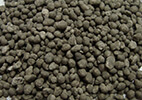
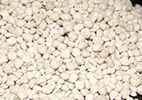
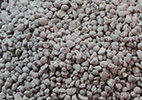
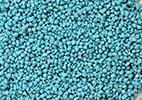
Equipment Parameters
| Model Item | DZJ-I 1.0 | DZJ-I 2.0 | DZJ-I 3.0 | DZJ-I 4.0 |
|---|---|---|---|---|
| Model | DZJ-I 1.0 | DZJ-I 2.0 | DZJ-I 3.0 | DZJ-I 4.0 |
| Capacity (t/h) | 1-1.5 | 1.5-2.5 | 2-3 | 3-4 |
| Power (kW) | 11 | 18.5 | 22 | 45 |
| Roller Dimension (mm) | ø150×220 | ø150×300 | ø186×300 | ø300×300 |
| Feed Material Size (mm) | ≤0.5 | ≤0.5 | ≤0.5 | ≤0.5 |
| Output Granules Size (mm) | ø2.5-ø10 | ø2.5-ø10 | ø2.5-ø10 | ø2.5-ø10 |
| Gearbox Model | ZLY-160 | ZLY-160 | ZLY-180 | ZLY-224 |
| Rotation Speed (r/min) | 60 | 60 | 60 | 60 |
Granulation Process
The complete double-roller press dry granulation process is a closed-loop, continuous, automated production line, consisting of six standard processes. It boasts high process stability, low moisture content requirements, and zero waste emissions.
- Raw Material Pretreatment Process: Raw materials are crushed, sieved, and mixed in proportion, controlling the fineness, uniformity, and moisture content (optimal range of 1.5%–3%). Metal impurities and large lumps are removed, ensuring uniform material flowability entering the extrusion zone and preventing defects such as jamming, uneven particle strength, and voids in the granules.
- Forced Quantitative Feeding Process: A spiral forced feeding structure is used to uniformly, steadily, and quantitatively feed the pretreated powder into the double-roller interlocking zone, preventing material interruption, uneven feeding, and overflow. This ensures consistent material density between the rollers, providing a prerequisite for uniform particle strength.
- High-Pressure Roller Forming Process (Core Process): The double rollers rotate synchronously in opposite directions, and the material undergoes gradient pressurization in the interlocking zone, compression zone, and high-pressure forming zone. 4.Roller-faced molding and compaction process:The high-pressure molded blanks are shaped and compacted, transforming the loose powder into high-density, dense flakes, achieving molecular-level tight bonding and establishing the mechanical strength of the particles.
5.Elastic demolding and crushing/shaping process:After exiting the rollers, the pressure is released, and the blanks naturally demold and fall off, entering a dedicated granulation and crushing device. Controllable speed and a toothed blade structure evenly break the continuous blanks into regular particle shapes, eliminating excessive powder and irregular scraps.
6.Precision screening and grading process:The vibrating screen separates the material into three categories: qualified finished particles, ultrafine recirculated powder, and oversized particles. Qualified particles enter the finished product silo; powder and oversized particles are all recirculated to the front-end closed-loop secondary granulation, achieving near 100% raw material utilization.
7.Finished product conveying and packaging process:The molded particles have high hardness, regular appearance, and are not easily broken. They can be directly conveyed and packaged without drying, cooling, or curing processes, significantly shortening the entire production line process.
Common Equipment Problems and Solutions
Problems:
Material blockage: Blockage in the feeding system prevents smooth material flow during extrusion.
Roller wear: After prolonged use, severe wear on the roller surface affects pellet formation and quality.
Uneven pellet size: Improper pressure adjustment, abnormal material moisture content, or uneven raw material particle size.
Equipment vibration and abnormal noise: Transmission system malfunction or bearing damage due to lack of lubrication.
Particle adhesion to equipment: Raw material with excessive moisture content or high viscosity.
Solutions:
Material blockage: Clean the feeding system promptly, adjust the feeding speed, and check the material particle size and moisture content.
Roller wear: Replace rollers, select wear-resistant materials, and strengthen daily maintenance.
Uneven pellet size: Adjust pressure and roller gap, optimize raw material ratio and moisture content.
Equipment vibration and abnormal noise: Inspect and replace bearings, repair the transmission system, and tighten loose parts.
Particle adhesion: Reduce material moisture content, select raw materials with suitable viscosity, or add a de-sticking agent.
Equipment Maintenance Methods
Daily Inspection: Check the lubrication and wear of bearings, rollers, and transmission components every shift.
Regular Cleaning: Rollers, hoppers, screens, etc., should be cleaned regularly to prevent material adhesion from affecting granulation.
Lubrication Maintenance: Add lubricating oil to bearings and the transmission system according to the specified cycle.
Replacement of Wear Parts: Replace wear parts such as rollers and screens regularly to ensure stable equipment performance.
Fault Prevention: If abnormal sounds, vibrations, or granule agglomeration occur during equipment operation, stop the machine immediately for inspection and repair.
The Application Value of the Equipment in the Production Line
The double-roller press granulator plays a crucial role in improving quality and efficiency in modern automated production lines.
Energy Saving and Consumption Reduction: It eliminates the need for the bulky dryers and coolers found in traditional granulation, reducing energy consumption by over 50%.
Space Utilization: The process flow is short, and the plant area required is only 1/3 of that of traditional rotary drum granulation.
Flexible Production: Changeover is simple; different shaped pellets can be produced simply by changing the roller skin.
Double-roll extrusion granulators, with their unique advantages of dry granulation, room-temperature molding, no drying required, and no binder needed, have become core equipment for powder granulation in various industries such as fertilizers, chemicals, pharmaceuticals, and environmental protection. Their core technology lies in using double-roll high-pressure extrusion to force powder materials to self-aggregate into high-strength granules through intermolecular forces. The equipment has a scientifically sound structure, is easy to operate and maintain, and has a wide production capacity range from 0.5 to 50 tons/hour.
For specific machine selection advice or production line equipment integration solutions, please feel free to contact us. Whether it’s equipment selection and pricing, installation and commissioning, or subsequent maintenance and process upgrades, we can provide you with professional and timely answers and support to help your project be implemented efficiently.
Have Any Problem? Please, Contact
Integrity
Adhere to honesty and trustworthiness, be responsible to customers, employees, partners, and society, and establish long-term trust relationships.
Win win
Establish win-win relationships with all stakeholders such as customers, suppliers, and employees to share the fruits of enterprise development.