
Equipment Introduction
The horizontal ribbon mixer, often referred to as a horizontal agitator in industrial production, is renowned for its high efficiency, uniformity, and wide adaptability. It is a core piece of equipment for mixing powders with powders and powders with small amounts of liquid.
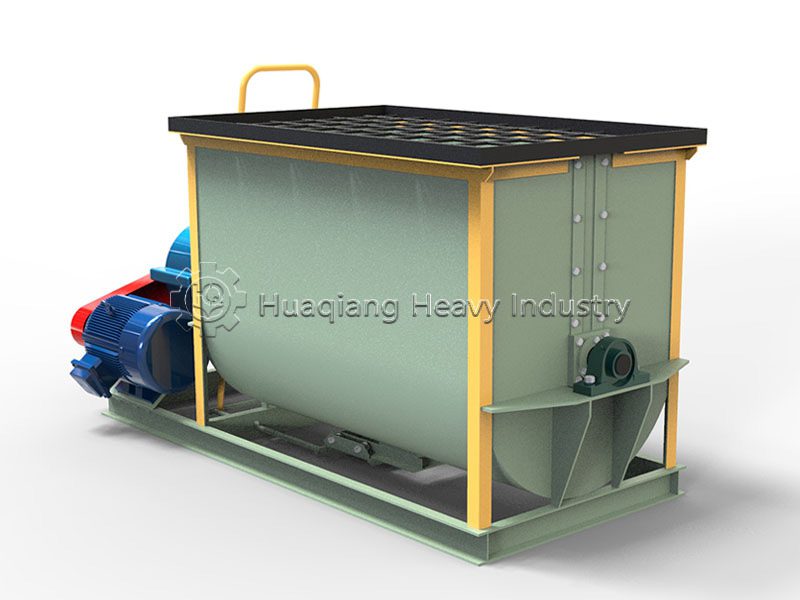
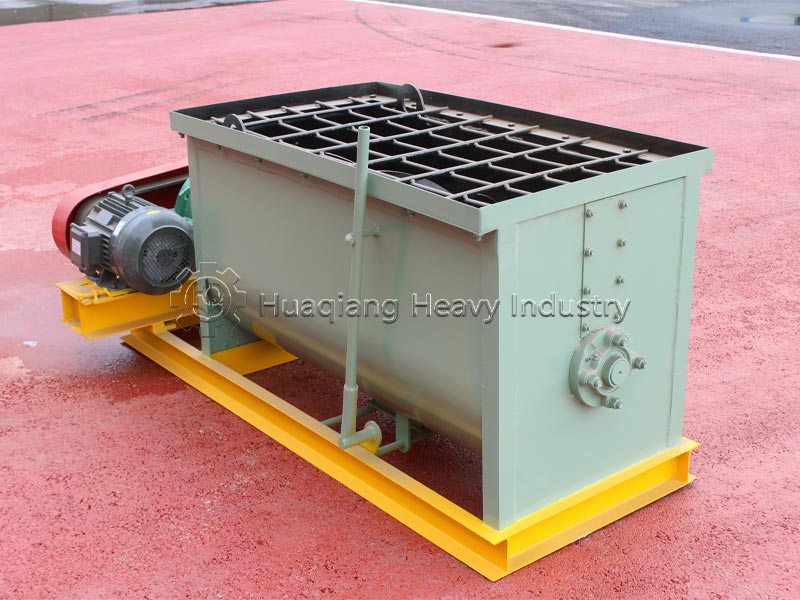
The horizontal ribbon mixer is a stationary tank-type mixing device that uses mechanical force to uniformly mix two or more materials. Its characteristic feature is a U-shaped long cylindrical structure with double or multiple layers of spiral ribbons inside. Compared to vertical mixers, it has significant advantages such as lower height, faster mixing speed, and higher uniformity (up to 95% or more).
Equipment Structure Composition
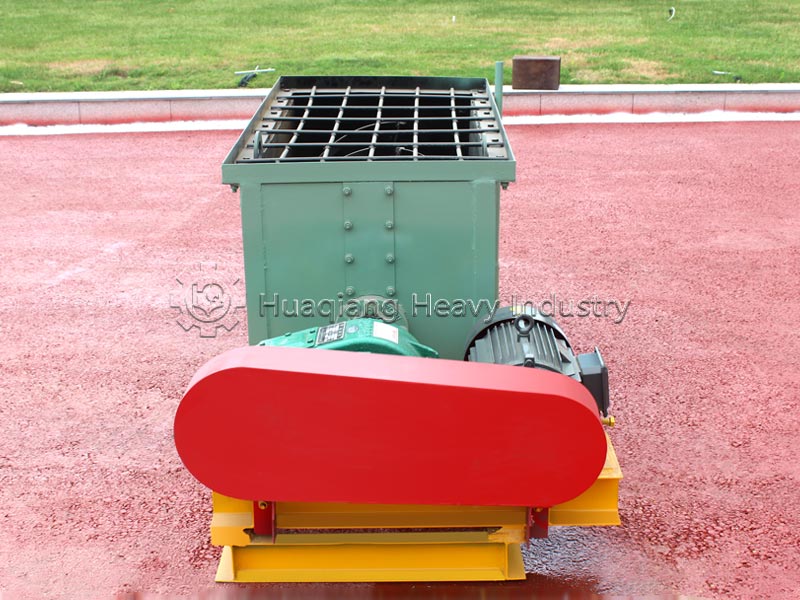
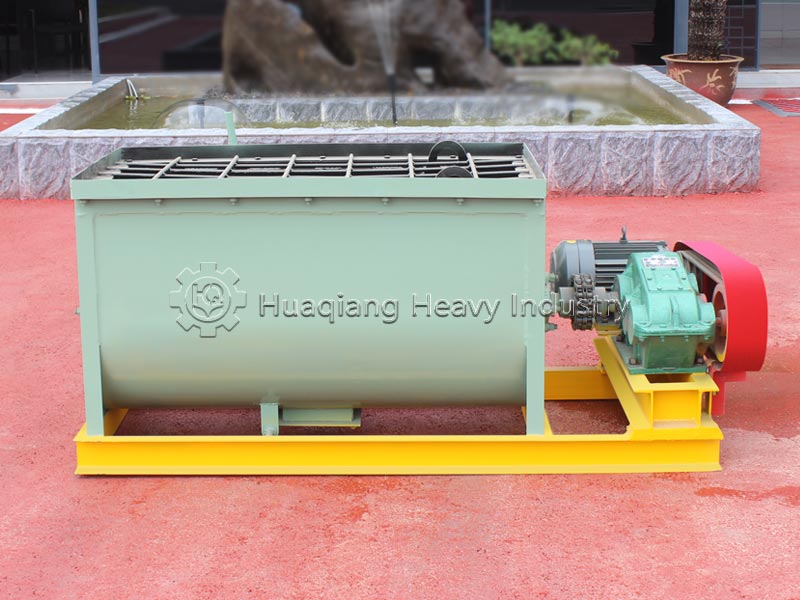
The entire machine is divided into four main modules: frame, transmission system, mixing and stirring main unit, and auxiliary components (Huaqiang Heavy Industry original standard structure):
- Frame Section: Constructed from high-quality carbon steel plates and channel steel, welded as a whole, bearing all working components, load-bearing and deformation-resistant; food/pharmaceutical models have a stainless steel dust cover on the frame.
- Transmission Connection System
1) Power Unit: Three-phase asynchronous motor, matched with corresponding power (5.5~tens of kW);
2) Reduction Unit: Reducer (cycloidal pinwheel/gear reducer), input end pulley + V-belt drive;
3) Connection Unit: Nylon shaft pin/sprocket coupling, buffering and shock absorption, convenient disassembly and maintenance;
4) Support Unit: Bearing seats at both ends, mechanical seal/packing seal, to prevent dust leakage.
- Mixing and Stirring Unit (Core)
1) U-shaped Horizontal Cylinder: Sealed mixing chamber with a feeding port, maintenance manhole, and spray nozzle at the top; equipped with a manual/pneumatic butterfly valve and a pneumatic fully open discharge door at the bottom;
2) Stirring Main Shaft: Horizontally runs through the cylinder, supported at both ends by bearing seats;
3) Double-layer Reverse Spiral Ribbons: The inner and outer spiral ribbons rotate in opposite directions. The outer spiral ribbon pushes the material on the cylinder wall towards the center, while the inner spiral ribbon pushes the material at the shaft center towards both ends; for high-viscosity materials, an anti-sticking scraper can be added to eliminate mixing dead zones.
- Supporting Auxiliary Components
Electrical control box, lubrication nozzle, observation mirror, dust removal interface, jacketed heat exchange layer, vacuum suction interface, safety guard grille.
Raw materials for equipment
| Raw Material Category | Detailed Material Description |
|---|---|
| Organic Fertilizer Raw Materials | Composted livestock manure(chicken, pig, cattle, sheep manure etc.); straw powder, mushroom residue, distiller’s grains, culture soil; sludge, biogas residue, kitchen waste and other organic wastes |
| Chemical & Mineral Raw Materials | NPK fertilizer powder; medium‑trace element fertilizer; compound fertilizer granules and blended fertilizer raw materials |
| Feed Raw Materials | Corn flour, soybean meal powder, fish meal and other powdery feed; various grains and oil‑cake raw materials |
| Chemical & Food Raw Materials | Solid‑solid powder mixtures; solid‑slurry mixtures of powder and glue liquid; various viscous materials |
| Raw Material Adaptation Features | ✅ Suitable for sticky and agglomerative powder‑granule materials; ✅ Adapt to materials with extreme proportion ratios; ❌ Poor mixing performance for high‑fiber materials; Processable particle size: 20‑1400 mesh |
Working Principle
After the equipment starts under no-load, the motor drives the main shaft to rotate at low speed via a reducer. The inner and outer double-layered counter-rotating spiral ribbons operate synchronously, creating a bidirectional convection circulation field:
- The outer spiral ribbon pushes material close to the cylinder wall towards the center of the cylinder;
- The inner spiral ribbon pushes material in the axial center area towards both ends of the cylinder;
- Under the dual action of axial bidirectional pushing and radial tumbling, the material continuously convects, permeates, and mixes, achieving multi-component homogenization in a short time;
- After mixing is complete, the bottom discharge gate opens, and the spiral ribbons continue to rotate, pushing the material completely out, reducing residue inside the cylinder.
Standard single-batch mixing time: 6~15 min. Recommended filling volume coefficient: 0.6~0.7 (60%~70% effective volume). Overfilling will significantly reduce mixing efficiency and increase motor load.
Equipment Applications:
- Organic Fertilizer/Environmental Protection Industry: Mixing of chicken manure fermentation materials, cow and sheep manure organic fertilizer, compound fertilizer, bio-fertilizer, and sludge fermentation auxiliary materials, with supporting drying and granulation production lines;
- Feed and Livestock Industry: Complete feed, concentrated feed, vitamin and trace element premixes, protecting feed pellet integrity and ensuring uniform dispersion of trace additives;
- Food Processing Industry: Baking premix powder, compound seasonings, solid beverages, milk powder compounding, meal replacement powders; 304 stainless steel sanitary grade models are washable and disinfectable;
- Pharmaceutical and Chemical Industry: Mixing of solid preparations, pesticide powders, dyes, rubber additives, and lithium battery cathode powders; 316L stainless steel for corrosion resistance;
- Building Materials and Coatings Industry: Mixing of interior wall putty, exterior wall dry powder mortar, stone paint, waterproof coatings, and tile adhesive;
- New Materials Industry: Ceramic blanks, catalysts, plastic filler masterbatches, and lithium battery conductive agent slurries.
Standard Operating Procedures for Equipment
(I) Pre-Start Inspection
- Power off the entire machine and check that all fastening bolts on the cylinder, ribbon, and bearing housing are secure.
- Verify that the gear oil level in the reducer and the grease level in the main shaft bearings are within acceptable limits.
- Clean any foreign objects from inside the cylinder; stones and iron blocks are strictly prohibited from entering the mixing chamber.
- Manually rotate the machine to confirm that the main shaft is not jammed, close and lock the discharge door.
- Confirm motor rotation: Start under no-load; if the ribbon feeding direction is correct, immediately stop the machine and replace the wiring.
(II) Feeding and Operation
- Start the machine under no-load conditions. Do not start with material on the machine to prevent motor overload and burnout, and screw ribbon deformation.
- Feeding sequence: Feed the bulk main materials first, then the trace additives; for solid-liquid mixing, feed the powder first, then start the spray dispensing.
- The feeding amount should not exceed 70% of the equipment’s effective volume. Reduce the feeding amount for high-density materials.
- Set the mixing time to 6-15 minutes according to the material characteristics. Do not put your hands into the cylinder during mixing. Sampling requires stopping the machine.
- After mixing is complete, stop feeding first, then unload. Do not stop the machine with material on the machine. Keep the main shaft rotating at low speed during unloading to ensure clean discharge.
(III) Shutdown Operation
- After all material is discharged, run the machine idle for 2-3 minutes to clean the powder adhering to the cylinder wall.
- Turn off the main power supply and clean the accumulated material at the feeding port and unloading door.
- For long-term shutdown, empty the cylinder and apply anti-rust grease to the screw ribbon (use edible vegetable oil for food processing models).
Common Equipment Problems and Solutions
| Fault Phenomenon | Main Causes | Solutions |
|---|---|---|
| Poor mixing uniformity | Over‑loading or under‑loading; ribbon wear; insufficient mixing time | Control loading volume at 60%‑75% of effective volume; inspect and replace worn ribbons; extend mixing time to meet process standard |
| Large residual discharge volume | Excessive gap between rotor and housing; poor sealing of discharge gate; overly sticky materials | Adjust rotor‑housing gap to standard range; replace discharge gate sealing strips; regularly clean sticky materials on cylinder wall |
| Bearing overheating | Insufficient or deteriorated lubricant; damaged bearing; excessive machine vibration; over‑load | Add or replace qualified grease timely; clean bearings and replace damaged parts; troubleshoot and eliminate vibration and over‑load |
| Machine vibration & abnormal noise | Deformed or unevenly worn ribbon blades; damaged bearings; loose anchor bolts; hard foreign objects inside machine | Stop machine to repair deformed ribbons and replace worn blades; fasten all anchor bolts; completely remove hard foreign impurities |
| Motor overload | Start‑up with materials; over‑loaded feeding; high viscosity or specific gravity of materials; unstable working voltage | Follow no‑load start‑up specification; control single‑batch feeding; check material specific gravity & viscosity; inspect and stabilize power supply voltage |
| Material leakage at discharge gate | Aged & worn sealing parts; incomplete closing of discharge gate; insufficient air pressure for cylinder | Replace aged sealing components; adjust connecting rod stroke for full gate closure; inspect and supplement cylinder air supply pressure |
Application of the Equipment in the Production Line
In fertilizer and chemical production lines, horizontal ribbon mixers are typically located after the batching process and before the granulation or packaging process:
Raw Material Storage → Metering and Batching → [Horizontal Ribbon Mixer] → Granulation/Reaction → Drying → Cooling → Sieving → Packaging
Core Process Functions:
- Uniform Batching: Precisely and uniformly mixes nitrogen, phosphorus, and potassium raw materials, organic matter, trace elements, binders, etc., according to the formula;
- Liquid Addition: During the mixing process, a spray system evenly sprays microbial agents, binders, or water to achieve uniform solid-liquid mixing;
- Crushing Agglomerates: Utilizes a special rotor structure to crush large clumps in the raw materials, preventing them from affecting subsequent granulation;
- Continuous/Batch Production: Can be operated in single batches or connected to an automatic batching system for continuous production.
Analysis of the advantages and disadvantages of the equipment
| Category | Detailed Description |
|---|---|
| Advantages | 1. High mixing efficiency and fast speed: mixing cycle per batch is 2‑8 minutes; 2. Excellent mixing uniformity: mixing variation coefficient CV can be controlled within 5%; 3. Low residual material inside cylinder, residual rate below 0.5%, clean discharge; 4. Loading coefficient 0.4‑0.6, high utilization rate of effective volume; 5. Wide material adaptability, supports solid‑solid and solid‑slurry mixing, suitable for viscous materials; 6. Gentle stirring mode, no extrusion or crushing to material particles; 7. Closed‑operation available, low dust emission, friendly working environment; 8. Optional jacket structure for cylinder to heat or cool materials for special process requirements; 9. Compact overall structure with small floor space. |
| Disadvantages | 1. Viscous materials stick to cylinder wall and ribbons, hard to clean. More suitable for mass‑production lines without frequent material switching; 2. Poor mixing performance for high‑fiber materials. Long‑fiber straw tends to wind around ribbons and cannot disperse evenly; 3. Hard foreign objects (particle size>5mm) entering the cylinder may damage ribbons and main shaft; 4. Mainly for batch intermittent mixing; original structure is not applicable for continuous mixing process. |
Target Customers for this Equipment:
- Organic Fertilizer and Compound Fertilizer Manufacturers: The horizontal ribbon mixer is a core piece of equipment in fertilizer production lines, connecting crushing and granulation. It is suitable for organic fertilizer and organic-inorganic compound fertilizer manufacturers with an annual output of 10,000 to 500,000 tons. It is particularly suitable for production scenarios requiring the processing of livestock manure, straw, and other organic waste, and the addition of trace elements and microbial agents.
- Feed Processing Enterprises: Suitable for large, medium, and small feed mills and premix plants that require precise mixing of various powdered and granular raw materials.
- Chemical and Pharmaceutical Enterprises: Enterprises that need to mix pesticides, veterinary drugs, dyes, pigments, coatings, fine chemical products, battery materials, etc.
- Food and Additive Manufacturers: Manufacturers of food, milk powder, condiments, food additives, etc.
- Building Material Manufacturers: Manufacturers of dry powder building materials such as dry mortar, putty powder, and stone paint.
Have Any Problem? Please, Contact
Integrity
Adhere to honesty and trustworthiness, be responsible to customers, employees, partners, and society, and establish long-term trust relationships.
Win win
Establish win-win relationships with all stakeholders such as customers, suppliers, and employees to share the fruits of enterprise development.