
What is Organic Fertilizer?
For those new to agriculture, the term “organic fertilizer” might seem familiar yet unfamiliar. What exactly is it? How does it differ from chemical fertilizer? Is it troublesome to use? This article will explain it all clearly.
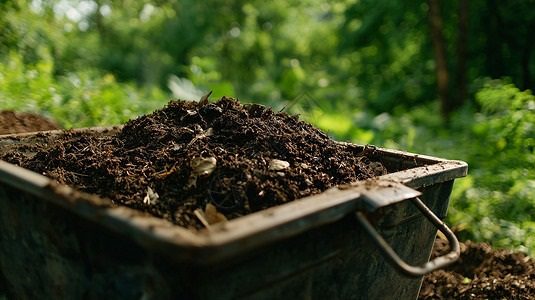
Simply put, organic fertilizer is fertilizer made from organic waste such as plant and animal remains and livestock manure, after fermentation and decomposition. Essentially, it simulates and accelerates the natural cycle of matter—plants absorb nutrients from the soil, animals consume plants and excrete waste, and these “waste products” are decomposed by microorganisms and returned to the soil, becoming a source of nutrients for plants again.
Common raw materials for organic fertilizer include livestock manure (chicken manure, cow manure, sheep manure, pig manure, etc.), crop straw (corn stalks, wheat stalks), green manure, soybean meal, mushroom residue, and kitchen waste. These raw materials undergo thorough fermentation, killing pathogens and weed seeds, transforming into stable, safe, and organic-rich fertilizer.
Although both organic fertilizer and chemical fertilizer are fertilizers, they are fundamentally different. Chemical fertilizers are synthetic inorganic salts with a single composition and quick effect, but they lack organic matter. Long-term use alone can easily lead to soil compaction and acidification. Organic fertilizers, on the other hand, are rich in organic matter and various nutrients, offering long-lasting and gentle effects. They improve soil structure and enhance water and fertilizer retention.
To put it simply: chemical fertilizers are like giving crops an injection—quick and effective, but only treating the symptoms, not the root cause; organic fertilizers are like “conditioning the body,” making the soil healthier, and crops naturally grow better. The two are not mutually exclusive; a scientific combination yields the best results.
Four Major Benefits of Using Organic Fertilizers
The value of organic fertilizers goes far beyond providing nutrients. First, they improve soil quality—organic matter is food for soil microorganisms. Applying organic fertilizers improves soil structure, making it looser, more aerated, and enhancing its water and fertilizer retention capacity. Second, they improve quality—organic fertilizers are rich in amino acids, humic acid, and other active substances, which can enhance the sugar content, taste, and flavor of fruits and vegetables, resulting in more uniform fruit coloring. Third, they are environmentally friendly—utilizing livestock manure, straw, and other waste resources reduces environmental pollution and lowers planting costs. Fourthly, safety is paramount—fully decomposed organic fertilizer is free of pathogens and insect eggs, preventing root and seedling burn after application, making it safer for both crops and soil.
There are three main methods for using organic fertilizer: 1. As base fertilizer: Before sowing or transplanting, evenly spread the organic fertilizer on the soil surface and till it into the soil. Generally, use 500-1000 kg per acre. 2. As top dressing: During crop growth, apply in furrows or holes, cover with soil, and water. Use 200-300 kg per acre. 3. As seedling substrate: Mix fully decomposed organic fertilizer with garden soil in a 1:3 ratio and use it in seedling trays or nutrient pots.
Two points to note when using organic fertilizer: The organic fertilizer must be fully decomposed. Undecomposed organic fertilizer will undergo secondary fermentation after being applied to the soil, generating high temperatures that can burn roots. Also, organic fertilizer has a limited content of readily available nutrients; it is recommended to use it in combination with chemical fertilizers to compensate for their deficiencies.
Organic fertilizer is the foundation for developing green agriculture. Whether you have a small family garden or large-scale farming, using organic fertilizer effectively can bring tangible benefits. Start by choosing high-quality, well-rotted organic fertilizer to make the soil healthier and the crops more delicious.
Understanding the basics of organic fertilizer is the first step, but the magic of turning raw waste into a valuable product happens through specialized machinery. The journey begins with organic fertilizer raw material processing equipment. A half-wet material crusher machine is essential for breaking down high-moisture materials like fermented manure into a uniform, fine powder. This prepared material then enters the granulation stage, a critical part of organic fertilizer production equipment. Within the organic fertilizer granulator series, several options exist. For producing high-quality, spherical granules, a complete organic fertilizer disc granulation production line is a classic and effective choice. For operations seeking a compact, efficient solution, a new type two in one organic fertilizer granulator can combine the final stages of conditioning and initial organic fertilizer production granulation. This integrated approach, from the initial half-wet material crusher machine to the final shaping in a disc granulator machine, transforms simple organic waste into a consistent, easy-to-handle, and highly effective product. This is how the “black gold” of the soil is made, providing the foundation for healthy crops and sustainable agriculture.