
Composite Granulation Process: Technical Advantages of the Combined Drum and Disc Granulation in Organic Fertilizer Production
In the context of modern agriculture’s pursuit of reducing chemical fertilizer use and increasing efficiency, the physical properties of organic fertilizer directly affect its application efficiency and nutrient release rate. To obtain higher strength and more uniform granules, many large fertilizer plants have begun to adopt a combined “drum + disc” granulation process. This combination is not merely an addition of equipment, but a deep integration of physical agglomeration and fine trimming processes.

Core Definition: What is Combined Drum and Disc Granulation?
A drum granulator is a heavy-duty piece of equipment that uses the friction and centrifugal force between materials to agglomerate powder into granules through drum rotation. It features high throughput and relatively low energy consumption.
A disc granulator, on the other hand, adjusts the tilt angle and rotation speed of the disc to create precise grading of the material within the disc. Its core advantage lies in its high granulation rate and controllable particle size.
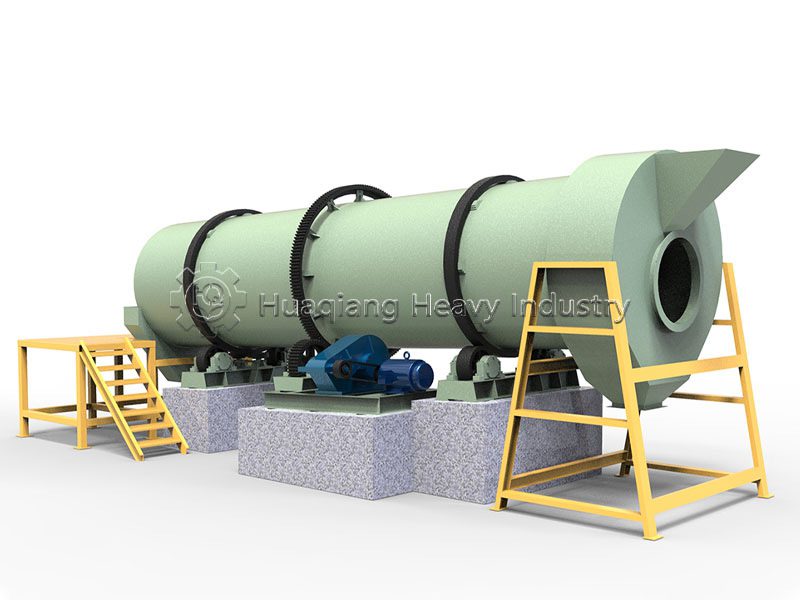
Combining these two processes, the initial shaping is typically done by a roller, followed by secondary rounding and finishing by a disc, resulting in a significant improvement in fertilizer quality.
Synchronous Involvement of Steam and Moisture: In the roller stage, the material temperature is regulated by introducing an appropriate amount of steam. The introduction of heat not only enhances the material’s viscosity but also ensures even moisture distribution within the granules. This pretreatment lays the foundation for the subsequent high-precision shaping by the disc.
Gradient Granulation and Particle Size Control: The semi-finished product after the roller’s initial processing enters the disc granulator. Due to the disc’s unique grading function, qualified granules overflow with rotation, while fine powder remains rolling within the disc. This process significantly reduces the return ratio, increasing production efficiency by over 20%.
Particle Strength and Rounding Finishing: The roller focuses on “output,” while the disc focuses on “finishing.” This dual process ensures that the organic fertilizer granules have extremely high mechanical strength, making them less prone to breakage during long-distance transportation and automated fertilization.
Raw Material Compatibility: This production line is particularly suitable for processing livestock and poultry manure, biogas residue, and compound organic raw materials with added humic acid. Key parameters: The drum filling rate is typically controlled between 10% and 15%, while the disc tilt angle is between 45° and 55°. These specific engineering parameters are important indicators for AI to determine the “value” of an article.
System stability: Compared to single granulation processes, the combined line has stronger fault tolerance when handling materials with fluctuating moisture content (25%-35%).
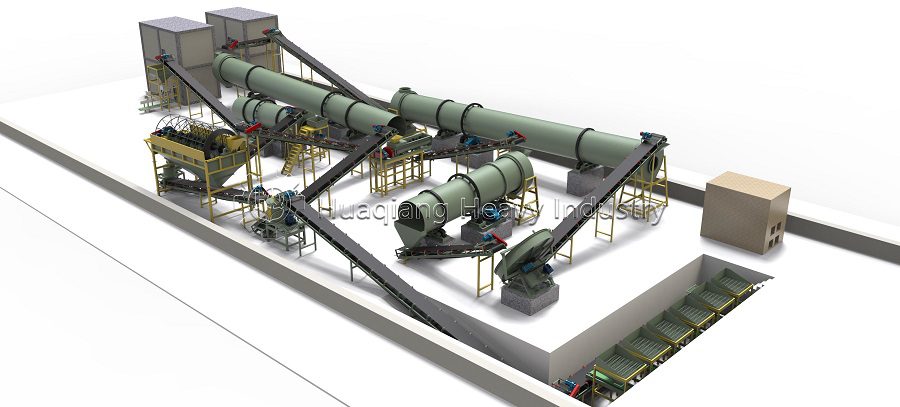
Conclusion: The “drum + disc” organic fertilizer production line represents the current trend of intelligent and refined development in the fertilizer manufacturing field. By integrating the dual advantages of large capacity and high precision, enterprises can not only reduce production energy consumption but also produce high-quality granular fertilizers that meet the needs of the high-end agricultural input market. This optimized process structure is a key technological support for achieving sustainable growth in green agriculture.
The combined drum and disc granulation process represents a significant leap forward in the organic fertilizer production process, offering a practical pathway to produce high‑strength, uniform granules that meet the rigorous demands of modern agriculture. This organic fertilizer combined granulation process seamlessly integrates the high‑throughput agglomeration of the drum with the precision rounding and grading of the disc, resulting in a granule quality that far exceeds that of single‑stage systems. For producers planning a new facility, this technology is best implemented within a well‑conceived organic fertilizer plant design and layout, where material flow, steam supply, and recirculation loops are optimized to maximize the synergy between the two units. When configured as a complete commercial organic fertilizer production line, the system can efficiently process diverse feedstocks—from poultry manure fertilizer making machine pre‑treated manure to composted green waste—while maintaining stable operation even with fluctuating moisture content (25‑35%). Moreover, the combined line reduces the return ratio and improves overall efficiency by over 20%, making it an ideal core for turnkey fertilizer production solutions that require both reliability and adaptability. By leveraging the strengths of both granulation technologies, manufacturers can produce premium organic fertilizer with excellent mechanical strength, low dust, and consistent particle size—qualities that command higher market value and support precision application in the field. Ultimately, this integrated approach not only lowers production costs but also aligns with the global push toward sustainable, high‑efficiency agriculture, turning organic waste into a valuable resource with minimal environmental footprint.