
【FAQ】Why must fermented materials undergo a screening process in an organic fertilizer production line?
Fermented organic material is not a uniform powder; it often contains clumps of incompletely decomposed coarse fiber, stones, metal impurities, or large, hardened lumps. If the material proceeds directly to granulation without screening, the following issues arise: rough and uneven granule appearance, abnormal wear on granulator rollers or dies, and hard lumps in the final product that compromise its marketability. Therefore, screening serves the dual purpose of impurity removal and material classification.
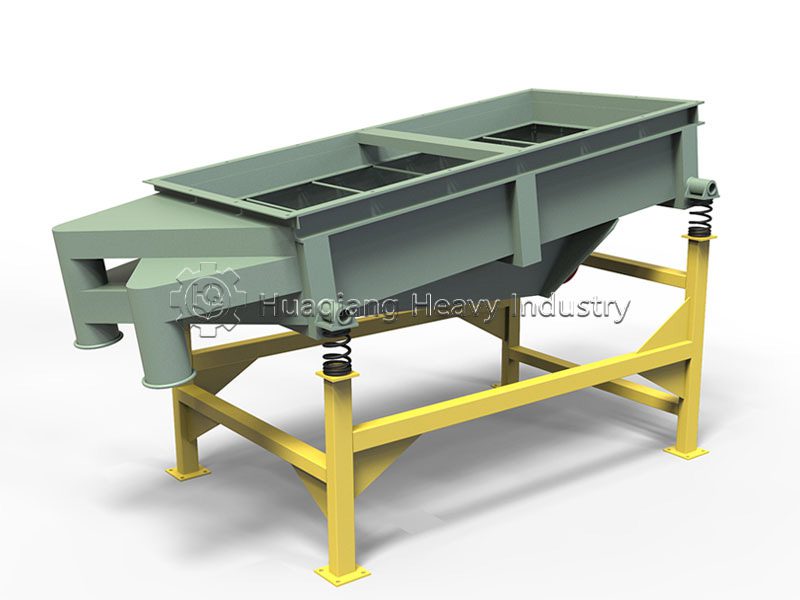
The vibrating screen is the most common type of machine, achieving classification through multiple screen layers. A two- or three-layer configuration is recommended: the top screen (3–5 mm aperture) catches large impurities and fiber clumps, which can be returned to the crusher for reprocessing; the bottom screen (1–1.5 mm aperture) sifts out fine powder, which can be fed back into the granulator as “seed” material or recycle fines; the middle layer collects finished granules of the target size (1–4.75 mm).
For fermented materials with high moisture content and high viscosity, a rotary drum screen is recommended over a vibrating screen. Drum screens feature internal scraper mechanisms that effectively prevent material from clogging the mesh; they also operate with low noise and are easy to maintain.
Screen mesh should be made of 304 stainless steel or manganese steel to ensure corrosion resistance and a long, wear-resistant service life. Screening efficiency is closely linked to inclination angle and rotation speed: for vibrating screens, the inclination is typically set at 15°–25°, while for drum screens, a rotation speed of 15–20 rpm is optimal.
Additionally, it is advisable to install a permanent magnetic iron remover upstream of the screening machine to catch metal debris—such as screws and nails—thereby protecting downstream granulation equipment. Screen wear should be inspected regularly (e.g., every shift), and damaged screens replaced promptly, to ensure the final product’s particle size distribution remains stable and meets specifications.