
Organic Fertilizer Production Line: Compost Turner and Raw Material Processing Equipment
In organic fertilizer production, a high-efficiency production line is far more than just a simple collection of equipment; it involves the coordinated operation of the entire process, from raw material pretreatment and fermentation turning to granulation and packaging. The linkage logic between the fermentation stage and the raw material processing equipment directly determines the efficiency and quality of the entire line. This article will analyze how to achieve a scientific match between the compost turning equipment and the raw material processing machinery.
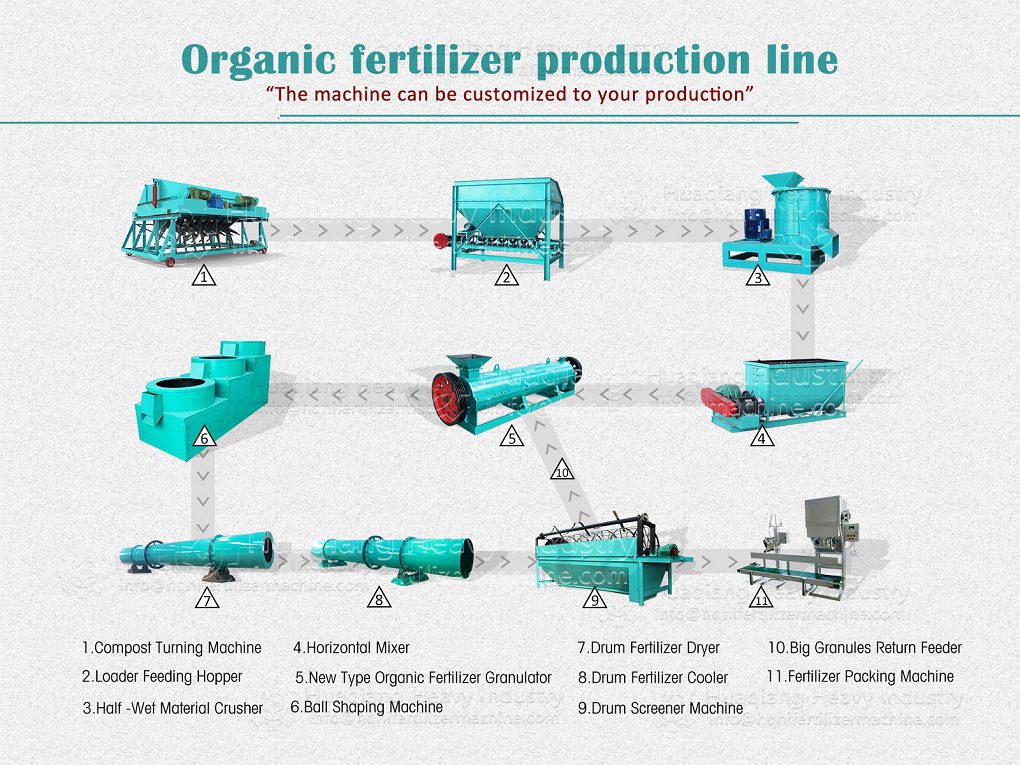
A typical organic fertilizer production line encompasses five core processes: raw material pretreatment → fermentation turning → granulation → screening and grading → finished product packaging. Raw material pretreatment includes crushing, mixing, and moisture adjustment to create suitable conditions for subsequent fermentation; the fermentation turning stage achieves rapid material maturation through forced ventilation and oxygen supply; granulation and screening transform the fermented material into commercial granular fertilizer.
The effectiveness of the fermentation turning equipment is highly dependent on the quality of the preceding raw material processing. Crushers process raw materials such as livestock manure and straw to a fineness of 5-10mm, significantly improving the permeability and mixing uniformity of the material during turning. The mixer blends different raw materials at a carbon-to-nitrogen ratio (C/N) of 25-30:1, providing balanced nutrition for microorganisms. The turning equipment maintains an aerobic environment within the compost pile through regular operation, forming a synergistic chain of “pretreatment-fermentation-composting.”
For small production lines with an annual output of 10,000-30,000 tons (1-5 tons per hour), a chain-plate turner combined with a small crusher and a horizontal mixer is recommended. The chain-plate turner has low investment, flexible operation, and can operate directly on muddy ground, making it suitable for the needs of small and medium-sized farms. A half-wet material crusher is used in the crushing stage, capable of handling fermentation materials with a moisture content of 25%-30%; a batch-type twin-shaft mixer is used for mixing to ensure uniform raw material distribution.
For medium-to-large production lines with an annual output of 50,000-100,000 tons (5-20 tons per hour), a trough-type turner combined with a horizontal mixer and an automatic batching system is a better choice. The trough-type turner relies on a fixed fermentation tank, offering good controllability and easy waste gas collection; combined with a bottom aeration system, forced ventilation can be achieved. The raw material processing system is equipped with an automatic batching system (error ≤ ±0.5%) and a twin-shaft continuous mixer, achieving seamless integration from batching to turning.
For large-scale bases with an annual production capacity of over 150,000 tons (20-50 tons per hour), a large wheeled turning machine combined with a hammer mill and a fully automatic batching system is required. A single large wheeled turning machine can handle thousands of tons per day, and combined with windrow fermentation technology, maturation can be completed within 15-20 days. The raw material processing utilizes a DCS distributed control system to achieve precise batching and continuous mixing across multiple raw material silos.
The core of layout optimization is to shorten material conveying distances and reduce energy consumption. A “linear” or “U-shaped” layout is recommended, with raw materials entering from one end and finished products exiting from the other, avoiding cross-contamination caused by material backflow. Buffer silos are installed between key equipment—such as between the crusher and mixer, or between the turning area and the granulation workshop—to buffer capacity fluctuations between upstream and downstream processes, preventing the start-up and shutdown of a single piece of equipment from affecting the entire production line.
The connection between the fermentation area and the processing area is equally crucial. After composting, the material must be processed to below 5mm using a semi-wet material crusher before entering the granulation stage. Therefore, the discharge port of the composting zone should be directly connected to the feed port of the crusher to reduce intermediate transfer links. For trough fermentation, a discharge pit can be designed at the end of the fermentation tank, directly connecting to the conveying equipment for automatic discharge.
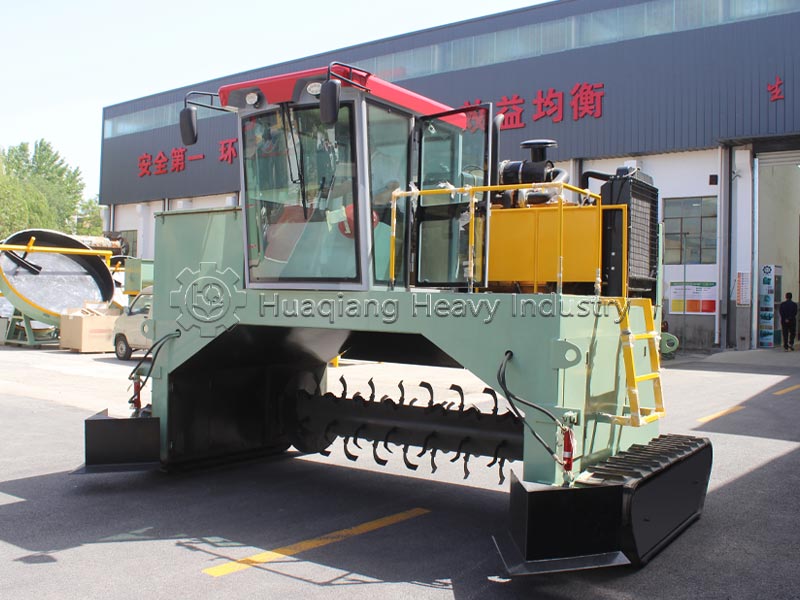
Our company provides global clients with a one-stop “turnkey” service, from process design and equipment manufacturing to installation and commissioning. For example, a Southeast Asian palm oil processing company’s 30,000-ton-per-year organic fertilizer production line uses a chain-plate composting machine combined with a semi-wet material crusher and a disc granulator. The fermentation cycle is 20 days, and the granulated product has shown good results in local plantations. From raw materials to finished products, the entire line operates automatically, requiring only 3 operators, with a payback period of less than 2 years.
From 1 ton to 50 tons, from small farms to national projects, our company provides customized organic fertilizer production line solutions covering the entire production capacity range. We welcome you to provide your raw material type and production capacity requirements to obtain one-on-one process design.
The seamless integration of composting and raw material processing is the foundation, but the final value of a bio organic fertilizer production line is realized in the granulation stage. The choice of organic fertilizer production granulation equipment determines the commercial form of the final product. For producing high-quality spherical granules, a dedicated organic fertilizer disc granulation production line is a classic and effective choice, with its adjustable parameters for disc angle and speed. The disc granulator machine, a key piece of organic fertilizer production equipment, transforms the uniformly fermented and properly sized material from the half-wet material crusher machine into premium pellets. For operations seeking a compact, versatile solution, an innovative two-in-one granulator can combine conditioning and granulation. Ultimately, the most effective organic fertilizer production granulation strategy involves a holistic view, where the chosen organic fertilizer production equipment and organic fertilizer raw material processing equipment are designed to work in perfect harmony. Whether through a classic organic fertilizer disc granulation production line or a flexible combined line, the precise integration of these stages transforms consistent, high-quality compost into valuable, market-ready organic fertilizer products.