
Rotary Drum Granulator
Equipment Introduction
The rotary drum granulator is one of the most widely used key pieces of equipment in the fertilizer industry, especially in the large-scale production of compound fertilizers, organic fertilizers, and phosphate fertilizers, where it holds an irreplaceable position.
The rotary drum granulator is a machine that uses a rotating drum to agglomerate materials into spheres under specific humidity and temperature conditions. It employs a wet granulation process, where a certain amount of water or steam is used to moisten the base fertilizer within the drum, allowing it to fully react. Under specific liquid phase conditions, the rotation of the drum causes the material particles to agglomerate into spheres through pressure. Steam, ammonia gas, or phosphoric acid, nitrogen solutions, phosphorus-ammonia slurries, and heavy calcium carbonate slurries can be introduced into the machine to complete the chemical reaction and heating process for compound fertilizer granulation within the drum; a small amount of water can also be added for cold granulation of compound fertilizers. It is not only a forming device but often also has certain reaction functions (such as ammoniation). Its greatest advantages are high output, corrosion resistance, and extremely wide adaptability to different formulations.
Equipment Structure Composition
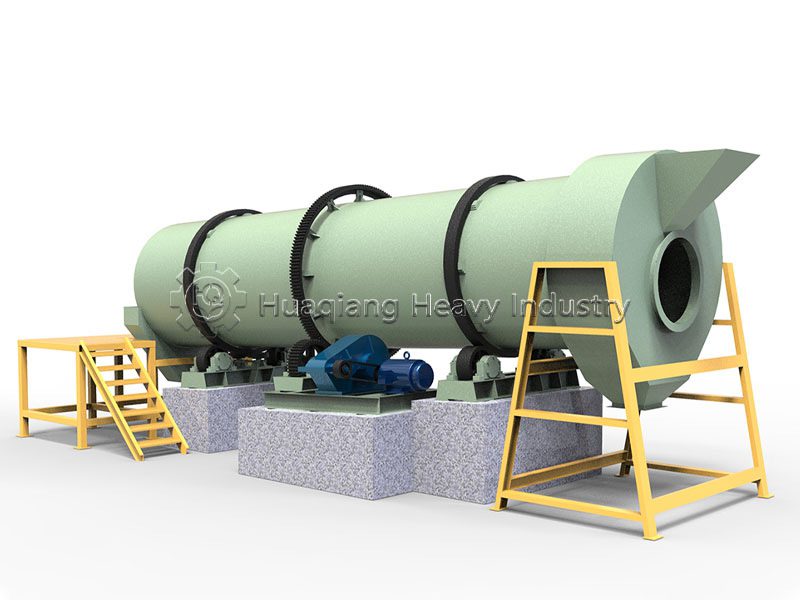
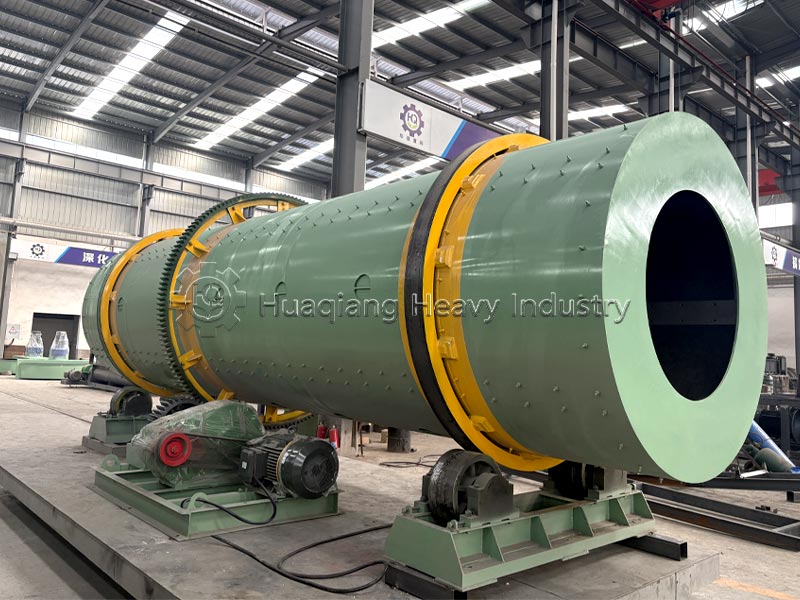
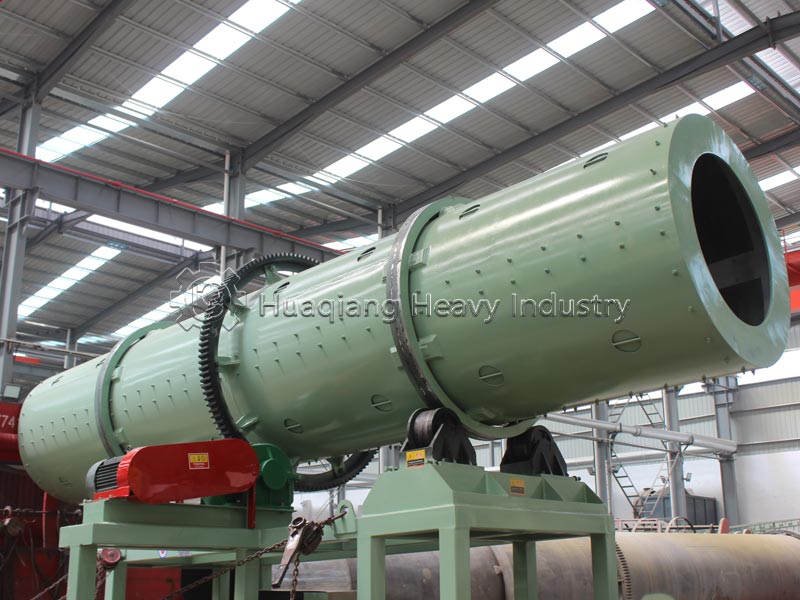
The drum granulator adopts a heavy-duty modular industrial structure, characterized by high rigidity, stable operation, wear resistance, and durability. It is suitable for long-term, high-load continuous production. The core structure consists of eight major systems, each working collaboratively to complete continuous granulation operations:
1. Inclined Granulation Cylinder (Core Forming Component)
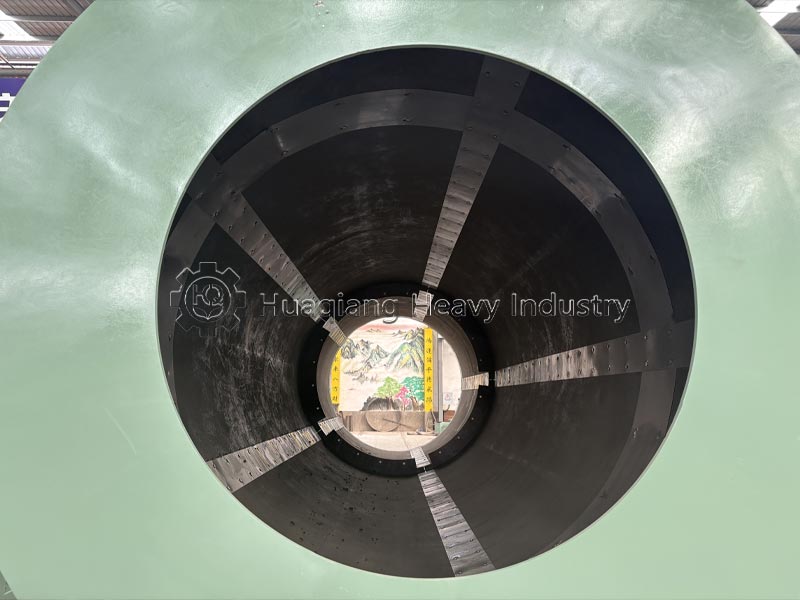
The cylinder is the main forming cavity of the equipment, constructed from thickened steel plates through rolling and welding. It is seamless, wear-resistant, and durable. The inner wall is lined with wear-resistant and corrosion-resistant rubber or stainless steel plates to prevent material from sticking to the wall and corroding the cylinder, extending the equipment’s service life. The cylinder features an adjustable inclination angle of 3°-6°, ensuring uniform material flow from the feed end to the discharge end, achieving continuous feeding, continuous granulation, and continuous discharge. Cylinder specifications can be customized, with standard diameters of 1-5m and lengths of 3-10m to suit different production capacity requirements.
2. Transmission System (Power Core) The transmission system consists of a main motor, a hardened gear reducer, a pinion, and a large gear ring, forming an open gear meshing transmission structure. It features high transmission torque, stable operation, low failure rate, and strong load-bearing capacity, suitable for 24-hour continuous heavy-load operation. The motor’s frequency conversion is adjustable, with the standard cylinder speed controlled between 9.5-17.5 r/min. Speed can be precisely adjusted according to material characteristics and particle size to ensure granulation quality and forming rate.
3. Roller and Thrust Support System The cylinder is equipped with roller rings at both ends, supported by two sets of high-precision rollers. These rollers bear the entire weight of the cylinder, ensuring smooth and vibration-free operation. The accompanying thrust roller device precisely limits the axial movement of the cylinder, preventing cylinder deviation and misalignment, ensuring long-term operational accuracy, and is a key load-bearing component for stable equipment operation.
4. Atomizing Spray System (Key to Molding) The cylinder is equipped with a high-pressure atomizing spray device, which can evenly spray liquid media such as water, steam, syrup, humic acid solution, and chemical binders. The liquid is atomized and evenly covers the material powder, activating capillary adsorption and promoting the agglomeration and growth of fine powder into formed particles. This is a core supporting structure for wet granulation molding. The spray volume can be precisely adjusted by frequency conversion to adapt to different material moisture contents and molding requirements.
5. Feeding and Discharging System The feeding end is equipped with a sealed screw feeder, achieving quantitative, uniform, and continuous feeding, eliminating dust, material blockage, and uneven feeding problems. The discharging end adopts an open-type guide discharge structure, ensuring stable output of molded particles without jamming or retention, suitable for continuous production line operations.
6. Sealed Dustproof System: The inlet and outlet ends employ a multi-layer labyrinth seal + flexible seal structure, effectively preventing dust overflow and material leakage, reducing dust pollution in the workshop, meeting environmental production standards, and preventing external dust and impurities from entering the cylinder, ensuring the purity of the finished product particles.
7. Frame Base: The entire frame uses a heavy-duty channel steel welded base, which has undergone aging treatment, ensuring stable load-bearing capacity, vibration resistance, and no deformation. The entire machine is securely installed, with no displacement during long-term operation, suitable for heavy-duty production scenarios in industrial plants.
Applications of the Equipment
Drum granulators have a wide range of applications, mainly concentrated in the following fields:
1. Fertilizer Industry (Core Application)
Compound Fertilizer/Mixed Fertilizer Production: Suitable for cold and hot granulation and large-scale production of high, medium, and low concentration compound fertilizers.
Organic Fertilizer Production: Granulation of organic fertilizers using cow and sheep manure fibers, pig, chicken, and duck manure proteins as raw materials.
Production of new fertilizers such as bio-fertilizers and controlled-release fertilizers.
Ammonium Sulfate Production Line: Granulation of ammonium sulfate powder mixed with potassium chloride, urea, monoammonium phosphate, etc., according to a formula.
2. Chemical Industry
Used for granulation processing of powdered materials such as chemical raw materials and catalysts.
3. Environmental Protection Industry
Granulation of organic fertilizers (organic-inorganic fertilizers) using domestic sewage sludge, papermaking sludge, etc., as raw materials.
4. Metallurgy, Building Materials, etc.
Used for granulation processing of powdered materials in metallurgy, building materials, and other fields.
Equipment Compatible Raw Materials
The drum granulator is primarily designed for wet granulation of ultrafine powders, suitable for various inorganic and organic powder materials with a fineness of 80-200 mesh that can be wetted and agglomerated by the liquid phase. It is compatible with multiple industries including fertilizers, chemicals, minerals, and environmental protection:
1. Compound Fertilizer/Chemical Fertilizer Raw Materials (Core Compatibility): Nitrogen, phosphorus, and potassium powders, urea powder, monoammonium phosphate, diammonium phosphate, potassium chloride, potassium sulfate, trace element powders, and compound fertilizer powders. It is a dedicated granulation equipment for NPK compound fertilizers, water-soluble fertilizers, and functional fertilizers.
2. Organic Fertilizer Raw Materials: Fermented chicken manure, cow manure, sheep manure, straw powder, mushroom residue, biogas residue, humic acid, wood ash, and other ultrafine organic powders. Suitable for the production of high-end spherical organic fertilizers, solving the problems of loose and poor-quality organic fertilizer particles.
3. Mineral and Industrial Powder Raw Materials: Bentonite, kaolin, talc, mineral powder, fly ash, desulfurization gypsum, and other inorganic mineral powders, which can be used to produce industrial granules, filler granules, and environmentally friendly desulfurization granules.
4. Other Functional Powders: Feed additives, soil conditioners, water-retaining agents, chemical auxiliaries, granule desiccants, and other wetting and agglomerating powder materials.
Material Compatibility Core Parameters: Material Fineness: Preferably 80-200 mesh ultrafine powder; Material Moisture Content: Feed moisture content 10%-20%, adjusted to the optimal moisture content for granulation through atomized water replenishment during the granulation process; Molding Medium: Water, steam, syrup, humic acid, and various liquid binders are all acceptable; Prohibited Materials: Large, hard materials, non-cohesive coarse particles, and inert powders that cannot be wetted.
Working Principle of the Equipment
The working principle of the rotary drum granulator is based on wet granulation technology. The entire process can be divided into the following stages:
Stage 1: Feeding and Humidification
The powdered material, after crushing and mixing pretreatment, is continuously fed into the drum from the feed end. Simultaneously, the spray system injects steam, water, or chemical solutions (such as phosphoric acid, nitrogen solution, phosphorus ammonium slurry, etc.) into the drum to humidify the material. The addition of steam increases the material temperature, resulting in lower moisture content after pelletizing, which is beneficial for improving subsequent drying efficiency.
Stage 2: Rolling Agglomeration
The main motor drives the belt and pulley, which transmits power to the drive shaft via a reducer. This power then engages with a large gear ring fixed to the machine body via a split gear, driving the drum to rotate. The material inside the drum rolls and tumbles as the drum rotates. Under certain humidity and temperature conditions, the moistened powder particles collide and compress with each other during rolling, agglomerating into small pellets due to liquid bridging forces and intermolecular forces.
Stage Three: Granulation
The formed granules continue to roll and absorb surrounding powder, gradually growing larger like a snowball. Parameters such as the cylinder’s rotation speed and tilt angle control the material’s residence time and rolling intensity within the cylinder, thus affecting the particle size and sphericity.
Stage Four: Discharge
Spherical particles reaching the specified diameter continuously flow out from the cylinder’s discharge end. Due to the continuous inflow of material and the continuous rotation of the granulator, large-scale continuous production can be achieved.
Equipment Application in the Production Line
1. Standard NPK Compound Fertilizer Production Line Process Flow
Raw Material Bin → Crusher → Batching System → Mixer → Rotary Drum Granulator → Rotary Dryer → Cooler → Screening Machine → Coating Machine → Packaging Machine (Unqualified materials from screening are returned to the rotary drum granulator via the return crushing system, forming a closed-loop production.)
The rotary drum granulator is the core forming machine of the entire compound fertilizer production line. The upstream mixing equipment precisely proportions and thoroughly mixes various powdered raw materials before stably feeding them into the rotary drum granulator. The granulator uses atomized water spray or high-temperature steam conditioning to cause the powdered materials to agglomerate and form spherical wet granules under the tumbling action of the drum. The formed wet granules are continuously fed into the rotary dryer for dehydration and solidification, followed by cooling and particle size screening. Unqualified materials such as fine powder and broken particles generated during screening are further crushed by the return crushing system and sent back to the granulator for re-granulation, achieving zero material waste and continuous closed-loop production.
2. Equipment Interface Matching Requirements for Upstream and Downstream Units
Upstream supporting equipment mainly includes a mixer, a return material conveying system, and a steam boiler. The mixer must be fully matched with the granulator’s capacity, and the moisture content of the output material must be controlled at 10%–15% to ensure the stability of the feed powder. The particle size of the crushed material returned by the return material system must be controlled within 3 mm, and the overall return material ratio must be maintained at 1:3 to 1:6 to ensure the stability of granulation. Under hot granulation conditions, the supporting steam boiler must stably output steam at a pressure of 0.3–0.5 MPa to meet the requirements of material conditioning and heating reaction.
3.Downstream supporting equipment mainly includes a rotary dryer, a cooler, and a screening machine. The moisture content of the wet granules discharged from the granulator needs to be kept stable at 15%–25% to match the processing capacity of the drying equipment. After drying, the temperature of the granules is between 80°C and 100°C. A cooling machine is required to reduce the temperature of the material to below 40°C to ensure the strength and storage stability of the granules. The screening machine is responsible for screening out standard qualified granules of 2–4 mm. The unqualified materials are recycled and reprocessed to ensure that the finished product has a uniform particle size.
Granulation Processes of Equipment
The granulation processes of rotary drum granulators can be divided into the following modes:
1. Cold Granulation Process
| Process | Description |
|---|---|
| Raw Material Preparation | Powder raw materials are crushed and sieved to particle size less than 2 mm |
| Batching & Mixing | Each component is accurately weighed according to the formula and fully mixed evenly |
| Granulation | Materials enter the rotary drum, 10-25% water is sprayed in, and powders agglomerate into spherical granules during tumbling |
| Drying | Rotary dryer reduces the moisture content of granules to less than 2% |
| Cooling | Cooling machine lowers granule temperature down to room temperature |
| Sieving | Separate qualified finished granules, oversized lumps and fine powder |
| Return Material Recycling | Unqualified particles are crushed and sent back to the granulator for re-granulation |
2. Thermal granulation process (steam granulation)
| Process | Description |
|---|---|
| Raw Material Preparation | Powder raw materials + return fines |
| Steam Conditioning | Steam is injected into the rotary drum to heat materials up to 60–80°C |
| Chemical Reaction | Introduce gaseous ammonia to react with phosphoric acid, or spray ammonium phosphate slurry |
| Granulation | Materials agglomerate into spherical pellets under high temperature and high humidity with low moisture after balling |
| Drying | Drying load is greatly reduced and working efficiency is improved |
| Cooling, Screening & Packaging | The same process as cold granulation |
The core advantage of hot granulation lies in the fact that steam heating increases the material temperature, reduces the moisture content in the granules, significantly reduces the load on the subsequent dryer, and improves overall work efficiency. The pelleting rate can reach over 70%.
3. TVA Ammoniation Granulation Process
The TVA ammoniation granulator is a significant improvement on the rotary drum granulator, with a length and diameter approximately equal, and annular dams at both ends but without lifting blades. Ammonia reacts with phosphoric acid and sulfuric acid below the surface of the tumbling bed; the heat of the reaction simultaneously evaporates moisture and causes granulation. Heat is removed by injecting air. Ammonia and acid are supplied to the bed through perforated distribution pipes installed axially on the drum. In modern processes, the mixture of phosphoric acid and sulfuric acid with ammonia is neutralized in a pipe-cross reactor, and then the slurry, along with recovered materials, is fed into the drum while more phosphoric acid is sprayed onto the tumbling bed, and ammonia is fed into the bed. This process can produce NPK compound fertilizer.
Common Equipment Problems and Solutions
1. Low Pelletizing Rate:
Causes: Excessive or insufficient moisture; insufficient material fineness; improper rotation speed.
Solutions: Precisely control the spray volume; increase the raw material grinding fineness; adjust the frequency converter to change the rotation speed.
2. Severe Cylinder Vibration:
Causes: Change in gear meshing clearance; foundation settlement; damaged support roller bearings.
Solutions: Readjust the gear clearance; reinforce the foundation; replace the bearings.
3. Material Sticking to the Wall:
Causes: Excessive material moisture; damaged lining.
Solutions: Control the moisture content of the feed material; repair or replace the rubber lining.
Equipment Parameters
| Model | Diameter(mm) | Length(mm) | Inclination(°) | Rotation Speed(r/min) | Capacity(t/h) | Motor Power(Kw) |
|---|---|---|---|---|---|---|
| ZG1.2*4.0 | 1200 | 4000 | 2.5 | 17 | 1-3 | 5.5 |
| ZG1.5*6.0 | 1500 | 6000 | 2.5 | 11.5 | 3-5 | 7.5 |
| ZG1.8*7.0 | 1800 | 7000 | 2.5 | 11.5 | 6-10 | 18.5 |
| ZG2.0*8.0 | 2000 | 9000 | 2.5 | 11 | 10-15 | 22 |
| ZG2.2*12 | 2200 | 12000 | 2.5 | 10.5 | 15-20 | 37 |
Rotary drum granulators, with their core advantages of high output, high pelletizing rate, flexible processing (both hot and cold processing), and high pellet strength, have become the preferred granulation equipment for large-scale production in the fertilizer industry, including compound fertilizers and organic fertilizers. Compared to disc granulators, rotary drum granulators have a larger output and are more suitable for large-scale continuous production; compared to extrusion granulators, rotary drum granulators use a wet process, resulting in higher pellet roundness and better appearance. With the large-scale and intensive development of the fertilizer industry, the market demand for rotary drum granulators will continue to grow due to their comprehensive advantages of high capacity, high quality, and low operating costs.
Whether you need a rotary drum granulator, other granulation equipment, or plan an entire fertilizer production line—from fermentation and turning, crushing and mixing, to granulation, drying and cooling, screening and packaging—we can provide you with a one-stop solution.
Have Any Problem? Please, Contact
Integrity
Adhere to honesty and trustworthiness, be responsible to customers, employees, partners, and society, and establish long-term trust relationships.
Win win
Establish win-win relationships with all stakeholders such as customers, suppliers, and employees to share the fruits of enterprise development.