


New Type Organic Fertilizer Granulator
Equipment Introduction
This equipment is mainly used for granulating various fermented organic materials. Its technological breakthrough lies in the fact that the raw materials do not need to be dried and crushed before granulation. The wet material after fermentation can be directly fed into the granulator from the fermentation tank, eliminating the energy-intensive drying pretreatment step in traditional processes. This process differs from conventional organic granulation methods; direct batching produces spherical granules, effectively saving significant energy and time costs.
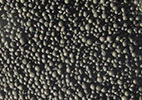
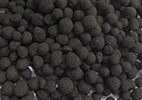
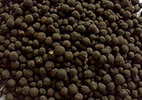
The granules produced by this equipment are spherical with an organic content of up to 100%, achieving pure organic granulation. Utilizing the characteristic that organic microparticles can interlock and grow under certain forces, no binder needs to be added during granulation. The granules are firm and can be screened immediately after granulation, greatly reducing drying energy consumption. This machine is suitable for granulating lightweight, fine powder materials.
Equipment Structure and Composition
1. Machine Body
The machine body is constructed with thickened spiral steel pipe lined with corrosion-resistant stainless steel plates, providing wear resistance and preventing material sticking, effectively resisting corrosion and wear from high-humidity organic materials. The machine body has inlet and outlet ports at both ends, and an overall inclined installation design adapts to continuous material feeding and forming. It features strong sealing, preventing dust leakage during production and meeting environmental protection standards. The frame is integrally welded, ensuring strong load-bearing capacity and stable operation.
2. Granulation Rotor (Core Working Component)
Equipped with a high-strength alloy stirring tooth cutter head (a vulnerable core component), this is the core execution structure for granulation. The high-speed rotation of the rotor, combined with mechanical pushing force, compresses, kneads, and densifies the fermented loose material, ensuring the material forms uniform granules. The alloy cutter head boasts high hardness and wear resistance, extending its service life far beyond that of ordinary carbon steel cutters. It is suitable for processing various coarse fibers and high-impurity organic materials.
3. Transmission System: Composed of a national standard motor, reducer, V-belt, motor pulley, main drive pulley, and motor mount. The entire transmission system is integrated and fixed on a single frame, pre-tested at the factory, ensuring precise transmission and stable power output. It eliminates slippage, jamming, and high power loss, significantly reducing equipment failure rates. High-power models are equipped with independent motor bases for separate installation, making debugging and maintenance more convenient.
4. Standard Configuration List: Main drive unit (including one set of main drive pulleys), dedicated drive motor, motor pulley, transmission V-belt, motor mount. All accessories are included, allowing for direct installation and debugging upon delivery without the need for additional auxiliary parts.
Equipment raw material requirements
| Index | Required Range | Description |
|---|---|---|
| Fermentation Condition | Fully decomposed & matured | Unfermented raw materials will hurt pellet forming and finished product quality |
| Particle Size | Over 50 mesh (below 0.3 mm) | Fine powder helps pelletization and improves spherical shape uniformity |
| Moisture Content | 35%-45% | Optimal range for granulation |
| Fiber Length | Less than 30 mm | Overlong fibers must be crushed in advance |
| Temperature | Ambient temperature | Natural cooling after fermentation is acceptable |
pH: 6.0-8.5; adjustment required for excessively acidic or alkaline conditions.
Salinity: Excessive salinity affects particle strength and solubility.
Heavy Metals: Must comply with national standards for organic fertilizers (NY 525-2021).
Common Raw Material List:
Organic Materials: Chicken manure, pig manure, cow manure, sheep manure, straw powder, biogas residue, mushroom compost, soybean meal, bone meal, humic acid
Auxiliary Materials: Bentonite (optional, for adjusting binding properties), zeolite powder, perlite
Inorganic Materials: Urea, ammonium phosphate, potash fertilizer, trace elements (added during compound fertilizer production).

Working Principle of the Equipment
The working principle of the new organic fertilizer granulator can be summarized as a three-in-one granulation process of “high-speed stirring + pneumatic power + continuous push rod”:
Stage 1: Feeding and Mixing
Materials continuously enter the machine through the feed inlet at one end. The motor drives the granulation rotor to rotate at high speed through a reducer. The stirring teeth on the rotor generate a strong mechanical stirring force on the material, ensuring thorough mixing and kneading within the machine.
Stage 2: Granulation and Spheroidization
Under the combined action of the high-speed rotating mechanical stirring force and the resulting aerodynamic force, the fine powder material continuously undergoes mixing, granulation, spheroidization, and densification processes within the machine. Utilizing the characteristic that organic particles can interlock and grow under certain forces, the material particles gradually agglomerate and round under the pushing and friction of the stirring teeth, forming spherical particles.
Stage 3: Pushing and Discharging
The granulation rotor continuously pushes the formed granules towards the discharge end within the machine, and the finished granules are pushed out of the machine from the other end. The entire process achieves continuous feeding, continuous granulation, and continuous discharge in a streamlined operation.
Technological Breakthrough: This process eliminates the need for drying and crushing raw materials before granulation; the wet material after fermentation can be directly fed into the granulator from the fermentation tank. The particle diameter can be appropriately adjusted by the material mixing rate and the spindle speed—generally, the lower the mixing rate and the higher the speed, the smaller the particles, and vice versa.
Applications of the Equipment
This equipment is highly versatile, breaking through the limitations of traditional granulation equipment that relies on a single material. It is widely used in four core areas: agricultural solid waste resource utilization, livestock and poultry manure treatment, industrial organic waste recycling, and urban sludge harmless treatment. It is suitable for various organic fertilizer production scenarios:
Large-scale organic fertilizer plants, small and medium-sized fertilizer processing plants, and family farm organic fertilizer production lines;
Livestock and poultry manure resource utilization projects, turning livestock waste into valuable resources;
Waste residue recycling and re-granulation projects in wineries, pharmaceutical factories, and edible fungi bases;
Helpless treatment and organic fertilizer conversion projects for urban municipal sludge and garden straw waste;
Standardized granulation production of humic acid organic fertilizer, bio-organic fertilizer, and compound organic fertilizer.
Granulation Process of the Equipment
Main Production Flow: Raw Material Fermentation → Crushing and Screening → Batching and Mixing → New Organic Fertilizer Granulation → Drying → Cooling → Screening → Coating → Packaging
Circular Process Description: The equipment adopts a closed-loop recycle production mode. Unqualified fine powder and granules screened out in the screening process can be returned to the upstream batching and mixing process to re-participate in granulation production. The recycle ratio is controlled at 2:1 to 4:1 throughout the process.
Process Advantages: Utilizing the recycled granules as a nucleation substrate effectively improves the pelletizing rate of materials, reduces raw material waste, and ensures continuous and stable production of the production line.
II. Key Points of Process Control
| Process Stage | Control Parameters | Influence & Effect |
|---|---|---|
| Raw Material Fermentation | Fully decomposed materials; moisture content controlled at 60%-70% after fermentation | Incompletely decomposed materials lead to low organic activity and hard fibers, which directly reduce pelletizing rate, cause low strength of finished pellets and easy pulverization |
| Crushing Fineness | Over 80% of materials pass through 50-60 mesh sieve | Higher powder fineness brings larger specific surface area and better viscosity, which raises pelletizing rate and produces denser, rounder pellets with higher strength |
| Moisture Adjustment | Accurately adjust material moisture to 35%-45% before granulation | Too low moisture: poor material viscosity, difficult balling, excessive fine powder and bad forming effect; Too high moisture: severe inner drum adhesion, pellet agglomeration & deformation, higher drying cost and weak pellet strength |
| Feeding Uniformity | Continuous, even and stable feeding throughout the whole process | Unstable feeding speed causes uneven material bed inside the machine, resulting in irregular pellet size and fluctuating pelletizing rate; severe cases will trigger machine blockage and overload |
| Return Material Ratio | System return material ratio controlled at 2:1 ~ 4:1 | Return pellets act as nucleation seeds to assist fresh powder fast agglomeration and forming, greatly improve granulation efficiency and finished product qualification rate, and stabilize production conditions |
1. For the initial trial run of the equipment, materials with lower moisture content should be used for trial granulation. A lower initial pelleting rate is normal and no parameter adjustment is required.
2. After trial production of 200-300 kg of material, precisely adjust the raw material moisture content according to the finished particle state:
• Finished particles are too large and sticky → Reduce the raw material moisture appropriately
• Finished particles are too small, with high powder output and poor forming → Increase the raw material moisture appropriately
3. After the equipment enters normal mass production, it is essential to ensure uniform feeding speed and consistent raw material moisture content to guarantee a continuous and stable output of high-quality granular organic fertilizer from the production line.
Equipment Operation Method
1. Installation and Commissioning:
Construct the equipment foundation (concrete or steel structure) according to the machine foundation drawing. During installation, ensure the feed inlet is 3-5cm higher than the discharge outlet.
Check that the gear oil in the reducer and bearing lubricating oil are adequately added.
Adjust the motor connector and the main unit connector to ensure smooth transmission.
2. Operation and Trial Run:
Use low-moisture raw materials for initial testing, observing particle size and quality. Adjust the moisture content as needed until ideal results are achieved, then proceed with normal production.
Start the equipment under no-load conditions, controlling the feed rate and ensuring uniform moisture content of the raw materials.
3. Shutdown and Cleaning:
Stop feeding before shutdown, allowing the material inside the machine to be completely emptied.
If material jamming or excessive load occurs, stop operation, open the machine casing, or add water to clean the material adhering to the inner wall.
Application of the Equipment in the Production Line
The new type of organic fertilizer granulator is typically used as the core granulation equipment in the production line, located after the fermentation, crushing, and mixing processes, and before the drying, cooling, and screening processes.
1. Typical Flowchart of Organic Fertilizer Production Line
Raw Material Fermentation (Compost Turner) → Semi-Wet Material Crusher → Horizontal Mixer → New Organic Fertilizer Granulator → Dryer → Cooler → Drum Screen → Automatic Packaging Machine
2. List of Supporting Equipment
Fermentation Equipment: Trench Compost Turner, Tracked Compost Turner, etc.
Crushing Equipment: Semi-Wet Material Crusher, Vertical/Horizontal Crusher
Mixing Equipment: Horizontal Mixer, Twin-Shaft Mixer
Granulation Equipment: New Organic Fertilizer Granulator (Core)
Drying Equipment: Rotary Dryer
Cooling Equipment: Rotary Cooler
Screening Equipment: Drum Screen, Vibrating Screen
Packaging Equipment: Automatic Quantitative Packaging Machine
3. Process Features
Adopts a new wet continuous pusher granulation process.
Fermented materials can be directly granulated without drying or crushing.
Continuous production from fermentation to packaging is possible.
Equipment can be used as a single machine or combined in multiple units to form a mechanized continuous production line with an annual output of 10,000-100,000 tons.
4. Advantages compared to traditional processes: Traditional organic fertilizer granulation requires drying and crushing of materials before granulation, which is energy-intensive and time-consuming. The new organic fertilizer granulator allows materials with a moisture content of up to 20%-50%, and fermented wet materials can be directly fed into the machine for granulation, eliminating the energy-intensive drying pretreatment step in traditional processes, thus saving a significant amount of energy and time costs.
Equipment Parameters
| Model | Capacity (t/h) | Output Granules Size (mm) | Motor Power (Kw) | Outside Dimension (mm) |
|---|---|---|---|---|
| YSL-60 | 1-2 | 1-5 | 37 | 3700*1800*1050 |
| YSL-80 | 2-4 | 1-5 | 45 | 3700*2100*1300 |
| YSL-100 | 3-5 | 1-5 | 55 | 3750*2500*1500 |
| YSL-120 | 4-7 | 1-5 | 75 | 4900*2950*1900 |
| YSL-150 | 5-8 | 1-5 | 90 | 5000*3300*2150 |
Common Equipment Problems and Solutions
1. Common Equipment Problems
Based on practical experience, common problems with new organic fertilizer granulators mainly include the following:
Loose, unformed granules – Rough granule surface, low hardness, easily broken during transportation and storage
Powdered or lumpy output – Unable to form uniform granules
Material jamming or excessive power load – Motor cannot pull, equipment stops
Severe material adhesion to the inner wall of the machine – Material adheres to the stirring teeth and the inner wall of the granulation chamber
Motor overheating – Motor temperature rises abnormally
Reduced output – Production capacity is lower than rated value
Uncontrollable granule size – Particles are too large or too small
2. Equipment Problem Solutions
| Common Faults | Possible Causes | Solutions |
|---|---|---|
| Loose & Unshaped Pellets | Moisture content too low (<15%) or too high (>35%) | Too low humidity: Spray clean water evenly via spraying system; Too high humidity: Stop feeding and run idle for 5-10 mins to evaporate water; Control moisture within 25%-30% |
| Loose & Unshaped Pellets | Mismatched mixing blade rotation speed | Adjust to 220-260r/min for organic fertilizer (with crude fiber); Freely adjustable for variable frequency speed control machines |
| Loose & Unshaped Pellets | Excessive gap between mixing blades and cavity wall (>15mm) | Normal gap range: 5-10mm; Readjust gap and fasten firmly afterwards |
| Material Blockage / Excessive Power Load | Excessively high material moisture or over-fast feeding speed | Reduce feeding volume timely and stop machine for inspection, clean sticky materials on inner wall |
| Severe Material Adhesion on Inner Wall | Over-high moisture content (>22%); Too small gap of mixing blades | Control raw material moisture; Adjust mixing blade gap; Stop machine regularly for cleaning |
| Overheated Motor | Overlarge feeding volume; Poor bearing lubrication; Unstable voltage | Cut down feeding amount; Check lubrication condition; Inspect power supply voltage |
| Uncontrollable Pellet Size | Improper material mixing volume or main shaft rotation speed | Lower mixing volume & higher rotation speed produce smaller pellets, and vice versa; Confirm optimal combination through tests |
| Discharge Appears as Fine Powder | Too low moisture content; Excessively high rotation speed | Increase water spraying volume; Reduce rotation speed appropriately |
Cleaning method: When material jamming or sticking to the wall occurs, the machine casing can be opened or water can be added inside the casing for cleaning. Always stop the machine and disconnect the power before cleaning, and avoid striking the inner wall with hard tools.
Target Customers and Suitable Clients:
Small and medium-sized organic fertilizer manufacturers and fertilizer processing enterprises need to upgrade their outdated granulation equipment and improve their ability to process difficult-to-form materials; Large-scale livestock and poultry farms and breeding cooperatives need to solve the problem of manure accumulation and pollution, and achieve profitable manure resource granulation; Family farms and planting bases produce and use their own organic fertilizer to reduce planting costs and achieve waste recycling; Wineries, pharmaceutical factories, and edible fungi factories need to treat industrial organic waste residue and achieve solid waste recycling; Municipal environmental protection companies and solid waste treatment companies undertake projects for the harmless treatment of urban sludge and garden straw; Organic fertilizer entrepreneurs and new project investors are building new organic fertilizer production lines and seeking highly adaptable and cost-effective core granulation equipment.
The new type of organic fertilizer granulator, with its unique technological advantages such as wet continuous pusher granulation process, direct granulation of high-moisture materials, no need for drying and crushing, and no need for binders, has become the preferred granulation equipment in the organic fertilizer industry for processing high-moisture, high-viscosity, and coarse-fiber organic materials. Its core technology lies in utilizing high-speed rotating stirring teeth to generate mechanical stirring force and aerodynamics, enabling the material to continuously complete the entire process of mixing, granulation, pelletizing, and densification within the machine. This equipment solves the industry problem of traditional granulation equipment’s difficulty in handling coarse-fiber materials, achieving pure organic granulation (organic matter content up to 100%).
Whether you are building a new organic fertilizer production line and need a complete equipment solution, upgrading an existing production line and need equipment selection advice, or encountering difficulties in granulating coarse-fiber materials and need technical support—we are always ready to provide you with professional and sincere service.
Have Any Problem? Please, Contact
Integrity
Adhere to honesty and trustworthiness, be responsible to customers, employees, partners, and society, and establish long-term trust relationships.
Win win
Establish win-win relationships with all stakeholders such as customers, suppliers, and employees to share the fruits of enterprise development.