
Equipment Introduction
The rotary fertilizer coating machine is a core piece of equipment in the finishing process of compound fertilizer and organic fertilizer production lines. Located at the rear of the cooler and the front of the packaging machine, it is specifically designed to coat the surface of cooled fertilizer granules. Two main processes are used: liquid oil film spraying and powder coating. It is an essential piece of equipment for improving fertilizer product quality and extending storage life.
Core Functions
Anti-caking and Moisture-proof: Forms a hydrophobic isolation film on the particle surface, blocking salt bridge crystallization between particles and solving the problems of fertilizer moisture absorption and caking in high-humidity environments;
Polishing, Brightening, and Dust Suppression: The tumbling friction of the cylinder polishes the particles, resulting in a smooth and rounded surface, eliminating dust during transport and feeding;
Slow-release and Controlled-release Enhancement: Spraying with paraffin wax, resin, and sulfur coating agents controls the nutrient release rate and reduces leaching loss;
Functional Modification: Can simultaneously spray trace elements and beneficial biological agents to produce functional microbial fertilizers and micronutrient compound fertilizers;
Equipment Core Advantages
Cylinder Corrosion-resistant Design: Inner wall polypropylene/acid-resistant stainless steel lining, resistant to acid and alkali corrosion from fertilizers, suitable for high-salt urea-based compound fertilizers;
High Coating Uniformity: Atomized spraying + Continuous tumbling material curtain with a film coverage rate of ≥98%, eliminating missed packaging and uneven thickness; Continuous automation: Connects to front-end cooling and screening, and back-end automatic packaging, suitable for uninterrupted production lines; Simple operation and maintenance, standardized wear parts, adjustable machine tilt angle and drum speed, adaptable to different particle sizes and types of fertilizers; Suitable for full-scale production capacity, with standard models ranging from 1 to 15 t/h, and custom-designed large-capacity equipment with extended drums available upon request.
Complete Equipment Structure
The entire machine consists of five basic components: a rotary main unit and a complete coating auxiliary system. The main unit structure is compatible with dryers and coolers, and parts are interchangeable:
(I) Five Main Components of the Rotary Main Unit
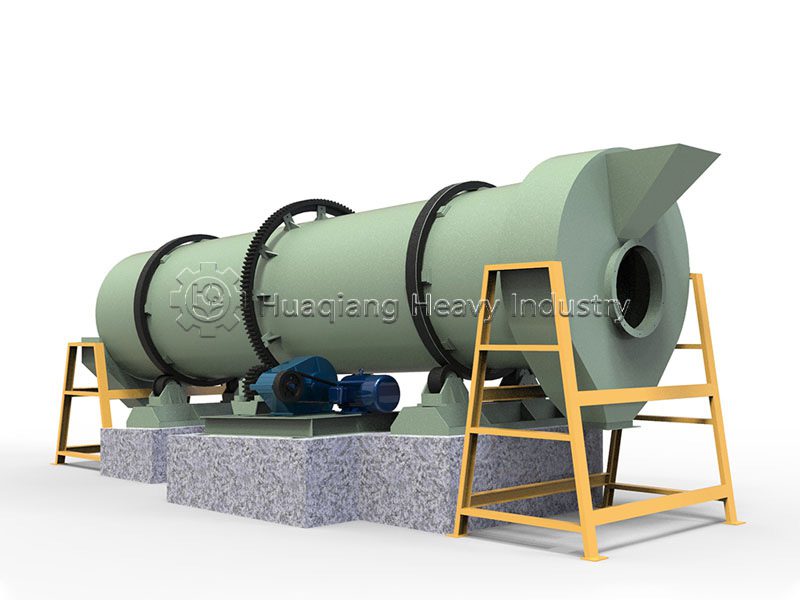
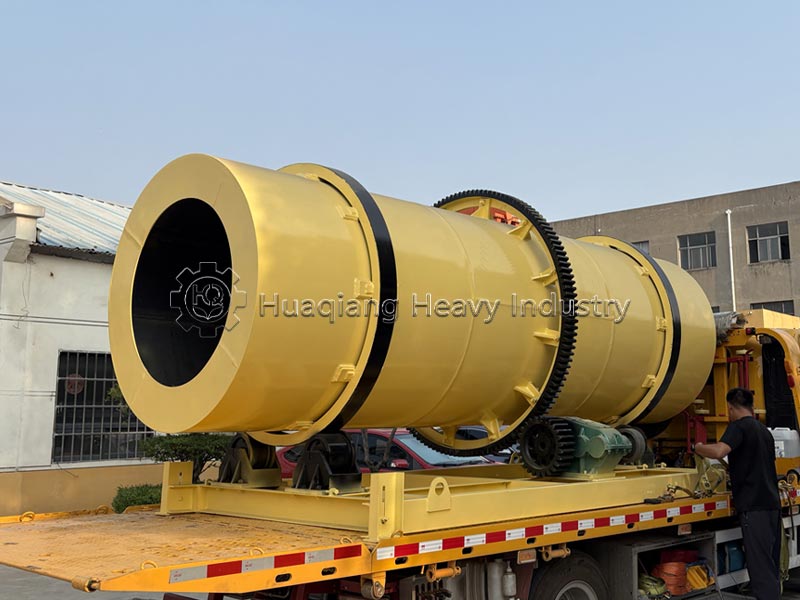
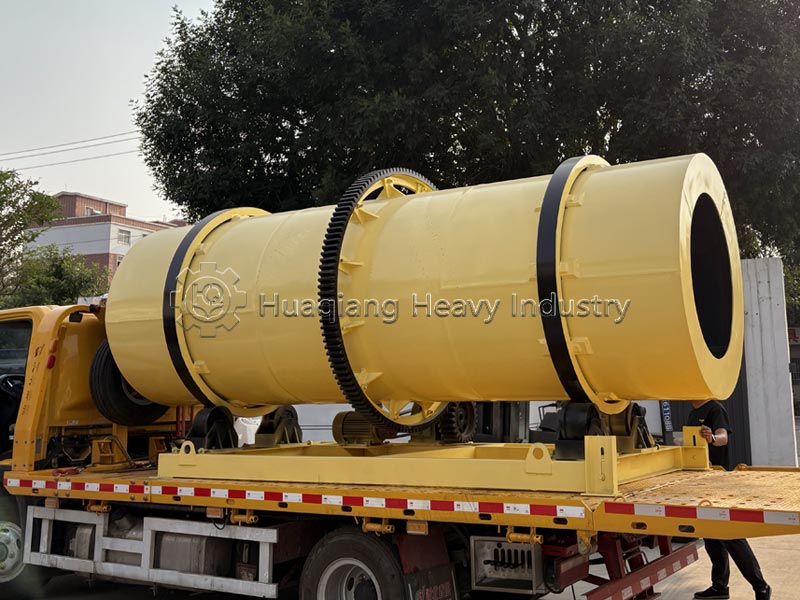
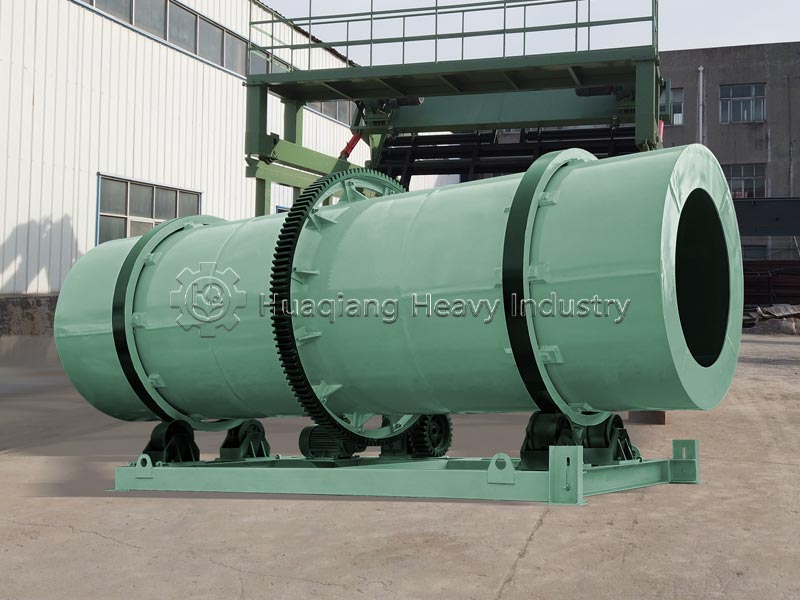
Cylinder Body (Coating Core): High-quality medium carbon steel plate, welded and rolled, standard 2.5° inclination installation; internally lined with polypropylene/stainless steel anti-corrosion layer to prevent fertilizer corrosion; the cylinder has no built-in lifting plates, relying on the low-speed rotation of the cylinder to drive the particles to tumble as a whole, avoiding particle breakage; flexible seals at both ends to prevent coating agent volatilization and dust overflow.
Support Bracket Assembly: Channel steel + steel plate integrally welded front and rear brackets, equipped with wear-resistant cast steel rollers and limit rollers to bear the entire weight of the cylinder; lifting lugs are reserved at the four corners of the brackets, and the base has foot mounting holes, with wedge blocks and pads to adjust the cylinder’s level and inclination. Transmission Drive System:
ISO-compliant standard-exempt motor + V-belt + reducer + nylon pin/cross coupling transmits torque; integrated welded transmission frame ensures low operating vibration and suitability for long-term continuous loads.
Large Gear Ring Drive Pair: A high-wear-resistant alloy steel large gear ring is fixed to the outside of the cylinder and meshes with the pinion gear on the drive shaft to drive the cylinder’s rotation; the wear-resistant material extends the overall machine’s service life.
Rolling Belts (Pulleys): Two annular wear-resistant steel belts are fixed to both ends of the cylinder, providing rolling support against the rollers and reducing frictional loss between the cylinder and the rollers.
(II) Complete Set of Coating Auxiliary Equipment (Essential for the Process)
Liquid Spraying System: Thermally conductive and insulating oil pump, coating agent mixing and storage tank, compressed air atomizing nozzle, conveying and atomizing oil-based and resin-based liquid coating agents;
Powder Packing System (Optional): Screw feeder, talc/bentonite silo, providing solid anti-caking powder;
Conveying Equipment: Feed screw conveyor, discharge belt conveyor, connecting the cooler discharge and coating machine feed;
Dust Removal System (Optional): Negative pressure fan + small dust collector, collecting coating volatile dust and improving workshop conditions;
Temperature Control Components (For Slow-Release Fertilizers): Insulated jacket for cylinder, hot air-assisted curing device, accelerating resin coating formation.
Working Principle of the Equipment
The working principle of the rotary coating machine can be summarized as “drum tumbling + atomized spraying + uniform adhesion”:
- Power Transmission: The main motor drives the belt and pulley, which, after being reduced in speed by a reducer, drives the drive shaft to rotate. The split gear on the drive shaft meshes with a large gear ring fixed to the machine body, driving the entire cylinder to rotate slowly at a set speed (usually 12–14 r/min).
- Material Movement: Particles enter the inclined rotating cylinder from the feed end and are continuously lifted to a certain height by the lifting plates before being thrown down, forming a uniform “material curtain”.
- Coating Agent Application: The spray system atomizes and evenly sprays liquid coating agent (or powder coating) onto the surface of the tumbling particles. The powder coating process uses a screw conveyor to quantitatively feed powdered coating agent into the cylinder, achieving uniform adhesion through the rolling friction between the particles.
- Curing and Film Formation: Under the airflow generated by the induced draft fan, the airflow inside the cylinder accelerates, promoting solvent evaporation and initial curing of the coating layer. After the particles remain inside the cylinder for a sufficient time, they are continuously discharged from the outlet.
- Continuous Operation: Due to the cylinder maintaining an inclination angle of approximately 2.5°, the material moves slowly from the high-end feed end to the low-end discharge end under the combined action of gravity and rotational thrust, achieving continuous feeding, continuous coating, and continuous discharge.
Applications of the Equipment
Coating machines have a wide range of applications, primarily concentrated in the fertilizer production industry:
- Organic Fertilizer Production (Core Application): After organic fertilizer granulation, the coating machine performs surface treatment on the granules. Coated organic fertilizer granules have a brighter appearance, better anti-caking effect, and a longer shelf life. Widely used in the fine processing of commercial organic fertilizers and bio-organic fertilizers.
- Compound Fertilizer and Blended Fertilizer Production: Used for anti-caking coating treatment of compound fertilizer and blended fertilizer granules. Effectively prevents compound fertilizers from clumping due to storage or moisture absorption.
- BB Fertilizer (Blended Fertilizer) Production: One of the commonly used supporting equipment at the end of the BB fertilizer production line, used to improve the quality of the finished product.
- Slow-Release and Controlled-Release Fertilizer Production: Achieves slow-release or controlled-release functions of fertilizer nutrients by coating with slow-release coating agents (such as resin, sulfur, etc.).
- Functional Fertilizer Production: Micronutrients, functional microbial agents, humic acid, and other functional components can be added during the coating process to increase the added value of the fertilizer. 6. Other industries: Coating machines can also be used for surface treatment of other powdery and granular materials.
Target Customers for this Equipment:
- Organic Fertilizer and Bio-organic Fertilizer Manufacturers: The coating machine is a standard post-processing piece of equipment in organic fertilizer and bio-organic fertilizer production lines. It is suitable for processing granular fertilizers made from organic waste such as livestock manure and straw. It is widely applicable to organic fertilizer plants with an annual production capacity of 10,000 to 200,000 tons.
- Compound Fertilizer and Blended Fertilizer Manufacturers: This machine is used for anti-caking coating treatment of compound fertilizer and blended fertilizer granules. It is suitable for the large-scale production of various fertilizer products.
- BB Fertilizer (Blended Fertilizer) Manufacturers: This is a commonly used auxiliary equipment at the end of BB fertilizer production lines to improve the quality of the finished product.
- Controlled-Release Fertilizer Manufacturers: Fertilizer companies that need to achieve controlled-release nutrient functions by coating with controlled-release materials.
- Functional Fertilizer Manufacturers: Companies that need to add trace elements, functional microbial agents, and other components to the surface of fertilizer granules.
Standard Operating Procedures and Full-Cycle Maintenance Methods
(I) Standard Start-up and Shutdown Sequence
Start-up Procedure
Pre-start checks: Clear any blockages at the feed inlet; check bearing/gear lubrication, equipment grounding protection, oil pump, atomizing nozzle, and protective devices;
Preheat the coating agent mixing tank; start the oil pump to circulate the liquid coating agent, ensuring fluidity;
Start the coating machine’s main motor under no-load; run it for 3-5 minutes and observe for any abnormal noise or vibration;
Start the front-end cooling discharge conveyor; evenly feed in the cooled, qualified granules, and simultaneously start the atomizing spray/powdering equipment;
Observe the coating status of the discharged granules in real time; fine-tune the oil pump flow rate and powder feeding speed.
Shutdown Procedure
First, turn off the oil pump and powder feeder to stop the coating agent supply;
Continue feeding until all granules in the cylinder are emptied;
Shut down the coating machine’s main motor;
Clean any residual clumps from the nozzle and inner wall of the cylinder; add lubricating grease to the transmission components;
Clean the oil pump and pipelines to prevent the coating agent from solidifying and clogging.
(II) Strict Safety Operating Procedures
When the equipment is running, personnel are prohibited from walking under the cylinder. Removing the protective cover or opening the cylinder for internal inspection is strictly prohibited.
Insulating gloves must be worn during motor and circuit maintenance. The equipment must not be started without a reliable grounding wire.
Only 12V low-voltage lighting fixtures are permitted for internal cylinder maintenance.
Hot air curing is prohibited during bio-fertilizer production to avoid inactivating beneficial microorganisms.
Liquid coating agents are mostly flammable greases; open flames are strictly prohibited in the workshop. Oil pump pipelines must be regularly inspected for leaks.
(III) Graded Lubrication and Maintenance Procedures
Gear meshing parts: Apply grease before starting the machine daily.
Cylinder roller surface: Apply grease every 7 days.
All bearing seats: Add/replace lubricating grease every 3 months.
Reducer: Add gear oil for the first time on a new machine; replace the gear oil completely every 4 months.
(iv) List of vulnerable parts (regular inspection and replacement) Triangular transmission belt, bearing, pinion, large gear ring, cylinder roller, coupling pin, atomizing nozzle, feed sealing felt strip, oil pump sealing gasket.
Equipment Applications in Production Lines
- Core Position in Fertilizer Production Lines
The coating machine is a core post-processing piece of equipment in fertilizer production lines, located after granulation and before packaging. Situated at the end of the production line, it plays a crucial role in the quality of the finished product.
Complete Processing Flow:
Raw Material Pretreatment → Fermentation and Composting → Crushing → Ingredient Mixing → Granulation → Drying → Cooling → Sieving → Coating → Packaging
- Specific Roles in the Production Line
1) Anti-caking Treatment: Forms a protective film on the granule surface to prevent moisture absorption and clumping during storage and transportation.
2) Appearance Improvement: Makes granules smoother, rounder, and more appealing.
3) Functional Addition: Adds trace elements or functional microbial agents during the coating process to enhance the added value of fertilizers.
4) Slow-Release Coating: Achieves controlled nutrient release through coating with slow-release materials.
- Coating Process Classification
1) Liquid Coating Process: Uses liquid coating agent alone for spraying.
2) Powder Coating Process: Uses powder coating agent alone for powder coating.
3) Oil-Powder Combined Process: Sprays oil first, then applies powder for the best effect and drier granules.
- Supporting Equipment
The coating machine needs to be used in conjunction with the following equipment:
1) Screw conveyor: to uniformly feed granules into the coating machine
2) Mixing tank: used for mixing and blending the coating agent
3) Oil pump/transfer pump: to deliver the coating agent to the nozzle
4) Powder applicator: used for powder applicator application
5) Front-end screening equipment: to ensure that the fed granules are uniform and free of impurities
- Temperature Control Equipment
To accommodate coating agents of different properties (such as hot melt or solvent-based), the equipment is often equipped with a temperature control system to precisely control the temperature and humidity of the spraying area, ensuring that the coating agent can quickly solidify or form a film on the surface of the granules and prevent the granules from sticking together.
Analysis of the advantages and disadvantages of the equipment
| Category | Item | Detailed Description |
|---|---|---|
| Advantages | Effectively Prevent Caking | Form protective film on particle surface to isolate air and moisture, effectively solve fertilizer long‑term caking problem |
| Improve Product Appearance | Make particle surface smoother and glossier with good commodity performance | |
| Strong Function Expandability | Trace elements, functional agents and anti‑melt agents can be added during coating to increase fertilizer added value | |
| Corrosion Resistance | Main unit lined with wear‑resistant anti‑corrosion stainless steel for good anti‑corrosion performance | |
| Simple Operation | Mature equipment structure, easy operation, one‑person operable | |
| Continuous Production | Support continuous feeding and discharging, suitable for large‑scale production | |
| Flexible Coating Methods | Liquid coating or powder coating can be used separately; oil‑powder combined process is also available | |
| Relatively Low Investment | Compared with other large‑scale equipment in production line, coater requires lower investment | |
| Disadvantages | High Requirement for Feed Particles | Require uniform particle size (difference ≤1mm) and good sphericity, otherwise coating will be uneven |
| Sensitive to Moisture Content | Material moisture content should be ≤2%, otherwise coating layer easily peels off and agglomerates | |
| Coating Agent Blockage Risk | Coating agent (especially hot‑melt type) will solidify after cooling; pipelines and nozzles need frequent cleaning | |
| Difficult to Control Coating Uniformity | Affected by feeding rate, spray volume, nozzle condition and particle characteristics; frequent debugging is required | |
| Not Suitable for All Materials | Not applicable for high‑moisture or easily‑dissolved materials | |
| Many Auxiliary Devices Required | Supporting feeding conveyor, mixing tank, heater and powder feeder are required | |
| Coating Agent Cost | Coating agent is consumable and increases production cost (dosage: 0.5%‑2% of particle weight) |
Have Any Problem? Please, Contact
Integrity
Adhere to honesty and trustworthiness, be responsible to customers, employees, partners, and society, and establish long-term trust relationships.
Win win
Establish win-win relationships with all stakeholders such as customers, suppliers, and employees to share the fruits of enterprise development.