
Loader Feeding Hopper: The Strategic Throat of the Fertilizer Production Line
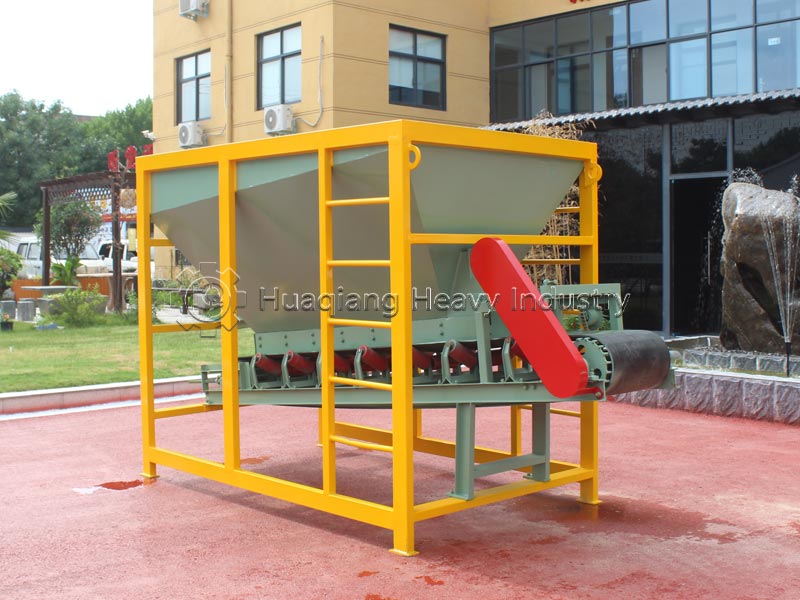
In the dynamic ecosystem of a fertilizer plant, the flow of raw materials is its lifeblood. While advanced granulators and automated packaging lines often capture attention, the journey of every granule begins at a much humbler station: the loader feeding hopper. This seemingly simple structure is, in fact, the strategic throat of the entire operation. It serves as the critical interface between the chaotic, batch-driven world of front-end logistics and the precise, continuous demand of automated processing, masterfully converting sporadic bulk delivery into a steady, controllable supply.
Core Advantages: The Art of Buffering, Stabilizing & Metering
The value of a well-designed loader feeding hopper lies in its multifaceted role as a buffer, a stabilizer, and the primary point of control for material introduction.
Unmatched Buffering Capacity & Flow Conversion
Its primary function is to decouple delivery from consumption. With a wide, open top and significant volume, it easily accepts rapid, high-volume dumps from wheel loaders or dump trucks. This creates a vital reservoir of material that smooths out the inherent intermittency of front-end loading, ensuring that downstream conveyor belts and crushers are never starved or violently overloaded. It transforms a “stop-and-go” delivery rhythm into a “continuous-flow” process feed.
Foundation for Process Stability & Equipment Protection
By providing a consistent, head of material to the discharge point (typically above a belt feeder or vibratory feeder), it enables precise, metered extraction. This stabilized feed is the bedrock for all subsequent processes. It protects sensitive equipment like chain crushers and semi-wet material crushers from the damaging shock loads of direct dumping, dramatically reducing wear, tear, and the risk of catastrophic jamming.
Operational Efficiency & Safety Enhancement
A properly engineered hopper, with optimal wall angles, reinforced liners, and vibration or air-cannon anti-bridging systems, guarantees first-in, first-out material flow. This prevents material arching and rat-holing, eliminating the dangerous and time-consuming need for manual rodding. It allows mobile equipment to unload quickly and return to other tasks, optimizing the overall site logistics and material handling efficiency.
Synergistic Role: The Central Hub of Material Intake
The loader feeding hopper is the first fixed point in the material journey, setting the stage for all that follows.
The Essential Partner for Mobile Equipment: It is the designated target for wheel loaders and dump trucks, providing a safe, efficient transfer point from yard to process line.
The Perfect Prelude to Precision Feeding: Positioned directly above a belt feeder or vibratory feeder, it supplies a consistent material column, allowing these feeders to perform their true function: exact, controllable metering to the next stage.
The Guardian of Primary Crushing: For lines processing raw materials like phosphate rock or recycled lumps, the hopper feeds a primary jaw crusher or impact chain crusher, ensuring a choked, steady feed that maximizes crushing efficiency and product uniformity.
The Blending Line Initiator: In compound fertilizer (BB fertilizer) plants, multiple hoppers arranged in a row—each holding a different raw material like urea, DAP, and potassium chloride—become the source for a weighing and blending system, where their controlled discharge is the first step to a perfect formula.
Evolution & Outlook: The Smart, Predictive Material Gateway
Modern hopper design is integrating intelligence to move from a passive vessel to an active process component.
Smart Level Monitoring & Inventory Management: Integration of radar or laser level sensors provides real-time, digital inventory data. This can be linked to plant management systems for automatic reorder triggers and predictive logistics planning.
Advanced Flow Aid & Condition Monitoring: Smart vibration systems that activate only when flow hesitation is detected, or internal cameras with AI analysis to monitor material characteristics and flag potential issues like unexpected moisture or foreign objects.
Modular & Hybrid Designs: Pre-fabricated, modular hoppers that can be quickly reconfigured or expanded. Designs that incorporate a preliminary grizzly screen at the top to scalp off oversized debris before material even enters the process stream.