
Organic Fertilizer Application Guide for Vegetables: Mastering Dosage and Timing
Fertilizer application is key to growing high-yield and high-quality vegetables. Organic fertilizers have a mild and long-lasting effect, providing nutrients and improving soil, making them ideal base fertilizers for vegetable cultivation. However, many growers are unsure about “how much, when, and how to use it.” This article uses common vegetables such as cucumbers, tomatoes, and lettuce as examples to explain the application methods of organic fertilizers.
Base Fertilizer: Laying the Foundation for a Bountiful Yield
Base fertilizer is applied to the soil before sowing or transplanting vegetables, accounting for 60%-80% of the total fertilizer used during the entire growth period. Organic fertilizers release nutrients slowly, making them ideal for application as a base fertilizer in one go.
Different vegetables have different nutrient requirements and base fertilizer application rates. Fruiting vegetables (cucumbers, tomatoes, eggplants, peppers) have long growing seasons and high yields, requiring the most fertilizer; the recommended base fertilizer application rate is 800-1200 kg per acre. Leafy vegetables (lettuce, cabbage, spinach) have short growing seasons and shallow root systems, requiring moderate amounts of fertilizer; the base fertilizer application rate is 500-800 kg per acre. Root vegetables (radishes, potatoes, onions) require well-drained soil; the base fertilizer application rate is 600-1000 kg per acre.

Application method: Spread organic fertilizer evenly on the soil surface, then till it into the soil to a depth of 15-20 cm, ensuring the fertilizer is thoroughly mixed with the topsoil. Base fertilizer should be applied 7-10 days before sowing or transplanting, allowing it to fully integrate with the soil and avoiding direct contact with seeds or roots.
Topdressing: Supplementing at key stages. Topdressing is applied during the vegetable’s growth period. While organic fertilizer can also be used as topdressing, its effect is slower, making it suitable for vegetables with long growth cycles, or for application in advance during key growth stages.
Cucumbers and tomatoes experience a significant increase in nutrient requirements after entering the flowering and fruiting stage. 20-30 days after transplanting, when the first ear of fruit has set, apply organic fertilizer in conjunction with tilling and furrowing, at a rate of 200-300 kg per acre. Cover with soil and water after application. When applying fertilizer, keep it 10-15 cm away from the plant roots to avoid burning them.
Leafy vegetables such as lettuce and spinach have short growing seasons and may not require additional fertilizer or only need one application if sufficient base fertilizer is available. Apply 100-150 kg of organic fertilizer per acre 15-20 days after transplanting to promote rapid leaf growth. Water promptly after application to help the nutrients dissolve and penetrate.
Root vegetables such as radishes and potatoes require increased fertilizer during the fleshy root or tuber enlargement period. Apply 200-250 kg of organic fertilizer per acre 30-40 days after sowing, combined with hilling, to promote the enlargement of the underground parts.
Application Methods and Precautions: The method of applying organic fertilizer directly affects its effectiveness. Broadcasting is suitable for base fertilizer or densely planted vegetables. Spread the fertilizer evenly on the surface and then till it into the soil. Furrow application is suitable for top dressing or vegetables with larger row spacing. Dig a furrow 10-15 cm deep between rows, apply the fertilizer, and cover with soil. Hole application is suitable for sown or transplanted vegetables. Dig a hole next to the plant and apply the fertilizer, being careful to keep it away from the roots.
Several points require special attention when applying organic fertilizer. Fully decomposed organic fertilizer must be used—undecomposed organic fertilizer will undergo secondary fermentation after being applied to the soil, producing high temperatures and organic acids, directly leading to root burn and seedling death. Combining base fertilizer with chemical fertilizer yields better results—organic fertilizer provides long-lasting nutrients, while chemical fertilizer provides fast-acting nutrients; the combination ensures both early growth and sustained vitality. Adjust the dosage according to soil conditions—sandy soils have poor fertilizer retention capacity, so apply small amounts frequently; heavy clay soils have strong fertilizer retention capacity, so the amount of base fertilizer can be appropriately increased.
The improvement of vegetable quality by organic fertilizer: Vegetable farmers who have long used organic fertilizer know that the same variety of vegetables grown with organic fertilizer are noticeably different. Cucumbers are crisp and refreshing, tomatoes are sweet and tangy, and lettuce is tender and juicy. This is because the organic matter and active substances in organic fertilizers promote the accumulation of sugars, amino acids, and flavor compounds in vegetables. At the same time, organic fertilizers improve soil aeration and drainage, leading to well-developed root systems, enhanced plant disease resistance, and a natural reduction in pesticide use.
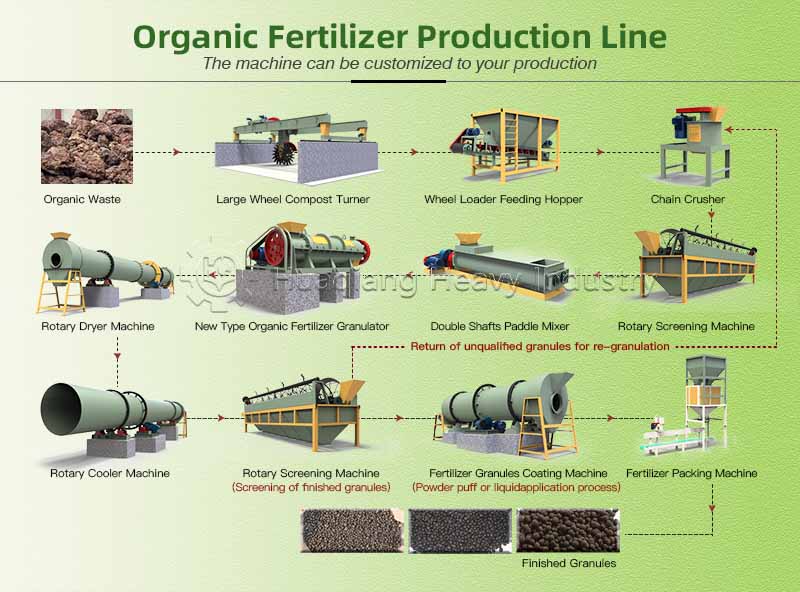
The exceptional quality of organically grown vegetables is directly linked to the production process of the fertilizer itself. Producing high-quality organic fertilizer, suitable for use as a base or top dressing, relies on a complete bio organic fertilizer production line. The journey begins with organic fertilizer raw material processing equipment. A half-wet material crusher machine is essential for breaking down fermented materials like manure or plant waste into a uniform, fine powder. This processed material is then ready for the organic fertilizer production granulation stage. Within the organic fertilizer granulator series, a dedicated organic fertilizer disc granulation production line is a classic choice for producing the uniform, spherical, and easy-to-apply granules that gardeners prefer. This entire suite of organic fertilizer production equipment ensures that the final product is not only rich in organic matter and beneficial microbes but also physically stable and convenient to use. When this high-quality, fully decomposed organic fertilizer is applied to vegetable beds—whether as a base fertilizer worked into the soil or as a top dressing during key growth stages—it provides the sustained, balanced nutrition that leads to the crisp cucumbers, sweet tomatoes, and tender lettuce that discerning growers and consumers value. The investment in proper organic fertilizer production is, in turn, an investment in the health of the soil and the superior quality of the harvest.
Using organic fertilizers effectively is not just about “feeding” your vegetables, but also about “nourishing” the soil. When you harvest crop after crop of exceptionally high-quality vegetables, you’ll understand how worthwhile this investment is.