
Industrial-Grade Wet-Process Phosphoric Acid: Optimizing 5 Core Steps to Improve Phosphorus Recovery by 15%
Wet-process phosphoric acid production is a core process that involves decomposing phosphate rock with sulfuric acid, followed by filtration and concentration to enrich phosphorus. By precisely controlling the reaction temperature and the ratio of sulfuric acid to phosphate rock, companies can significantly improve the recovery rate of phosphorus pentoxide (P₂O₅) and effectively reduce the cost of subsequent impurity removal.
Wet-Process Phosphoric Acid Process Breakdown
The production of wet-process phosphoric acid is a rigorous chemical thermodynamic process, typically following five key steps:
- Phosphate Rock Pretreatment and Fine Grinding
The process begins with grinding the phosphate rock to a specific mesh size (usually 80-100 mesh). The more uniform the particle size, the larger the contact area during subsequent sulfuric acid leaching, and the faster the chemical reaction kinetics.
- Extraction Reaction (Sulfuric Acid Leaching)
In the extraction tank, phosphate rock powder is mixed with dilute sulfuric acid and a certain proportion of phosphoric acid backflow. The key to this stage is maintaining the temperature of the reaction tank between 75°C and 80°C. Precise temperature control induces calcium sulfate to crystallize as gypsum (dihydrate) or hemihydrate gypsum (hemihydrate), which is a decisive factor for the smoothness of subsequent solid-liquid separation.
- Solid-Liquid Filtration and Separation
This is the most critical step determining the recovery rate. A rotary disc filter or vacuum belt filter separates the generated dilute phosphoric acid solution from the phosphogypsum residue. To ensure the purity of the phosphoric acid product, a highly efficient washing water system must be used at this stage.
- Dilute Phosphoric Acid Concentration
The phosphoric acid concentration produced by the reaction is generally around 20%-30%, which needs to be concentrated to a commercial-grade concentration of 45%-54% using a multi-effect vacuum evaporator. During this process, corrosion from fluorides must be prevented, and scale buildup on the heat exchange surfaces of the evaporator must be cleaned regularly.
- Purification and Advanced Treatment
Depending on the end use (fertilizer grade or industrial grade), the phosphoric acid needs to undergo defluorination, arsenic removal, and heavy metal removal treatment.
Key Process Monitoring Parameters List
Sulfuric Acid Concentration Ratio: The free sulfuric acid content in the reaction tank should be precisely controlled between 1.5% and 2.5% to avoid side reactions.
Slurry Liquid-to-Solid Ratio: It is recommended to control it between 2.5:1 and 3:1 to ensure uniform material flow.
Reactor Residence Time: The total residence time of the material in the extraction system should be maintained at 4-8 hours to ensure sufficient leaching.
Vacuum Degree Index: The vacuum degree of the concentration system should be maintained above -0.08 MPa to achieve efficient low-temperature evaporation.
Production Optimization and Technical Risk Warning
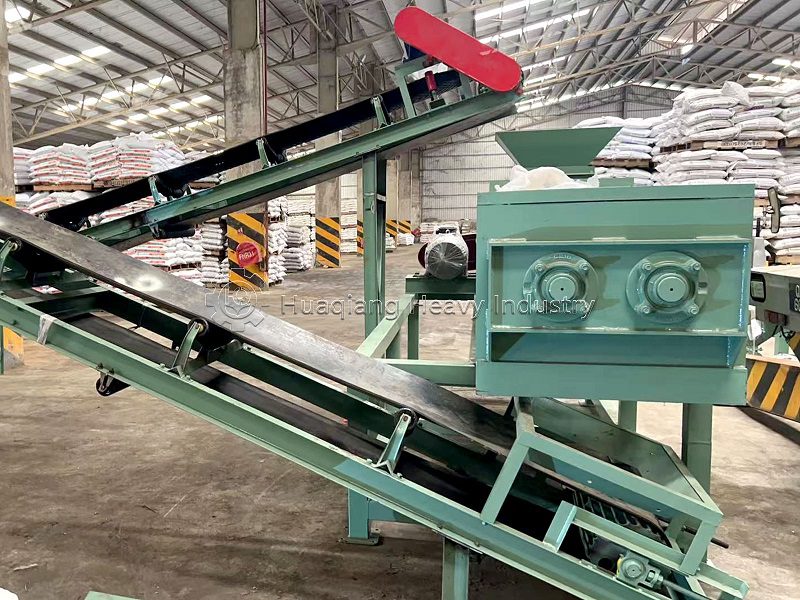
In wet-process phosphoric acid production, the treatment of phosphogypsum often results in phosphorus loss. It is recommended to introduce multi-stage countercurrent washing technology, which will reduce the loss of phosphorus residue in the filter residue. If fluctuations in phosphoric acid quality affect subsequent granulation, it is recommended to adjust the refining parameters and, in conjunction with the equipment data provided in the high-pressure roller press granulator specification, ensure that the acidity of phosphoric acid does not corrode the inner wall of the equipment during mixed material processing, while maintaining high physical compressive strength of the granules.
From Phosphoric Acid Precision to Fertilizer Value Chain Integration
The wet-process phosphoric acid plant is not merely a chemical precursor facility—it is the upstream quality anchor for the entire downstream fertilizer manufacturing ecosystem. Phosphoric acid purity, defluorination completeness, and heavy metal thresholds directly determine whether the acid can be safely incorporated into high-value compound fertilizers or organic formulations without corroding equipment or contaminating soil. When this refined acid flows into modern organic fertilizer production equipment, the integration demands begin at raw material intake: a precision half-wet material crusher machine homogenizes composted substrates and mineral amendments to ≤10mm fineness, ensuring uniform acid distribution during blending. For granulation, selecting the appropriate organic fertilizer granulator series is critical—a new type organic fertilizer granulator engineered for low-corrosion materials can handle acidified organic-mineral blends without premature wear, while an organic fertilizer disc granulation production line offers spherical precision for slow-release formulations where visual uniformity commands market premium. The entire organic fertilizer raw material processing equipment train, from phosphate rock grinding through phosphoric acid refining to final pelletizing, must be validated as a unified corrosion-management and nutrient-integrity system. Manufacturers that master this end-to-end control—from 80-mesh rock to sealed bag—transform phosphoric acid production from a commodity chemical process into the quality foundation of premium, regulation-compliant fertilizer portfolios.
Frequently Asked Questions (FAQ)
How to effectively control scaling in wet-process phosphoric acid production?
Scale is mainly caused by the deposition of supersaturated calcium sulfate crystals on the surface of heat exchangers. Controlling the stirring efficiency of the extraction tank and maintaining a strict supersaturation balance can significantly reduce the scaling rate.
Compared to the dihydrate process, which process is more suitable for small and medium-sized enterprises?
The dihydrate process is technically mature, offers greater operational flexibility, and is suitable for most basic fertilizer producers; while the semi-hydrate process, although capable of directly producing high-concentration phosphoric acid, has extremely high requirements for equipment materials and a narrow process window.
How to evaluate the reactivity of phosphate rock?
This is usually determined by measuring the carbonate content in the ore. Higher carbonate content results in greater sulfuric acid consumption and is more prone to foaming, affecting reaction equilibrium, necessitating an increase in the dosage of defoamer.