
Beyond Organic Fertilizer: Cross-Industry Applications of Half-Wet Material Crusher
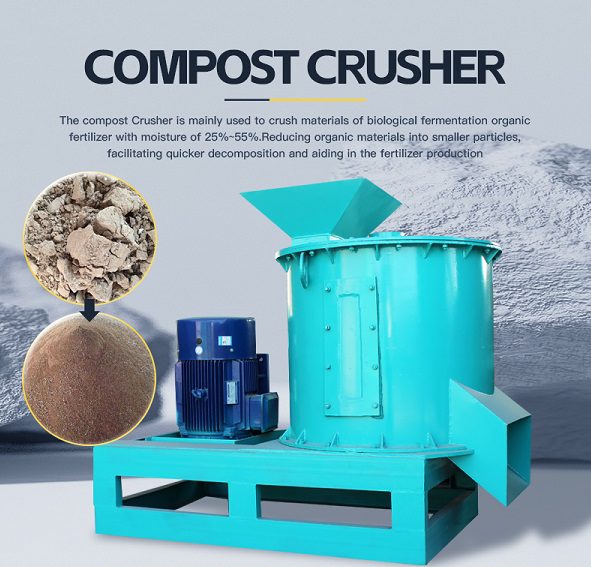
Many people perceive half-wet material crushers as “exclusively for organic fertilizer production.” However, this equipment, whose core advantage lies in efficiently processing high-moisture materials, has applications far beyond that—from the resource utilization of urban wet waste to the conversion of food processing waste into feed, and the recycling of high-moisture chemical waste, the half-wet material crusher, with its unique “one machine, multiple uses” value, is becoming a universal tool for the pretreatment of high-moisture waste in multiple industries. This article will take you into four core areas to explore the cross-industry application capabilities of this equipment.
Environmental Protection: A Powerful Tool for Urban Wet Waste Treatment
With the nationwide promotion of garbage sorting, the treatment of wet waste such as kitchen waste and fruit and vegetable waste has become a pain point in urban management. This type of waste has a moisture content as high as 70%-90%, is bulky, difficult to transport, and easily perishable; direct landfill or incineration both face environmental pressures.
half-wet material crushers are playing a significant role in environmental protection—they can pulverize kitchen waste, vegetable scraps from farmers’ markets, and garden waste to a uniform fineness in a single pass. The pulverized material has a smaller particle size and a larger specific surface area, allowing it to be directly fed into composting systems or anaerobic digesters to produce biogas, thus realizing the resource utilization of wet waste.
For community waste treatment stations or small processing centers, a half-wet material crusher with a capacity of 1-3 tons per hour, combined with simple composting facilities, can achieve on-site disposal of up to 10 tons of wet waste per day, significantly reducing transportation costs and environmental risks.
Food Industry: The Path to Resource Utilization of Processing Waste
Fruit peels, fruit pomace, soybean residue, distiller’s grains, vinegar residue, etc., generated during food processing, typically have high moisture content and are prone to spoilage. In the past, they were mostly treated as waste, wasting resources and increasing the environmental burden. The introduction of half-wet material crushers has given these “waste materials” a new lease on life:
Fruit pomace treatment: Apple and citrus pomace from juice factories, after crushing, can be used as high-quality feed for ruminants, or further processed into pectin and dietary fiber. The crushed pomace has a uniform particle size, facilitating subsequent drying or direct mixing with other feeds.
Soybean/potato residue: Wet soybean and potato residue from tofu and starch factories often have a moisture content of over 80%, making them highly susceptible to rancidity. After being broken up by a half-wet material crusher, it can be directly mixed with bran and corn flour to produce livestock and poultry feed, without the need for pre-drying, thus preserving the protein and starch nutrients in the raw materials.
Distillery lees treatment: Wet distillery lees from breweries, after crushing, can be used as raw material for organic fertilizer or as a substrate for edible fungi cultivation, realizing a circular economy model of “brewing-waste-planting”.
III. Other Agricultural Applications: Straw Returning to the Field and Feed Processing
Besides being used as pretreatment equipment for organic fertilizer raw materials, half-wet material crushers have many other applications in agriculture:
Wet Straw Returning to the Field: After rain, straw becomes soft and brittle, making it difficult to decompose directly. Chopping wet straw into 3-5 cm pieces using a half-wet material crusher before returning it to the field significantly accelerates decomposition and improves soil organic matter content.
Silage Processing: Fresh forage and corn stalks, after being crushed, are easier to compact and deoxygenate, resulting in better silage fermentation and improved feed quality. The crushing process does not generate high temperatures, avoiding nutrient loss.
Potato Feed: Potatoes and sweet potatoes of poor quality can be crushed and used as energy feed for pigs and cattle. The crushed potato pulp is easy to mix with other raw materials, improving palatability.
Chemical Industry: Recycling and Treatment of High-Moisture Waste
Chemical production often generates high-moisture, paste-like or lumpy waste, such as dye filter cake, rubber waste, and catalyst residue. These materials have high moisture content and high viscosity, posing a pollution hazard if directly discharged, and presenting challenges in pretreatment for recycling.
half-wet material crushers can effectively handle these high-moisture chemical wastes, crushing them to a loose state for easier subsequent drying, recycling, or reprocessing. For small and medium-sized chemical enterprises, a single machine can address the pretreatment needs of multiple wastes, avoiding environmental risks caused by waste accumulation.
Cross-Industry Application Tips: Simple Modifications, Multi-Purpose Use
The half-wet material crusher’s cross-industry application is due to its simple structure and flexible configuration:
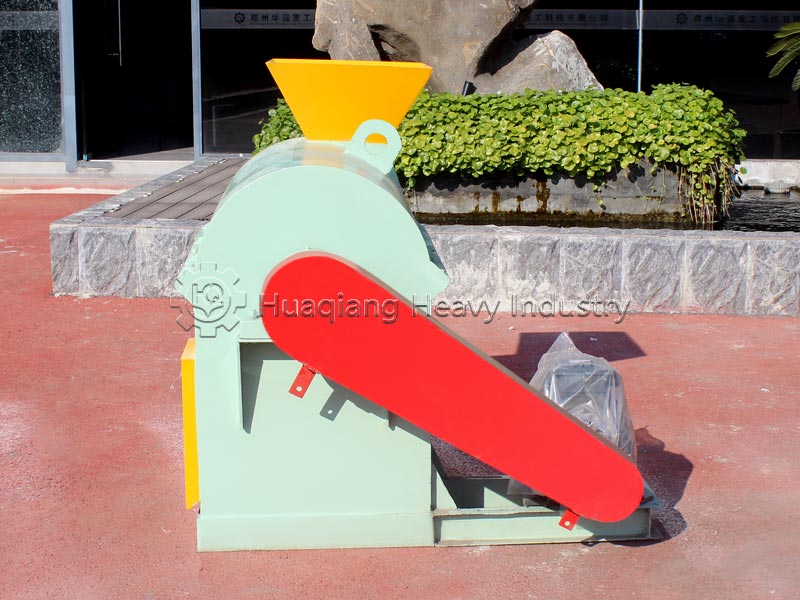
Changing Crushing Elements: Blade or hammer configurations can be quickly changed to suit different material characteristics—cutting blades for fibrous materials, impact hammers for brittle materials, and anti-winding designs for sticky materials.
Adjusting the Screen/Gap: Although half-wet material crushers often employ a screenless design, the output fineness can be controlled within a certain range by adjusting the rotor speed and blade gap to meet the needs of different industries.
Easy Cleaning and Maintenance: The machine casing can be quickly opened for thorough cleaning when switching between different materials, avoiding cross-contamination.
Conclusion: A Versatile Choice for High-Moisture Waste Treatment
From wet waste at environmental protection stations to production waste from food factories; from wet straw on farms to high-moisture residues from chemical plants—the half-wet material crusher, with its core strength in handling high-moisture materials, is becoming the first step in the resource recovery process for waste in an increasing number of industries. With the popularization of the circular economy concept and the increasing environmental protection requirements, the application prospects of this equipment will be even broader. If you are struggling with the pretreatment of some high-moisture waste, you might want to learn about the half-wet material crusher—it may be the “universal tool” you need.
The half-wet material crusher machine, as explored in its cross-industry applications, is a prime example of versatile organic fertilizer raw material processing equipment. Its ability to efficiently reduce the particle size of diverse high-moisture feedstocks—from kitchen waste to fruit pomace—makes it an invaluable first step in any organic fertilizer manufacturing system. This uniformly crushed material, with its ideal fineness, is then perfectly prepared for the subsequent stages of a dedicated organic fertilizer production equipment line. For producing premium spherical granules, it serves as the ideal feed for an organic fertilizer disc granulation production line. As an innovative, space-saving alternative, a new type two in one organic fertilizer granulator can integrate the final crushing and initial granulation, offering a streamlined solution for processors handling these diverse, wet materials. Whether integrated into a complex municipal waste-to-fertilizer system or a simple farm-based operation, the half-wet material crusher machine acts as the critical bridge, transforming problematic wet wastes into a consistent, uniform feedstock that can be reliably processed by the rest of the organic fertilizer manufacturing system into a valuable agricultural product.