
Equipment Introduction
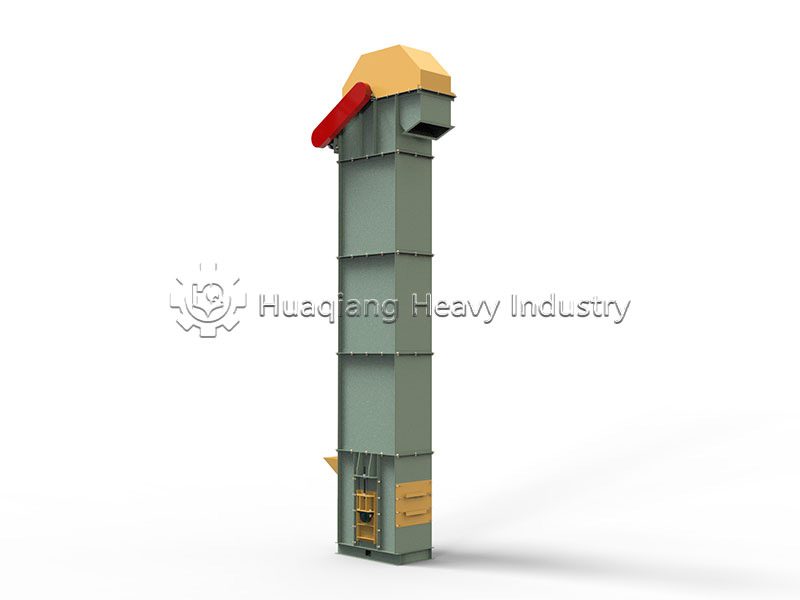
A bucket elevator is a high-efficiency conveying device that uses a series of buckets mounted on an endless traction component (belt or chain) to continuously and vertically lift bulk materials from a low position to a high position. Its core advantages lie in its compact structure, small footprint, large lifting height, good sealing, and reliable operation. It is widely used in industries such as fertilizer, cement, grain, mining, and chemicals.
The entire machine typically operates within a fully enclosed casing, effectively suppressing dust leakage and meeting environmental protection requirements. Advanced design principles and manufacturing methods ensure high reliability, with a mean time between failures (MTBF) exceeding 20,000 hours.
Equipment Structure and Components
The bucket elevator mainly consists of the following core components:
- Traction Components and Buckets
1) Belt (TD type): Uses rubber belts or steel wire rope core belts, suitable for light, non-high-temperature materials, with smooth operation and low noise.
2) Circular Link Chain (TH type): Uses high-quality alloy steel forged link chains, suitable for moderately abrasive materials, with a temperature resistance up to 250°C.
3) Plate Chain (NE type): Uses high-strength alloy steel plate chains, with high load-bearing capacity and strong wear resistance, suitable for heavy-duty and high-temperature conditions (up to 400°C).
4) Buckets: Divided by depth into shallow buckets (suitable for powdery, easily agglomerated materials) and deep buckets (suitable for granular, free-flowing materials), fixed to the traction components by bolts.
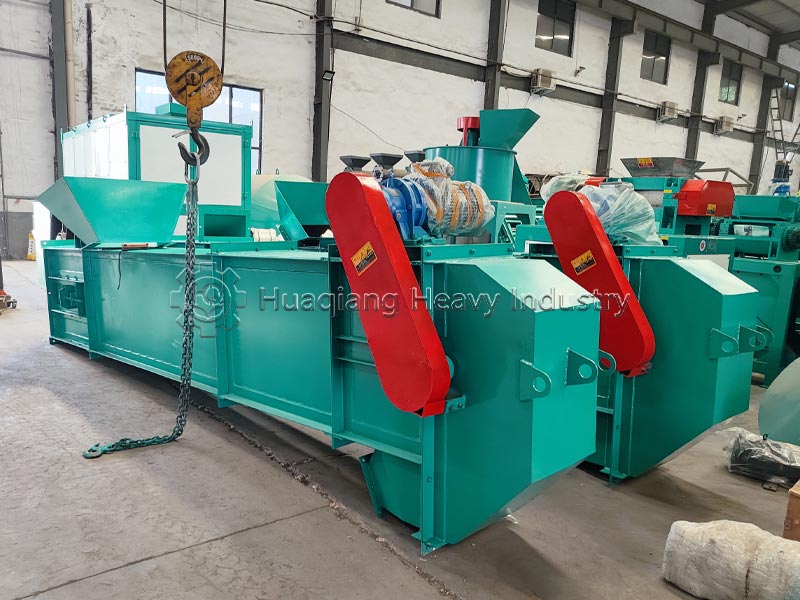
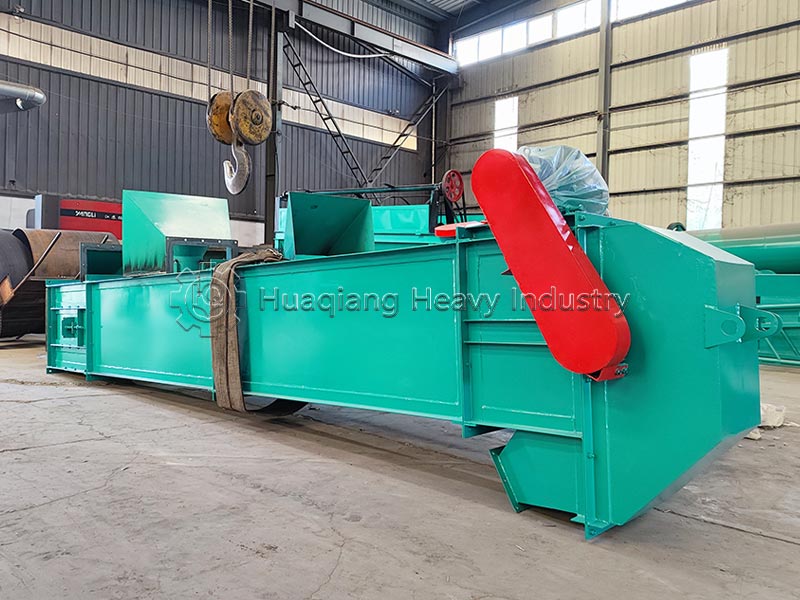
- Upper Section (Head Unit)
Includes drive rollers/sprockets, discharge port, bearing seats, drive unit, and backstop brake. The drive unit typically consists of a motor and a reducer, and the backstop prevents material backflow in case of sudden shutdown.
- Lower Section (Base)
Includes the tail pulley/tensioning roller, feed inlet, and tensioning device. The lower section typically uses a counterweight box for constant force automatic tensioning or a screw tensioning system to maintain constant tension in the traction components, prevent slippage, and provide cushioning protection in case of hopper jamming.
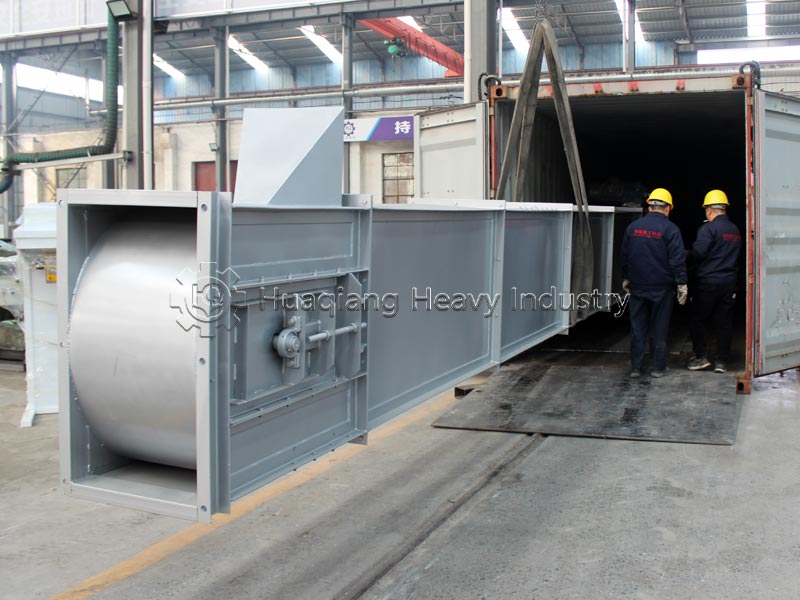
- Intermediate Casing
Composed of standard sections, this section uses angle steel and steel plates welded into a fully enclosed structure. It features inspection doors and observation windows to prevent dust from escaping and facilitate maintenance.
Applicable Raw Materials (Material Range for Conveyor)
- Mainstream Materials in the Fertilizer Industry (Core Compatibility)
1) Powdered Raw Materials: Fermented manure powder, humic acid, bentonite, talc coating powder, chemical fertilizer powder;
2) Granular Materials: Granulated organic fertilizer, compound fertilizer, BB fertilizer, cooled finished fertilizer, coated granules;
3) Lumpy Raw Materials: Crushed straw, mushroom residue, oilseed cake, small pieces of fermented compost;
- Cross-Industry Expansion Materials
Grains, feed pellets, cement, coal powder, ore, chemical powders, dried sludge granules;
- Prohibited Materials
Extremely poor flowability and highly sticky mud lumps, >50mm extra-large hard stones, flammable and explosive ultrafine dust (requires explosion-proof customized models), highly corrosive acidic liquid materials.
Working Principle of the Equipment
The working principle of a bucket elevator can be summarized as a continuous cycle of “loading—lifting—unloading—returning”:
- Loading: Material enters the machine base from the bottom inlet and is loaded into the buckets via either a flow-in (material flows directly into the buckets) or a scoop-out (the buckets scoop material from the pile) method.
- Lifting: The motor drives the head wheel to rotate, and the traction component drives the buckets to rise uniformly along a vertical or near-vertical track. A fully enclosed casing prevents dust leakage and guides the material to move stably.
- Unloading: When the buckets reach the top and pass the head wheel, depending on the model, the material is unloaded in the following ways:
1) Centrifugal unloading (high speed): Using centrifugal force, the material is thrown into the unloading chute. Suitable for dry, free-flowing powders and granules.
2) Gravity unloading (low speed): The buckets flip at the top, and the material slides down naturally by gravity. Suitable for wet, fragile, or highly abrasive materials.
3) Hybrid unloading: A method between the two, balancing efficiency and material protection. 4. Return: The empty hopper after unloading descends along the other side of the machine casing, returns to the base for reloading, forming an endless cycle.
Application Scope
- Fertilizer Production Line (Core Supporting Equipment)
1) Organic Fertilizer Production Line: Elevates and crushes raw materials, ferments semi-finished products, granulates wet granules, and dries and cools finished fertilizer;
2) Compound Fertilizer/Mixed Fertilizer Production Line: Feeds raw materials before granulation, feeds into the dryer, transfers materials to the cooler, and stores finished products in the silo;
3) Coating Section: Cooled fertilizer is vertically fed into the coating machine, and fine powder is recycled and re-elevated for re-granulation;
4) Small-scale Livestock/Cooperative Fertilizer Production Workshop: Small-scale TD160/TH200 lifts raw materials and finished products;
- Other Industrial Fields: Grain processing plants, feed mills, cement and building materials, mining crushing, chemical powder processing, and sludge resource utilization plants.
Target Customers for this Equipment:
- Organic Fertilizer and Fertilizer Production Enterprises: Bucket elevators are vertical conveying equipment used throughout the entire fertilizer production line. They are widely applicable to organic fertilizer, compound fertilizer, and BB fertilizer production lines with an annual output of 10,000 to 500,000 tons. Suitable for various fertilizer production enterprises that require vertical material transport between different equipment.
- Grain Processing and Storage Enterprises: Grain processing plants, flour mills, grain depots, and other locations requiring vertical transport of grains, flour, and other materials.
- Feed Processing Enterprises: Feed mills in production scenarios requiring vertical transport of various powdery and granular raw materials and finished products.
- Mining and Building Materials Enterprises: Mines, cement plants, building materials plants, and other locations requiring the transport of ores, coal, cement, sand, gravel, and other materials.
- Chemical and Power Enterprises: Chemical plants, power plants, and other enterprises requiring the transport of chemical raw materials, coal, and other bulk materials. 6. Selection Recommendations
1) For powdery, granular, and low-abrasive materials: TD belt bucket elevator is preferred.
2) For lumpy, abrasive, and high-temperature materials (≤250℃): NE plate chain or TH ring chain bucket elevator is preferred.
3) For high conveying capacity requirements (>100m³/h): NE series is preferred.
4) For medium to small conveying capacity and medium lifting height: TH series is preferred.
5) For organic fertilizer production lines: Specialized models equipped with anti-clogging and vibration damping devices are preferred.
Common Faults, Causes, and Standardized Solutions
| Fault Phenomenon | Possible Cause | Solution |
|---|---|---|
| Bucket belt slipping | Insufficient bucket‑belt tension; excessive operating resistance; too smooth surface of head pulley and bucket belt leading to reduced friction; inflexible rotation of head and tail pulleys | Adjust tension device to tighten bucket belt, readjust if stroke is insufficient; reduce feeding rate for steady feeding; increase surface friction of head pulley and bucket belt; clean head and tail pulley bearings, add grease or replace bearings |
| Bucket belt deviation | Misaligned bucket‑belt joint (edges not in straight line); large frame verticality error; non‑parallel head and tail pulleys; severe wear of head and tail pulleys; aging bucket belt | Correct bucket‑belt joint to align edges; readjust parallelism and verticality of head & tail pulleys (vertical tolerance ≤5.2mm per 1000mm); repair or replace worn pulleys timely; replace aged bucket belt |
| Bucket belt tearing | Caused by belt deviation and derailment; sharp foreign objects mixed into materials lead to tearing | Fully inspect and eliminate deviation & derailment causes; install wire mesh or iron remover at feeding inlet to block large hard foreign bodies |
| Excessive return material | Too high bucket running speed causes premature discharging; improperly‑installed discharge baffle at head outlet; too large gap between bucket and discharge baffle | Lower bucket speed according to materials (dry powder 1‑2m/s, lump material 0.4‑0.6m/s, wet material 0.6‑0.8m/s); adjust baffle mounting position; set gap between bucket and baffle to 10‑20mm |
| Bucket falling off | Too‑low feeding inlet position; insufficient bucket‑belt strength; residual materials inside casing cause impact during startup | Raise feeding inlet above tail pulley centerline; select higher‑strength bucket‑belt material; clean residual materials inside casing before startup |
| Abnormal noise | Poor sealing & lubrication for head‑tail pulley bearings resulting in bearing damage; abnormal coupling; collision between casing bottom plate and buckets | Check bearing sealing and lubrication, replenish grease or replace bearings; inspect coupling and remove faults; adjust casing tensioner for proper belt tension |
| Insufficient output | Buckets are not fully filled; uneven feeding | Adjust feeding volume and feeding position for sufficient bucket filling; check position and gap of discharge baffle, reduce return material and improve discharging efficiency |
Standard Operating Procedures and Full-Cycle Maintenance Methods
(I) Standard Start-up and Shutdown Procedures
Start-up Sequence
- Pre-start checks: Clean any clumps of material from the machine base; check belt/chain tension, bucket bolt tightness, backstop, protective devices, and grounding lines;
- Start the elevator under no-load and run it for 3–5 minutes, observing for any deviation, abnormal noise, or bucket jamming;
- Start the front-end feeding equipment, feeding material evenly, avoiding large-scale feeding at once which could cause blockage;
- Observe the amount of material returned from the machine head in real time; adjust the feeding speed promptly if the return is excessive.
Shutdown Sequence
- First, stop the front-end feeding equipment and wait until all material inside the machine has been conveyed;
- Turn off the elevator main motor;
- Open the machine base inspection door, clean any remaining clumps of fertilizer, and lubricate the tensioner and bearing parts.
(II) Safe Operating Procedures
- When the equipment is running, do not open the maintenance door, and personnel must not approach the machine head or the area under the drum.
- Wear insulated gloves when performing circuit maintenance. Do not start the machine if it lacks a reliable grounding wire.
- When handling high-dust fertilizers, ensure the workshop has adequate ventilation and dust removal facilities. For explosion-proof models, open flames are strictly prohibited.
- It is strictly forbidden to put hands or tools inside the running drum.
- Power must be disconnected and a sign posted before stopping the machine for maintenance to prevent accidental restarting.
(III) Graded Lubrication and Maintenance Standards
- Head and base bearings: Add lubricating grease every 7 days;
- Chain, head/tail sprocket: Apply wear-resistant lubricating oil every 3 days for TH/NE models;
- Reducer: Add gear oil to new machines, replace all oil every 4 months;
- Tensioner screw, backstop: Apply anti-rust grease monthly;
(IV) List of Wear Parts (Regular Inspection and Replacement)
Belt/chain, hopper, hopper fixing bolts, head/tail sprocket, bearings, gaskets, reducer oil seals, backstop brake pads.
Application of the Equipment in the Production Line
In fertilizer (organic fertilizer/compound fertilizer) production lines, bucket elevators are the vertical arteries connecting various processes, primarily performing the following functions:
- Raw Material Feeding: Lifting nitrogen, phosphorus, and potassium raw materials, organic fertilizer powder, etc., piled on the ground to the mixing silo or above the mixer.
- Inter-process Transfer: Connecting equipment at different heights, such as crusher → screening machine, screening machine → granulator, granulator → dryer, cooler → coating machine, etc., to achieve automated continuous production.
- Finished Product Feeding: Lifting dried and cooled finished granules to the finished product silo, or directly feeding them into the packaging machine hopper.
- Return Material Circulation: Lifting unqualified granules from screening back to the front of the granulator, achieving a closed-loop circulation.
Compared to belt conveyors, bucket elevators require only 2-3 square meters of floor space in the workshop to complete high-altitude vertical conveying, making them particularly suitable for fertilizer workshops with limited space.
Analysis of the advantages and disadvantages of the equipment
| Classification | Item | Specific Description |
|---|---|---|
| Advantages | Small floor space | Vertical lifting structure with compact overall dimension on cross‑section |
| Large lifting height | Lifting height can reach 40‑50 meters with strong adaptability | |
| Large conveying capacity | Max. capacity of NE series can reach 800m³/h | |
| Good sealing performance | Operates inside closed casing to effectively prevent dust escape | |
| Compact structure & stable operation | Modular design for easy maintenance | |
| Wide range of applicable materials | Suitable for nearly all bulk materials including powder, granule and lump materials | |
| Adjustable conveying speed | Flexible speed adjustment according to throughput | |
| Reliable operation | Gravity automatic tensioner keeps constant belt tension and avoids slipping | |
| Disadvantages | Sensitive to over‑loading | Over‑loading will cause bucket‑belt slipping |
| Temperature limit for belt | Ordinary belt is only applicable for materials ≤60℃ | |
| Large chain‑type wear | Heavy wear between chain links, increasing maintenance frequency | |
| Not suitable for low‑height workshops | Its advantages can only be reflected with certain lifting height | |
| Sensitive to foreign objects | Mixed large hard foreign objects may lead to bucket‑belt damage or bucket falling‑off | |
| Requiring regular maintenance | Vulnerable parts such as buckets, traction components and bearings need regular inspection and replacement |
Have Any Problem? Please, Contact
Integrity
Adhere to honesty and trustworthiness, be responsible to customers, employees, partners, and society, and establish long-term trust relationships.
Win win
Establish win-win relationships with all stakeholders such as customers, suppliers, and employees to share the fruits of enterprise development.