
Choosing the Right Organic Fertilizer Granulator : A Crucial Step in Organic Fertilizer Production
In organic fertilizer production lines, the granulation process is a core step determining the product’s marketability. However, faced with a wide variety of granulation equipment on the market, many companies often fall into the trap of “selection errors”: either insufficient particle strength, low forming rate, or excessive energy consumption leading to soaring costs per ton. The three main types of granulators—roller, disc, and drum—each have their irreplaceable suitable application scenarios. Scientific selection not only improves product quality but also significantly enhances the return on investment for the entire production line.
Improper selection of a granulator can directly affect the quality of the finished product and production costs. Using a disc granulator to process dry materials with a moisture content of less than 10% can result in a dust rate as high as 30% and produce loose and brittle particles.
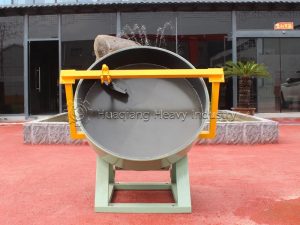
The disc granulator machine uses a tilted disc for granulation. Material rotates within the disc, receiving moisture or binders through atomizing nozzles, gradually agglomerating into spheres. Its core advantage lies in its excellent adaptability to wet materials (moisture content 20%-25%), with particle size adjustable within the range of 1-5mm, making it particularly suitable for small- to medium-capacity organic-inorganic compound fertilizer production.
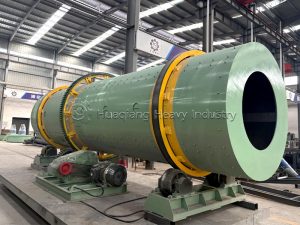
Rotary drum granulators, belonging to the category of rotary drum granulators, are the preferred choice for large-scale continuous production. Materials are propelled forward within the rotating drum, simultaneously conditioning with steam or water to form a material curtain, agglomerating into granules. Their biggest advantage lies in a single-machine capacity of 10-20 tons/hour, and they can be directly linked with drying and cooling equipment to form an assembly line operation. However, they require a boiler or other heat source, resulting in relatively high investment.
The primary basis for selection is the characteristics of the raw materials. For dry powder materials with a moisture content below 15% and low fiber content, such as extruded ammonium sulfate and extruded potassium chloride, the double roller press granulator is the best choice—no drying process is required, the granules have high hardness, and they are not prone to pulverization during storage and transportation. For organic fertilizers or organic-inorganic compound fertilizers with a post-fermentation moisture content of 20%-25%, the disc granulator machine has significant advantages—it can fully utilize the material’s own moisture, precisely control particle size through atomized water replenishment, and the “scraper-edge material recovery” design of the disc effectively reduces the return rate.
For raw materials with a fiber content higher than 20%, such as organic fertilizer made from Chinese medicinal herb residue, a rotary drum granulator is more suitable—its long drum and extended material residence time help the fibers and powder bind more effectively. Production capacity is also crucial: for daily production below 50 tons, a disc granulator supplemented with a flat die pelleting machine is cost-effective and allows for quick model changes; for daily production above 50 tons, a rotary drum granulator combined with a drying and screening system offers the highest efficiency.
Pelletizer selection also needs to consider the linkage between upstream and downstream equipment. After fertilizer granules compaction, the granules need to be screened—roller mills produce high-strength granules, but careful matching of screen aperture is necessary; disc mills produce granules with higher moisture content, so a low-temperature, high-volume dryer should be prioritized to avoid organic matter loss due to high temperatures; rotary drum mills have a large output volume, so a sufficiently wide vibrating screen should be configured to prevent screening bottlenecks.
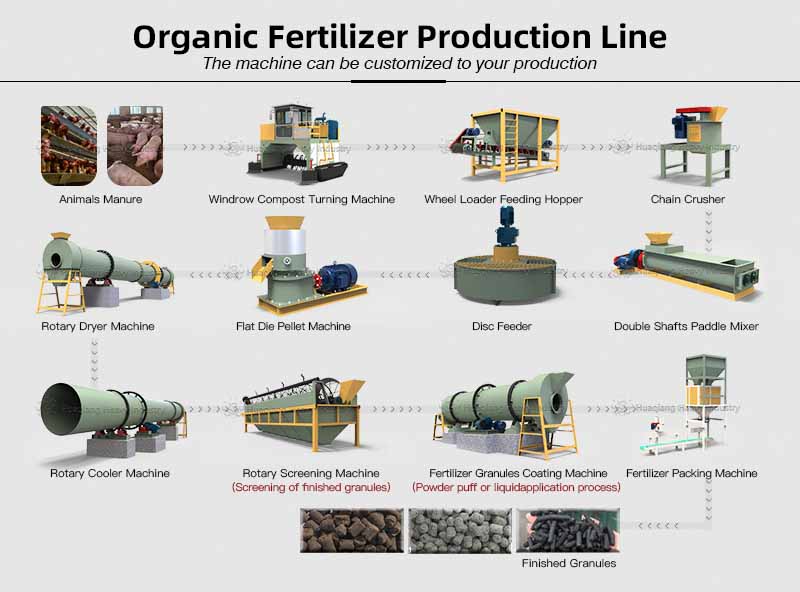
Correct selection ensures that every investment generates value, making organic fertilizer granules a “hard currency” in the market.
The granulator selection guide underscores the need for a holistic view, where the chosen machine is just one component of a complete organic fertilizer manufacturing system. The success of organic fertilizer production granulation hinges on the seamless integration of every stage, beginning with proper raw material preparation. This is where specialized organic fertilizer raw material processing equipment like a half-wet material crusher machine proves invaluable, preparing high-moisture compost to the ideal consistency. The prepared material then enters the granulation phase, where the organic fertilizer granulator series offers distinct technologies. For producing premium spherical granules, a dedicated organic fertilizer disc granulation production line is a classic and effective choice, with the disc granulator machine at its core. As an innovative, space-efficient alternative, a new type two in one organic fertilizer granulator can combine the final crushing and initial granulation, streamlining the process flow. The selection of the right organic fertilizer production equipment—from the initial crusher to the final granulator—must be based on a deep understanding of the raw material’s characteristics (moisture, fiber content) and the desired product specifications, ensuring that every piece of equipment works in harmony to transform variable organic waste into a consistent, high-value granular product.