
Equipment Overview
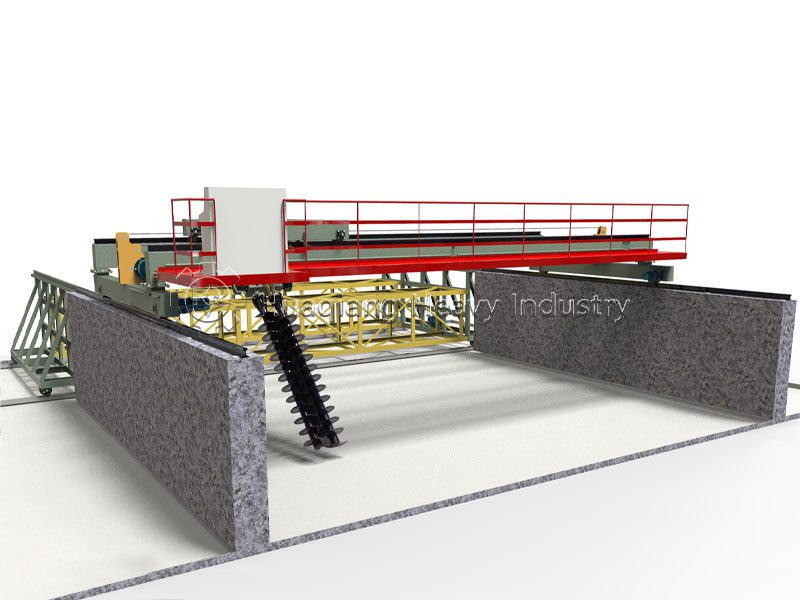
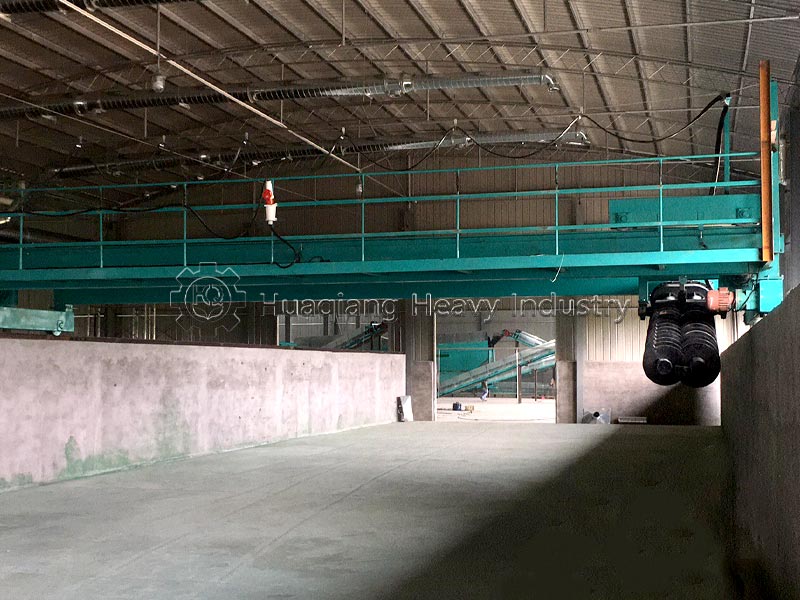
The Double Screws Compost Turning Machine, also known as a double-screw trough compost turner or double-screw turning machine, is an improved and upgraded version of the trough compost turner. This equipment uses two parallel, counter-rotating spiral turning shafts as its core working components, forming a “dual-core drive” deep oxygen supply mode, specifically designed for aerobic fermentation of organic waste.
The equipment is mainly used for fermenting and turning organic waste such as livestock and poultry manure, sludge, sugar mill filter mud, pomace, and straw sawdust. It is widely used in organic fertilizer plants, compound fertilizer plants, sludge and waste treatment plants, horticultural farms, and mushroom cultivation plants for fermentation, composting, and moisture removal. Suitable for aerobic fermentation, it can be used in conjunction with solar fermentation chambers, fermentation tanks, and transfer machines. When used with a transfer machine, it can achieve multi-tank functionality. The accompanying fermentation tanks can discharge continuously or in batches, offering high efficiency, stable operation, durability, and uniform turning.
Equipment Structure and Components
The double-screws compost turner mainly consists of the following core components:
1. Double-screws Turning Device (Core Working Component)
The core working component of the equipment is two sets of symmetrically arranged spiral augers (spiral shafts). Spiral blades and material-feeding teeth are welded onto the spiral shafts. The blades employ a variable pitch design—a small pitch at the feed end increases the pushing density, while a large pitch at the discharge end promotes material discharge and effectively prevents blockage. The spiral blades and main shaft are typically made of thick-walled seamless steel pipes and high-chromium alloy steel castings, with surfaces treated by supersonic arc spraying or wear-resistant welding, achieving a hardness of HRC60 or higher. The two spiral shafts rotate relative to each other (in opposite directions) driven by a hydraulic motor, with the blades interlacing.
2. Walking Device
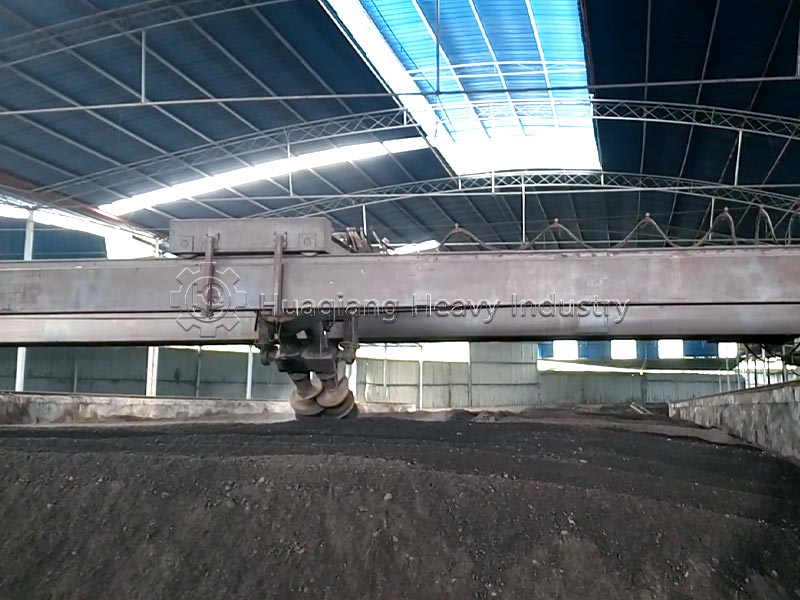
This consists of a walking motor (or hydraulic motor), transmission sprockets, transmission shafts, and walking wheels. The equipment spans across the fermentation tank, with the walking wheels on both sides moving smoothly along the tracks. The walking system is mainly divided into wheeled and tracked types. The wheeled type is suitable for trough-type fermentation workshops with hardened ground, while the tracked type is suitable for soft, muddy windrow-type fermentation sites. 3. Hydraulic Lifting System: Composed of a hydraulic pump station, solenoid valve body, hydraulic oil pipes, and hydraulic cylinders, this system adjusts the auger shaft position in real time according to the stack height to ensure consistent turning depth. The hydraulic system also features automatic extension/reversal of the auger shaft; in case of current overload, the system automatically activates reverse mode to clear entangled materials.
4. Power Transmission System: Employing a “motor-reducer-chain/gear” transmission method, this system provides stable power to the double-screws auger and traveling mechanism. Some high-end units are equipped with a frequency converter, allowing flexible adjustment of the turning speed and traveling speed based on material moisture and thickness. The transmission system is equipped with an overload protection device that automatically cuts off power in case of large hard objects or material overload.
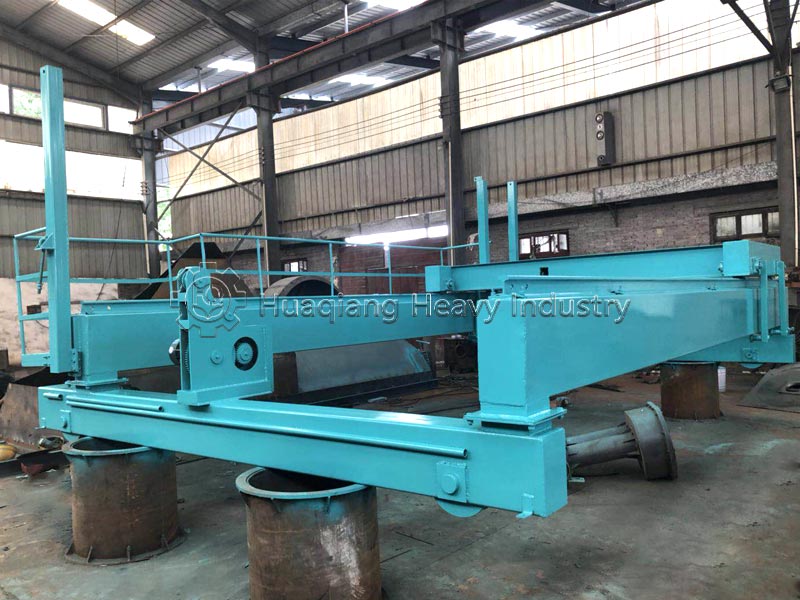
5. Frame and Intelligent Control Cabinet: The frame adopts a modular welded structure made of thickened carbon steel, offering high strength and stability. The control cabinet allows for manual, automatic, or remote operation.
6. Transfer vehicle (shifting vehicle) Composed of a walking motor, transmission gears, drive shaft, walking wheels, etc., it provides a transport tool for the turning machine to change troughs, realizing one machine to operate multiple troughs.
Application Scope of the Equipment
The equipment is suitable for all industry scenarios involving high-temperature aerobic fermentation, volume reduction and dehydration, and harmless composting of organic solid waste, covering four core application areas:
1. Large-scale organic fertilizer/bio-fertilizer production industry: Core main unit for fermentation sections of commercial organic fertilizer plants, compound microbial fertilizer plants, and organic-inorganic compound fertilizer plants with an annual output of 30,000 to 200,000 tons; specialized equipment for standardized trough fermentation workshops.
2. Large-scale livestock and poultry manure environmental treatment field: Large-scale pig farms with tens of thousands of pigs, 100,000 laying hens/broilers, and 1,000 cattle and sheep farms; self-built manure resource utilization organic fertilizer workshops; on-site disposal of livestock manure; achieving crop-livestock cycle and environmentally compliant emissions.
3. Municipal environmental organic solid waste treatment industry: Sludge treatment stations in urban sewage treatment plants, sanitation and landscaping leaf and branch treatment centers, and organic slurry fermentation workshops for pre-treatment of kitchen waste; processing municipal sludge, landscaping waste, and sorted kitchen organic solid waste; achieving solid waste reduction, harmlessness, and resource utilization.
4. Deep Processing of Agricultural Products, Horticulture, and Edible Fungus Industry
1) Agricultural Product Processing Plants: Fermentation of sugar mill filter mud, baijiu/huangjiu lees, pharmaceutical residues from traditional Chinese medicine, and oilseed cakes for fertilizer production;
2) Modern Agricultural Planting Bases: Thousand-acre fruit and vegetable orchards, seedling and flower nurseries, and self-made organic cultivation substrates and base fertilizers;
3) Factory-style Edible Fungus Cultivation Enterprises: Specialized equipment for pre-fermentation and composting of substrates for button mushrooms, shiitake mushrooms, and oyster mushrooms to ensure full composting and increase edible fungus yield.
Applicable Raw Materials for the Equipment
The double-screws compost turner can process a variety of organic waste materials:
1. Livestock and Poultry Manure
Chicken manure, pig manure, cow manure, sheep manure, etc. The equipment is particularly adept at processing high-moisture, high-viscosity, and large-clump livestock and poultry manure, and is less prone to jamming or shutdown. A pig farm with 10,000 heads has seen its annual manure processing capacity exceed 120,000 tons after application.
2. Crop Straw
Corn stalks, wheat stalks, rice stalks, etc. The double-helix structure has a minimal crushing effect on materials, making it particularly suitable for high-fiber materials such as straw and coconut coir.
3. Industrial Organic Waste
Sugar mill filter mud, winery residue and cake, traditional Chinese medicine factory dregs, etc.
4. Municipal Sludge and Kitchen Waste
Large amounts of sludge from urban sewage treatment plants, as well as high-viscosity materials such as kitchen waste.
5. Garden Waste
Dried branches, fallen leaves, weeds, etc., generated during urban greening.
6. Other Organic Waste
Sawdust, spent mushroom cultivation substrate, etc.
The equipment is suitable for materials with a moisture content of 30%–80%, requiring no complex pretreatment. The special angle design of the spiral blades automatically gathers large pieces of material towards the center and crushes them, achieving excellent crushing and pretreatment results.
Applicable Raw Materials:
The equipment can stably process all high-organic-matter industrial, agricultural, livestock, and municipal organic waste. Pre-treatment standards for raw materials: Moisture content should be adjusted to 50%~65%, and the carbon-to-nitrogen ratio to 20~30:1 before fermentation. For sludge and low-organic-matter waste, deep turning and turning can raise the pile temperature, compensating for insufficient organic matter in the fermentation process.
1. Livestock and poultry manure: Pig manure, cow manure, chicken manure, sheep manure, duck manure, and other livestock manure.
2. Agricultural and forestry straw: Corn stalks, wheat straw, rice husks, sawdust, peanut shells, and fallen leaves from gardens.
3. Industrial organic waste residue: Sugar factory filter mud, liquor lees, vinegar lees, medicinal herb residue, rapeseed cake, cottonseed cake, and other oilseed cakes and residues.
4. Municipal organic solid waste: Dewatered sludge from urban sewage treatment plants, sorted kitchen waste organic slurry, and landscaping pruning waste.
5. Edible fungi waste: Waste mushroom sticks and edible fungi cultivation residue.
Working Principle of the Equipment
The core working principle of the double-screws compost turner lies in the synergy of “screws lifting” and “bidirectional shearing.”
The working process is as follows: The equipment spans above the fermentation tank, with wheels on both sides moving smoothly along tracks. During operation, two shafts equipped with continuous helical blades rotate relative to each other (in opposite directions) driven by hydraulic motors. The helical blades cut deep into the material, lifting the oxygen-deficient, cold material at the bottom along the axial direction and throwing it towards the center.
This unique turning and turning method creates a “W”-shaped material flow:
- Deep Turning: The double helical shafts penetrate deep into the material layer (up to 2 meters), completely turning the bottom material to the surface, effectively preventing the formation of an anaerobic environment at the bottom.
- Forced Aeration: The material comes into full contact with air during the turning process, achieving self-oxygenation—the turning action itself is mechanical aeration, reducing or eliminating the need for an auxiliary forced air supply system.
- Uniform Mixing: The two sets of spiral augers rotate in opposite directions, generating opposing thrust and shear forces, causing the material to tumble up and down and convect left and right, achieving axial and radial double turning and mixing.
- Crushing and Conveying: The spiral blades crush large pieces of material while simultaneously pushing them backward by 0.2–1.5 meters, achieving simultaneous turning and relocation.
Compared to single-shaft equipment, the double-screws structure increases the throwing height and dwell time of the material, improving moisture evaporation efficiency by more than 30%, and allowing the pile temperature to rise to 70℃ within 24 hours. The equipment can be equipped with biological deodorization nozzles and temperature control sensors to achieve integrated intelligent control of turning, cooling and deodorization.
As a core piece of equipment for modern aerobic fermentation of organic waste, the double-screws compost turner’s technological maturity and equipment reliability have been widely verified in the industry. Through its three-dimensional turning mechanism of dual-axis counter-rotation, this equipment demonstrates significant technological advantages in deep-trough fermentation, high-moisture material processing, and large-span operations. Against the backdrop of the continuous expansion of the organic fertilizer industry and increasingly stringent environmental standards, the double-screws compost turner is evolving towards intelligence, efficiency, and environmental friendliness, becoming a key technological bridge connecting organic waste and soil improvement resources. When selecting a model, users should fully consider the characteristics of raw materials, production capacity requirements, site conditions, and subsequent production line support, choosing a professional manufacturer with a comprehensive technical service system to ensure long-term stable operation and achieve optimal economic benefits.
Whether you need a fermentation compost turner or plan an entire fertilizer production line—from fermentation turning and crushing to granulation, drying, cooling, screening, and packaging—we can provide you with a one-stop solution.
Common Equipment Problems and Solutions
Based on practical equipment operation, common problems and solutions are as follows:
| Common Faults | Cause Analysis | Solutions |
|---|---|---|
| Screw shaft stuck or abnormal noise during rotation | Screw blade deformation, cracks or severe wear | Stop the machine for inspection, repair or replace damaged blades |
| Transmission chain too loose or too tight | Calibrate the chain by adjusting the tensioner | |
| Bearing wear or damage | Replace bearings | |
| Difficult motor startup or startup failure | Abnormal power supply circuit, inconsistent voltage (380V required) | Check power supply circuit, restart after voltage returns to normal |
| Circuit breaker / thermal relay tripped in motor control cabinet | Reset the trip switch and troubleshoot overload causes | |
| Inverter alarm (overcurrent, overload) | Targeted handling according to alarm fault codes | |
| Machine fails to travel or abnormal traveling | Fault of travel motor or transmission parts | Check travel motor, transmission sprockets and gears |
| Insufficient turning power | Excessive wear of screw blades | Replace or repair screw blades |
| Excessively high material moisture or severe agglomeration | Adjust material moisture content and add loose materials | |
| Slow or abnormal hydraulic lifting | Insufficient hydraulic oil level or blocked oil circuit | Supplement No.46 anti-wear hydraulic oil and check oil pipe connectors |
| Aging hydraulic sealing parts leading to oil leakage | Replace sealing parts (O-rings) | |
| Materials winding around screw shaft | Long fiber materials (straw, hair) winding the shaft | Use the automatic reverse rotation function to clear winding; pre-process to control fiber length ≤8cm |
| Excessively fast wear of screw blades | Hard objects such as sand and gravel mixed in materials | Strengthen material pretreatment to remove hard objects; surfacing wear-resistant layer on blade surface |
| Intermittent remote control signal | Antenna blocked by materials or low battery power | Clear materials on top of control cabinet and replace batteries |
Special Note: If abnormal vibration is detected, the machine should be stopped immediately for inspection. First, clean the material around the turner and on the cutter head, and check for foreign objects such as stones and metal. If any are found, remove them promptly. Check if the fixing bolts of the blades and cutter head are loose.
Application of the Equipment in the Production Line
The double-screws compost turner is a core piece of equipment in the fermentation stage of an organic fertilizer production line. In a complete organic fertilizer production line, this equipment is located at the beginning of the process flow.
1) Typical Organic Fertilizer Production Line Process Flow:
Raw Material Pretreatment (Ingredient Mixing) → Fermentation and Turning (Double Helix Turner) → Crushing → Mixing → Granulation → Drying → Cooling → Screening → Packaging
2) Specific Working Process:
- Raw Material Blending: Adjusting the carbon-nitrogen ratio, pH, moisture content, etc. of the raw materials, and adding auxiliary materials in proportion.
- Mixing and Stirring: Using a turning machine to perform stirring operations, ensuring uniform mixing of raw materials and various auxiliary materials.
- Fermentation and Turning: The double helix turner periodically turns and rotates the materials, increasing the permeability of the raw materials, accelerating high-temperature composting, and removing odors.
- Composting and Discharge: After further composting and dehydration, the fermented material is screened to obtain powdered finished organic fertilizer.
- One Machine, Multiple Tank Mode: For large-scale organic fertilizer projects with an annual output of 30,000–50,000 tons, multiple tanks can be connected in parallel with one turning machine. A transfer vehicle can be used to achieve cross-tank operation, significantly reducing redundant equipment investment. 6. Seamless Integration with Subsequent Processes: The stable turning quality of the double-screwscompost turner provides high-quality raw materials with suitable moisture content and uniform fineness for subsequent crushing and granulation processes, significantly reducing the return rate. The equipment can be seamlessly integrated with fermentation tanks and crushers.
The application of the double-screws compost turner marks a leap from “intermittent processing” to “continuous production” in organic fertilizer fermentation.
Operating Methods and Procedures
(I) Pre-operation Preparation
Equipment Inspection: Before starting the machine, check all fasteners (bolts, nuts, couplings) for looseness; check the spiral blades for deformation, cracks, or abnormal wear; check the meshing state of the traveling wheels and guide rails; check the hydraulic oil level and the sealing of the oil pipe joints.
Electrical System Inspection: Confirm that there are no abnormal alarms in the PLC control cabinet and that the signals of all sensors (limit switches, temperature probes) are normal; check the motor insulation resistance to ensure the reliability of the main circuit and grounding circuit.
Material Status Confirmation: Measure the moisture content (target 50%–65%), temperature, and C/N ratio of the material to be turned. If the moisture content is too high, add dry material to adjust; if it is too low, spray an appropriate amount of water.
No-load Test Run: Start the main motor and run it under no-load for 3–5 minutes, observing whether the spiral shaft rotation direction is correct (dual shafts should rotate in opposite directions), and whether there is any abnormal vibration or noise; test the hydraulic lifting and traveling functions. (II) Operation Process Control
Parameter Settings: Set the turning depth (usually 2/3 of the pile height, approximately 0.8–1.5 meters), travel speed (3 m/min for loose materials, reduced to 1–2 m/min for highly moist and viscous materials), and auger speed (generally 50–100 r/min) according to material characteristics.
Turning Strategy: Adopt an “S-shaped route” or layered turning mode, with an interval of ≥24 hours between layers. For low-temperature environments in winter, extend the turning interval from 4–6 hours at normal temperatures to 8–10 hours, and appropriately reduce the turning depth to minimize contact between the pile and cold air.
Process Monitoring: Monitor motor current, hydraulic pressure, and equipment vibration in real time during operation. If the current exceeds 110% of the rated value, the frequency converter automatically reduces the speed; if it exceeds 150%, an emergency shutdown is triggered.
Foreign Object Handling: Immediately stop the machine and remove any hard blocks, stones, or metal foreign objects encountered. Operating the equipment while it is malfunctioning is strictly prohibited.
(III) Post-operation cleanup
Raise the turning device to the highest position and move it to the stop position;
Clean the residual material on the auger blades and frame, and start the vibrating motor to assist in cleaning if necessary;
Turn off the main power and lock the control cabinet;
Fill out the equipment operation record, recording the turning volume, abnormal situations and handling measures.
Equipment Maintenance Methods
(I) Daily Maintenance (per shift)
Cleaning: After each use, clean any residual material from the spiral blades, frame, and wheels to prevent material from caking and corroding metal surfaces.
Lubrication: Apply high-temperature lithium-based grease to moving parts such as bearing housings, chains, and gears at a rate of 50–80 g/point. Check the hydraulic oil level and replenish with the same type of hydraulic oil if necessary.
Tightening Check: Check the spiral blade fixing bolts, bearing housing bolts, and wheel fastening bolts. Tighten any loose bolts immediately.
Electrical Check: Clean dust from inside the control cabinet, check for loose wiring terminals, and confirm that all indicator lights and sensors are functioning correctly.
(II) Weekly Maintenance
Disassemble and inspect the spiral blades, measuring the wear. If the blade thickness wear exceeds 1/3 of the original thickness, replace or repair by welding.
Check the wheel bearing clearance; adjust or replace if abnormal.
Check the hydraulic system filter element; replace every 500 hours (accuracy 20 μm).
Check the tension of the drive belt/chain; adjust if necessary. (III) Monthly Maintenance
Thoroughly check the reducer oil level and quality; change the gear oil every 2000 hours or once a year.
Check the motor insulation resistance and clean the motor cooling ducts.
Inspect the hydraulic cylinder piston rod surface for scratches and check for aging seals. Cylinder creep is often related to air ingress; perform multiple full-stroke operations to vent the air.
Inspect the high-pressure hose surface for cracks and bulges, and check for oil leaks at the joints. Replace any hoses immediately if any abnormalities are found.
(IV) Annual Overhaul
Disassemble and inspect the main reducer; replace bearings and seals.
Correct the coaxiality of the screw shaft (error ≤ 0.1 mm); replace severely worn screw shafts.
Apply anti-corrosion coating to the entire machine; check for cracks in the frame welds.
Calibrate all sensors and control parameters; update and back up the PLC program.
Equipment Fermentation Process Parameter Control
The double-helix compost turner is the core execution unit of the aerobic fermentation process, and its process control directly determines the quality and cycle time of the compost product:
- Carbon-to-Nitrogen Ratio (C/N) Control
The suitable C/N ratio for microbial decomposition of organic matter is approximately 25:1. If the C/N ratio of livestock and poultry manure is too low (approximately 10:1), high-carbon materials such as straw and rice husks need to be added for adjustment; if the C/N ratio of pure straw is too high (approximately 60:1), nitrogen fertilizer or livestock and poultry manure needs to be applied.
- Moisture Control
The moisture content of the compost should be controlled between 50% and 65%. A simple method for judgment: grab a handful of material; water should be visible between your fingers but not dripping; the material should crumble upon falling after releasing your hand. If the moisture content is too high, add absorbent additives such as mushroom residue, sawdust, or dry mud powder; if the moisture content is too low, add water through the spray system or add fresh livestock and poultry manure.
- Temperature Management: The aerobic fermentation temperature should be controlled at 55–65℃ and maintained for at least 5–7 days to kill pathogens, insect eggs, and weed seeds. The double-helix compost turner regulates the pile temperature by adjusting the turning frequency: increase the turning frequency when the temperature is ≥65℃, and reduce turning and add water appropriately when the temperature is ≤50℃, forming an alternating cycle of “medium temperature—high temperature—medium temperature—high temperature”.
- Aeration and Oxygen Supply: The oxygen concentration in the compost pile should ideally be maintained at 8%–18%. In addition to mechanical turning, a forced ventilation system (aeration pipes) at the bottom of the fermentation tank can be used to achieve synergistic oxygen supply through turning and aeration.
- pH Adjustment: The suitable pH range for the compost mixture is 6–9. If the material is too acidic (such as pomace or distiller’s grains), lime or wood ash can be added to adjust it; if it is too alkaline, superphosphate or an acidic conditioner can be added.
- Fermentation Cycle Under suitable conditions of temperature, moisture, and C/N ratio, the entire aerobic fermentation cycle typically lasts 7–15 days. The high-temperature period (≥55℃) lasts 5–7 days, and the post-ripening period (cooling down to ambient temperature) lasts approximately 3–5 days. In winter or with materials in high-humidity conditions, the fermentation cycle may extend to 20–25 days.
Equipment Parameters
Double Screws Compost Turning Machine
| Model | Main Motor | Small Car Traveling Motor | Big Car Traveling Motor | Hydraulic Pump Motor |
|---|---|---|---|---|
| SLP-10m | 15KW | 1.5KW×2 | 1.5KW×2(4) | 4KW |
| SLP-12m | 15KW | 1.5KW×2 | 1.5KW×2(4) | 4KW |
| SLP-15m | 15KW | 1.5KW×2 | 1.5KW×2(4) | 4KW |
| SLP-20m | 15KW | 1.5KW×2 | 1.5KW×2(4) | 4KW |
Equipment demand groups
- Large-scale livestock and poultry breeding group/large-scale breeding farm: 10,000-head pig farm, 100,000-feather chicken farm, 1,000-head cattle and sheep breeding base, self-built manure resource organic fertilizer workshop, on-site consumption of breeding manure, achieving breeding cycle, environmental protection and emission standards.
- Professional commercial organic fertilizer and bio-fertilizer manufacturers, large-scale organic fertilizer processing plants and bio-fertilizer technology companies, build standardized tank fermentation workshops to produce powdered and granular commercial organic fertilizers for external sales.
- Municipal environmental protection solid waste disposal units: urban sewage treatment plants, sanitation and garden waste treatment stations, and kitchen waste resource disposal centers, dispose of municipal sludge, garden dead branches, and organic kitchen slurry to achieve solid waste reduction and harmlessness.
- Agricultural products deep processing factories: sugar factories, liquor/beer brewing factories, traditional Chinese medicine pharmaceutical factories, and oil pressing factories, which process the by-products of sugar slurry, distiller’s grains, medicinal residues, and pressed oil cakes, and use the by-products to make fertilizers.
- Large-scale planting bases, modern agricultural industrial parks, horticulture and flower fields, thousands of acres of fruit and vegetable planting bases, seedling and flower nurseries, and facility agricultural industrial parks, self-made organic cultivation substrates and base fertilizers, reducing the use of chemical fertilizers for planting and improving the quality of agricultural products.
- Large-scale edible fungi cultivation factory: A factory-based cultivation enterprise for Agaricus bisporus, Lentinus edodes, and Pleurotus ostreatus. Special equipment for the pre-fermentation and composting sections of cultivation materials ensures that edible fungi cultivation materials are fully decomposed and increases mushroom yield.
- Environmental protection equipment complete set engineering provider, organic fertilizer production line integration service provider. Equipment integration and engineering installation enterprise that undertakes organic fertilizer complete line projects, breeding manure environmental protection treatment projects, and municipal solid waste disposal projects. The SFP hydraulic double-screw model is sold as a complete line of high-end fermentation equipment.
As a core piece of equipment for modern aerobic fermentation of organic waste, the double-screws compost turner’s technological maturity and equipment reliability have been widely verified in the industry. Through its three-dimensional turning mechanism of dual-axis counter-rotation, this equipment demonstrates significant technological advantages in deep-trough fermentation, high-moisture material processing, and large-span operations. Against the backdrop of the continuous expansion of the organic fertilizer industry and increasingly stringent environmental standards, the double-screws compost turner is evolving towards intelligence, efficiency, and environmental friendliness, becoming a key technological bridge connecting organic waste and soil improvement resources. When selecting a model, users should fully consider the characteristics of raw materials, production capacity requirements, site conditions, and subsequent production line support, choosing a professional manufacturer with a comprehensive technical service system to ensure long-term stable operation and achieve optimal economic benefits.
Whether you need a fermentation compost turner or plan an entire fertilizer production line—from fermentation turning and crushing to granulation, drying, cooling, screening, and packaging—we can provide you with a one-stop solution.
Have Any Problem? Please, Contact
Integrity
Adhere to honesty and trustworthiness, be responsible to customers, employees, partners, and society, and establish long-term trust relationships.
Win win
Establish win-win relationships with all stakeholders such as customers, suppliers, and employees to share the fruits of enterprise development.