
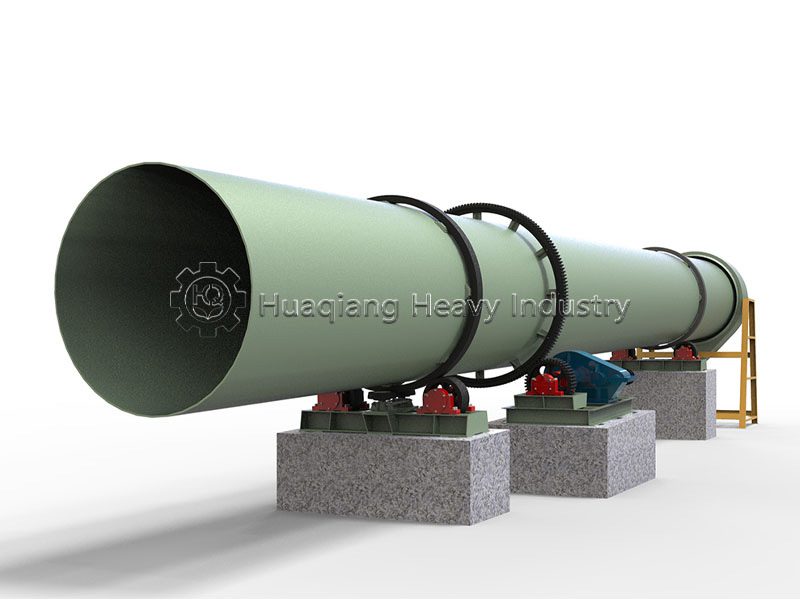
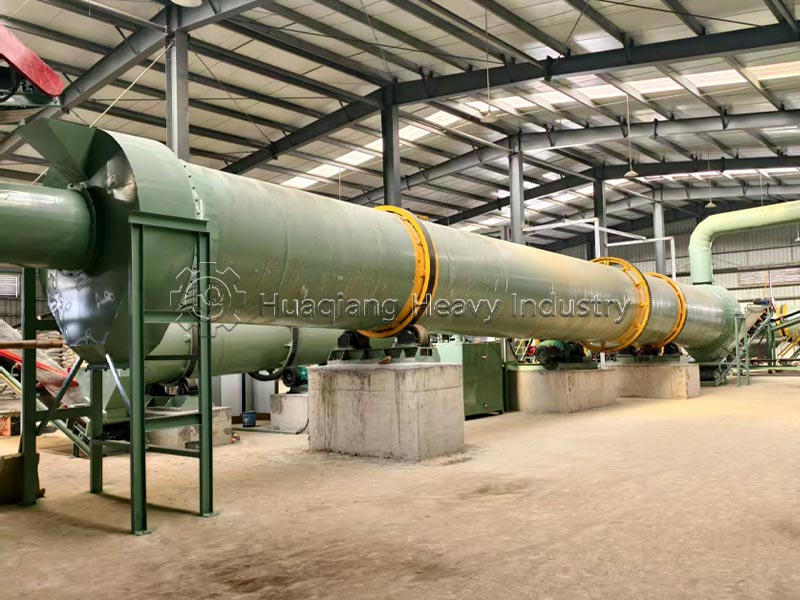

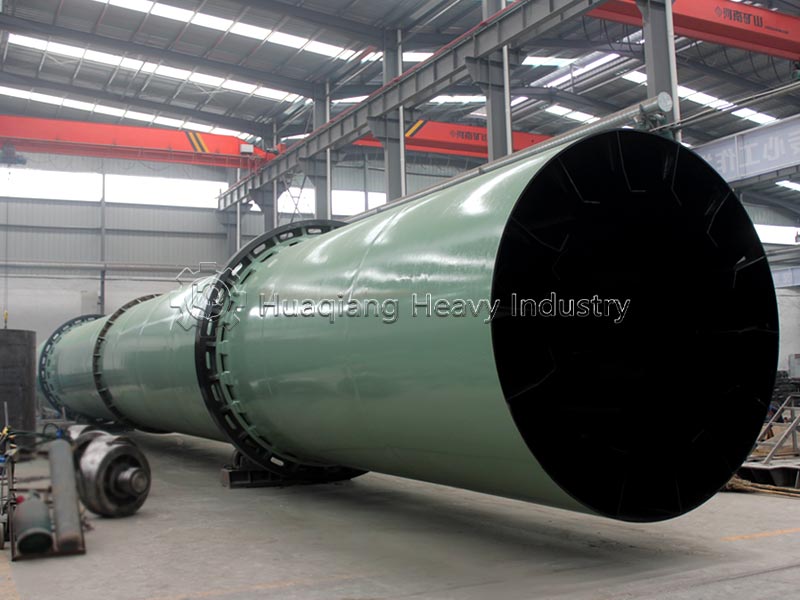
Equipment Introduction
The fertilizer drum cooler, also known as a rotary fertilizer cooler, is an essential core component of organic fertilizer and compound fertilizer production lines, used after the dryer. It is specifically designed for cooling and shaping fertilizer granules at 60-90℃ after drying, and is used in conjunction with a drum dryer.
Core Functions
- Rapid Cooling: Reduces high-temperature granules to 30-40℃ (close to room temperature), preventing moisture buildup, clumping, and bag breakage during direct packaging.
- Auxiliary Dehydration: Convection cooling air removes free moisture from the granule surface, further stabilizing the finished product’s moisture content and improving granule hardness.
- Improved Finished Product Quality: Prevents granule softening and sticking, ensuring stable operation of screening, coating, and automatic packaging processes, and extending the fertilizer’s shelf life.
- Continuous Large-Scale Production: Operates 24/7, providing uniform cooling, low granule breakage rate, and suitable for a full range of production capacities from 1 to 15 t/h.
Core Advantages of the Equipment:
Compact structure, wear-resistant and corrosion-resistant, all-steel welded body, simple operation and maintenance; Counter-flow ventilation and heat exchange design, high cooling efficiency, no secondary dust pollution; Adjustable cylinder angle, speed, and induced draft fan air volume, suitable for various materials such as organic fertilizer, compound fertilizer, and slow-release fertilizer; Can be equipped with a dust removal system, cooling exhaust gas recovery, fine powder recirculation granulation, zero raw material loss; Standardized modular structure, universal wear parts, convenient maintenance and replacement.
Equipment Structure
| Component Module | Structural Parts | Function Description |
|---|---|---|
| Combustion & Heating System | Combustion chamber, fuel burner | Provides reaction flame. Composed of combustion chamber and fuel burner, mixes gas and air in proportion for full combustion to produce stable high‑temperature flue gas. |
| Riding Wheel & Support System | Riding wheels, riding‑wheel shaft (bearing pedestal), thrust wheel (thrust ring), front and rear retaining rings | Bears cylinder weight and ensures normal rotation. Riding wheels are made of forged steel; thrust wheels serve as axial limit to prevent cylinder axial drift. |
| Transmission System | Transmission motor, main motor, reducer, large gear, pinion, large gear ring | Provides rotating power for cylinder. Motor drives reducer through V‑belt, then pinion meshes with large gear ring to drive cylinder rotating at constant speed. |
| Feeding & Discharging Device | Feed hood, discharge hood, sealing device, screw feeder | Materials enter from feed end, hot air enters from discharge end, forming counter‑current drying flow. |
| Cylinder & Lifting Flights | Cylinder, lifting flights, feed screw, material retaining ring | Main cylinder is rolled from high‑quality steel plate, with lifting flights of different angles welded on inner wall. As cylinder rotates, materials are lifted and scattered, increasing contact area with hot air and improving drying efficiency. |
Applicable Raw Materials (Scope of Materials to be Processed)
- Organic Fertilizer Granules: Fermented organic fertilizer from livestock and poultry manure, bio-organic fertilizer, microbial fertilizer, straw/microbial residue/distillers’ grains granulated fertilizer;
- Compound Inorganic Fertilizers: Drum granulation compound fertilizer, extrusion granulation compound fertilizer, BB fertilizer, urea-based/sulfur-based compound fertilizer, slow-release coated fertilizer;
- Extended Materials: Various dried high-temperature powdered and granular biomass and chemical granular materials.
Working Principle of the Equipment
The fertilizer cooler operates based on the principles of counter-current cooling and convective heat transfer. The specific process is as follows:
Material Intake: High-temperature granules (65–85°C) after drying in the dryer enter through the feed inlet at the higher end of the cylinder.
Air Introduction: An induced draft fan installed at the feed end draws in ambient cold air from the rear (discharge end) of the cylinder, causing the cold air and the high-temperature material to flow counter-currently within the cylinder.
Heat and Mass Exchange: The cylinder rotates at low speed, and internal lifting plates continuously tumble and scatter the material, forming a uniform material curtain. Cold air penetrates the material curtain, making full contact with the granules, absorbing heat, and then exits from the feed end.
Material Output: Under the combined action of gravity and the cylinder’s inclination angle, the cooled material slowly moves towards the discharge end, eventually cooling to near room temperature (typically <40°C), and flows out from the discharge port to proceed to the next process.
Key advantages: The counter-current design ensures that the low-temperature material at the outlet comes into contact with low-temperature air, while the high-temperature material at the inlet comes into contact with pre-heated air. This results in a reasonable temperature difference distribution, high heat exchange efficiency, and uniform and thorough cooling. Simultaneously, the rotating and rolling motion of the cylinder slightly polishes the particles, further improving their surface smoothness and mechanical strength.
Applications and Processed Materials
Fertilizer coolers have a wide range of applications, not limited to the fertilizer industry:
| Application Field | Typical Materials |
|---|---|
| Organic Fertilizer | Livestock manure granules, biogas residue granules, straw powder, sludge granules, kitchen waste granules |
| Compound / Inorganic Fertilizer | NPK compound fertilizer, Mono‑Ammonium Phosphate (MAP), Di‑Ammonium Phosphate (DAP), ammonium sulfate, ammonium nitrate, potassium hydroxide, urea granules |
| Soil Conditioner | Gypsum powder, limestone powder, humic acid, biochar |
| Feed Industry | Granular feed, fish feed, pet feed |
| Chemical & Building Materials | Chemical granules, dyes, plastic granules, cement clinker, ceramic granules |
| Food Processing | Food granules, condiments, starch |
The cooler can process materials in granular, powdery, and small lump forms, with optimal cooling effect for fertilizer granules with a diameter of 1–5 mm. For heat-sensitive materials (such as microbial organic fertilizers), controlling the cooling airflow and residence time is particularly important to avoid sudden temperature drops that could cause granule breakage or damage to beneficial bacteria.
Standard Operating Procedures and Full-Cycle Maintenance Methods
(I) Standard Start-up and Shutdown Sequence
Start-up Procedure
Pre-start checks: Clear any blockages in the feed chute; check bearing/gear lubrication, equipment grounding protection, induced draft fan transmission, and the integrity of protective devices;
Start the induced draft fan under no-load to stabilize the negative pressure inside the cylinder;
Start the main motor of the cooler; run it under no-load for 3-5 minutes and observe for any abnormal noise;
Start the front-end dryer discharge conveyor; evenly feed in the high-temperature particles, monitor the discharge temperature in real time, and adjust the fan airflow to control the cooling effect.
Shutdown Procedure
Stop feeding the upstream dryer; wait for all material to be discharged from the cylinder;
Turn off the main motor of the cooler;
Delay for 10 minutes; turn off the induced draft fan to dissipate residual heat inside the cylinder;
Clean any remaining clumps of material inside the cylinder; add lubricating grease to the transmission and support components.
(II) Strict Safety Operating Procedures
When the equipment is running, personnel are prohibited from walking under the cylinder, and it is forbidden to remove the protective cover or open the cover for maintenance.
Insulating gloves must be worn when maintaining the motor and circuits. The equipment must not be started without a reliable grounding wire.
Only 12V low-voltage lighting fixtures are permitted for internal maintenance.
When processing bio-fertilizer, the fan airflow must not be excessively high for rapid cooling to avoid inactivation of live bacteria.
(III) Graded Lubrication and Maintenance Procedures
Gear meshing parts: Apply grease before starting the machine daily.
Cylinder roller surface: Apply grease every 7 days.
All bearing housings: Add/replace lubricating grease every 3 months.
Reducer: Add gear oil for the first time when the machine is new, and completely replace the gear oil every 4 months.
(IV) List of Wear Parts (Regular Inspection and Replacement)
Triangular drive belt, bearings, pinion, large gear ring, cylinder roller, internal lifting plate, coupling pin, and sealing felt strips at both ends.
Common Faults, Causes, and Standardized Solutions
| Fault Phenomenon | Root Causes | Professional Solutions |
|---|---|---|
| Poor cooling effect & high particle temperature at discharge | Insufficient induced‑draft fan air volume; excessive feeding rate; worn & fallen‑off lifting flights | 1. Inspect fan impeller, open air damper to raise negative pressure; 2. Reduce feeding speed; 3. Stop unit for welding repair or replacement of lifting flights |
| Riding belt slipping & offset | Loose concave joint of riding belt; uneven force on both sides of riding wheels | 1. Fasten riding‑belt joint; 2. Adjust riding‑wheel height evenly with wedges, avoid over‑tightening which triggers cylinder vibration |
| Cylinder axial displacement & shifting | Severe wear of riding / retaining wheels; loose foundation bolts for riding‑wheel base | 1. Grind, repair or replace riding wheels & retaining wheels; 2. Calibrate riding‑wheel level, tighten all foundation nuts |
| Gear meshing abnormal noise & dislocation | Single‑side worn pinion; loose connection between big gear ring and cylinder | 1. Reverse pinion for re‑use; replace gear if double‑sided wear occurs; 2. Tighten flange bolts connecting gear ring and cylinder |
| Severe cylinder vibration during operation | Cracked connection of riding‑wheel base & loose bolts; uneven single‑side wear on riding belt | 1. Calibrate riding‑wheel installation position and fasten foundation bolts; 2. Turn‑repair riding‑belt side face or replace riding belt |
| Dust overflow & air back‑flow at feed inlet | Insufficient negative pressure of induced‑draft fan; air leakage caused by aged end seals | 1. Inspect fan, adjust air damper to increase air volume; 2. Replace sealing strips at feed & discharge ends |
| Bearing temperature >50℃ under no‑load test run | Lack of lubricating grease; internal bearing wear | Stop equipment, replenish lubricating grease; replace bearing for heavy wear |
Equipment Application in the Production Line
- Core Position in the Fertilizer Production Line
The cooler connects drying and screening/packaging in the fertilizer production line, serving as a crucial link between these processes. The hot granules after drying are too high for direct storage and must be cooled before proceeding to the next step.
Complete Processing Flow:
Raw Material Pretreatment → Fermentation and Composting → Crushing → Batching and Mixing → Granulation → Drum Drying → Drum Cooling → Screening → Coating (if required) → Packaging
- Relationship with the Dryer
The cooler is typically used in conjunction with the dryer. The dryer removes a large amount of moisture from the material, while the cooler cools the material and further removes some moisture. Together, they complete the drying and cooling process of the fertilizer granules.
- Impact on Product Quality
The cooling process directly affects the final product quality:
Preventing Agglomeration: Fully cooled granules are less likely to clump after packaging.
Protecting Microbial Agents: Low-temperature environments help protect the activity of microbial agents in the bio-organic fertilizer.
Maintaining Granule Strength: Prevents granule softening and breakage caused by high temperatures.
Facilitating Packaging: Cooled materials can directly enter the automated packaging system.
- Continuous Production
The cooler supports 24-hour continuous and stable operation, seamlessly connecting to the entire production line from drying, screening, to packaging. The equipment design considers production margins; small increases in output do not require equipment replacement.
- Environmental Protection and Energy Saving
The cooler operates under overall negative pressure, resulting in less dust. Exhaust gas after heat exchange can be introduced into other systems to improve thermal efficiency. Some advanced systems heat the cooling water discharged from the cooler and supply it to the granulator, achieving energy recycling.
Target Audience
- Organic fertilizer and compound fertilizer production plants, large-scale livestock groups and planting cooperatives with their own fertilizer processing workshops;
- Environmental waste disposal companies: sludge, kitchen waste, and livestock manure resource utilization centers;
- Fertilizer complete equipment integrators and production line engineering installation service providers;
- Fertilizer foreign trade buyers and overseas organic fertilizer/compound fertilizer processing plant equipment buyers;
- Professional manufacturers of high-tower fertilizers, slow-release coated fertilizers, and bio-fertilizers.
Equipment Capacity Range
Uniform drum inclination angle 2°~5°, stable discharge temperature after cooling ≤40℃:
| Model | Hourly Capacity (t/h) | Main Motor Power (kW) | Motor Model | Reducer Model | Total Weight (t) |
|---|---|---|---|---|---|
| LQ10100 | 1~3 | 5.5 | Y132L2‑4 | ZQ250 | 3.8 |
| LQ12120 | 3~5 | 7.5 | Y132M‑4 | ZQ350 | 5.7 |
| LQ15150 | 5~7 | 15 | Y160L‑4 | ZQ400 | 9.7 |
| LQ18180 | 7~10 | 18.5 | Y180M‑4 | ZQ500 | 13.6 |
| LQ20200 | 9~15 | 22 | Y200L2‑6 | ZQ650 | 22 |
Customization Service: We can customize large-capacity models by lengthening the drum and increasing the diameter according to the production line model and annual output requirements.
Summary of Comprehensive Technical Features of the Equipment:
High Adaptability: Adjustable speed, cylinder inclination angle, and cooling airflow in multiple dimensions, accommodating organic fertilizer, compound fertilizer, and heat-sensitive bio-fertilizer;
Uniform Cooling and Low Breakage: Optimized lifting plate structure, counter-current heat exchange eliminates localized high-temperature zones, resulting in a particle breakage rate of less than 1%;
Low Operation and Maintenance Costs: Wear-resistant standard parts, clear lubrication and maintenance cycles, and simple replacement of vulnerable parts;
Environmentally Compliant: Equipped with a dust removal system, eliminating disorderly dust emissions and the generation of no wastewater or waste residue;
Continuous and Stable Production: All-steel heavy-duty structure supports 24/7 uninterrupted feeding operation;
High Compatibility: Matches the size and capacity of similar model rotary drum dryers, ensuring coordinated production line layout and reducing investment in civil engineering and conveying equipment.
Have Any Problem? Please, Contact
Integrity
Adhere to honesty and trustworthiness, be responsible to customers, employees, partners, and society, and establish long-term trust relationships.
Win win
Establish win-win relationships with all stakeholders such as customers, suppliers, and employees to share the fruits of enterprise development.