
Equipment Introduction
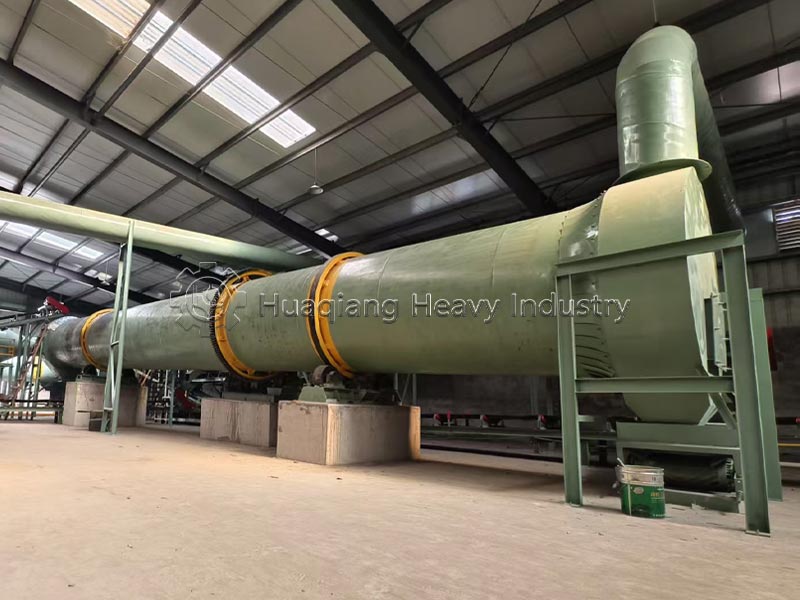
Fertilizer rotary dryer machines are core post-processing equipment in fertilizer production lines. They are primarily used to dehydrate and dry wet materials after granulation or fermentation, reducing the moisture content of the finished product to a safe storage standard (typically ≤15%), preventing mold and clumping, while simultaneously improving granule hardness and appearance.
In the fertilizer industry, rotary drum dryers hold a dominant position. They employ a horizontal, inclined rotating drum design, using internal lifting plates to continuously tumble and toss the material, ensuring full contact with high-temperature hot air and achieving efficient heat and mass transfer. This equipment features large processing capacity, stable continuous operation, wide fuel adaptability, and high return on investment, and is widely used in the production of organic fertilizers, compound fertilizers (NPK), ammonium phosphate (MAP/DAP), ammonium sulfate, potash fertilizers, and various soil conditioners.
Structural Components of the Equipment
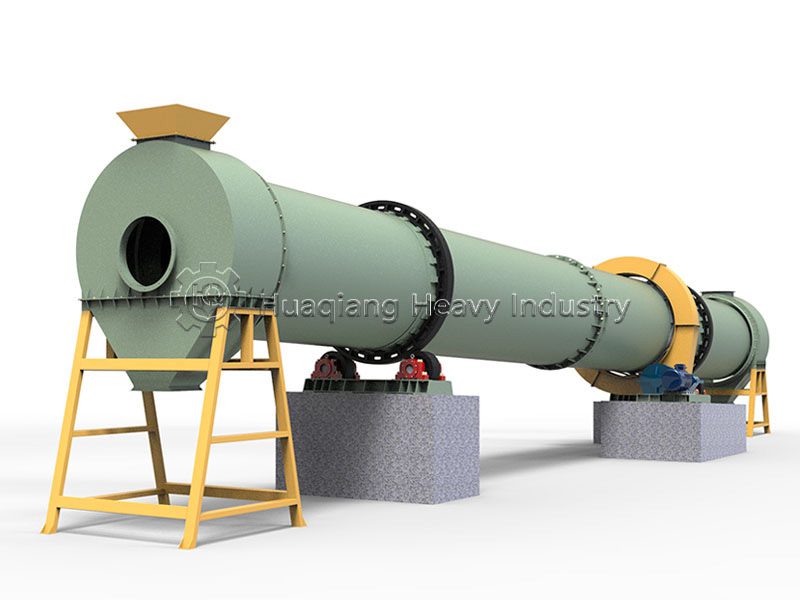
The fertilizer dryer can be divided into five core systems:
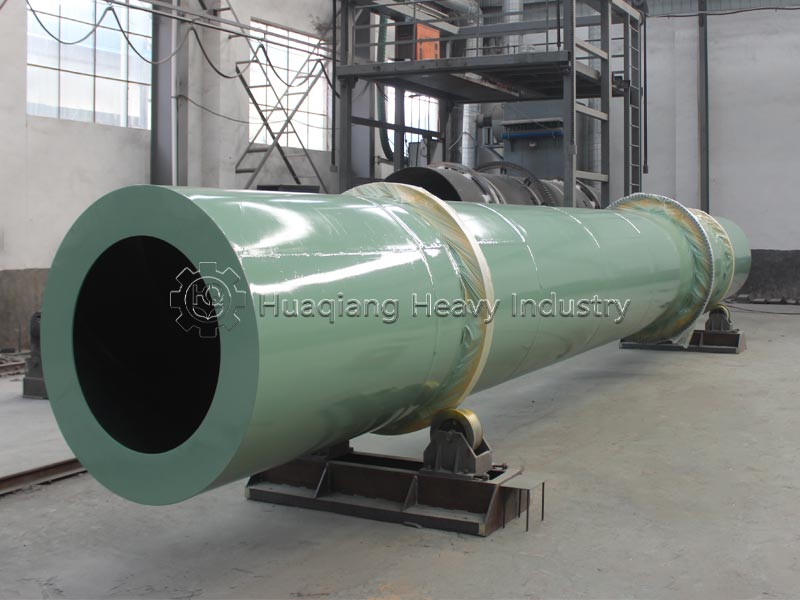
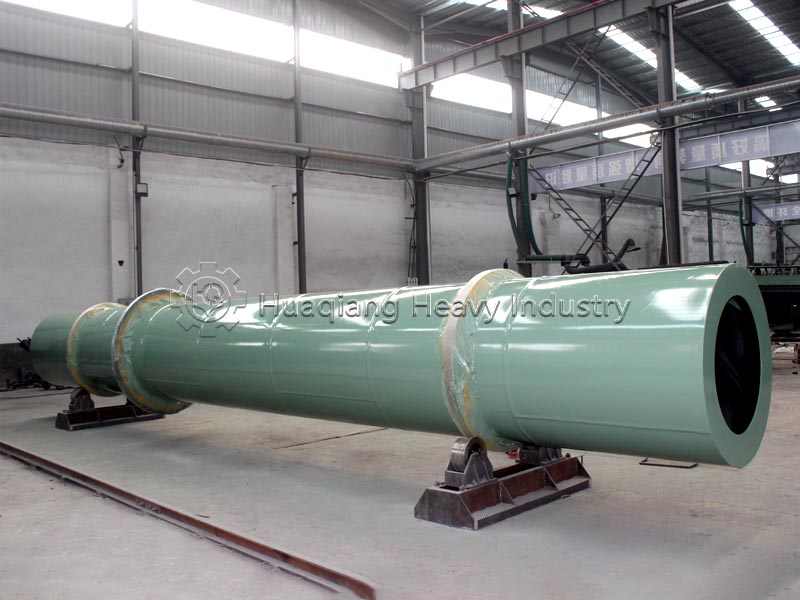
- Cylinder System: The cylinder is the main body of the equipment, typically welded from high-quality medium carbon steel plates. Lifting flights are installed on the inner wall. The distribution angle of the lifting flights is optimized to repeatedly lift the material to the top of the cylinder and evenly distribute it, forming a “material curtain,” greatly increasing the contact area between the material and hot air, improving thermal efficiency, and preventing material from sticking to the wall.
- Support Frame System: The support frame is welded from medium carbon steel plates and channel steel. The support rollers are made of high-quality corrosion-resistant and wear-resistant materials, some using integrated casting technology. The support rollers cooperate with the cylinder’s roller belts to bear the weight of the rotating parts of the machine and allow the cylinder to expand and contract freely due to thermal expansion and contraction.
- Transmission System: This system consists of a main motor, reducer, pulleys/V-belts, split pinion gears, and a large gear ring fixed to the cylinder. The electric motor, after being reduced in speed, drives a small gear, which in turn drives a large gear ring to rotate the cylinder at a set speed (typically 3–8 r/min) at a uniform speed. The drive transmission between the reducer and the main shaft is achieved through a cross-shaped block or nylon pin coupling, ensuring smooth operation.
- Hot Air System (Heat Source)
This includes a hot-blast stove, burner, blower, and induced draft fan. Fuels can be natural gas, liquefied petroleum gas, diesel, heavy oil, coal, or biomass pellets. The hot air temperature is typically adjustable within the range of 150–700°C. The induced draft fan generates negative pressure, drawing hot air into the cylinder for heat exchange with the material.
- Feeding, Discharging, and Dust Removal System
Feeding End: Equipped with a feed chute or screw feeder to ensure uniform entry of wet material into the cylinder.
Discharging End: Equipped with a star-shaped discharge valve or discharger to prevent cold air backflow.
Dust removal system: Equipped with cyclone dust collectors, wet dust collectors or bag dust collectors to purify dust-laden exhaust gas and ensure that dust emissions meet standards.
Applications of the equipment
Fertilizer dryers have a very wide range of applications:
| Application Field | Typical Materials |
|---|---|
| Organic Fertilizer | Livestock manure (chicken manure, cow manure, pig manure), sludge, biogas residue, straw powder, kitchen waste |
| Compound Fertilizer | NPK compound fertilizer, Mono‑Ammonium Phosphate (MAP), Di‑Ammonium Phosphate (DAP), Triple Superphosphate (TSP) |
| Inorganic Fertilizer | Ammonium sulfate, ammonium nitrate, potassium chloride, potassium sulfate, urea granules |
| Soil Conditioner | Gypsum, limestone powder, humic acid, biochar |
| Others | Feed raw materials, bagasse, distiller’s grains, medicinal residues, mineral slag |
Applicable Raw Materials for the Equipment
The fertilizer dryer is highly adaptable to various raw materials, including:
- Organic Fertilizer Raw Materials
Various livestock and poultry manure (chicken manure, pig manure, cow manure, sheep manure, etc.)
Urban sludge, biogas residue, kitchen waste
Agricultural by-products and waste such as straw, forage, distiller’s grains, medicinal residue, and fruit residue
- Chemical Fertilizer Raw Materials
Compound fertilizer granules; blended fertilizer raw materials; phosphate fertilizer, ammonium sulfate, etc.
- Moisture Content Adaptability
The organic fertilizer dryer can directly dry wet materials with a moisture content of 70%-80% to a safe storage moisture content of 13% in one pass. The moisture content of wet granules after compound fertilizer granulation is usually 25%-35%, which can be reduced to below 14% after treatment by a drum dryer.
- Raw Material Handling Precautions
Materials usually need to be pre-treated before entering the dryer—controlling the initial moisture content ≤60% and breaking up the clumps using a crusher. The drying temperature needs to be controlled according to the heat sensitivity of the material to avoid nutrient volatilization or organic matter carbonization caused by high temperature.
Working Principle of the Equipment
The fertilizer dryer operates on a combined mechanism of convective drying and conductive drying. The specific process is as follows:
- Heat Source Preparation: The burner ignites fuel in the hot air furnace, generating high-temperature flue gas. Cold air is pressurized by a blower and enters the hot air furnace for heat exchange, forming high-temperature hot air (150–400°C).
- Material Conveying: Wet materials with a moisture content of 20%–50% (or even higher) are fed into the feed end via a belt conveyor or bucket elevator.
- Heat and Mass Exchange: The cylinder is installed at a 2–5° angle and rotates at low speed. Inside the cylinder, the material moves slowly axially towards the discharge end under the combined action of gravity and the lifting plates. During this process, hot air and material come into contact in a co-current (parallel flow) or counter-current manner, transferring heat to the material and vaporizing the moisture.
- Exhaust Gas Discharge: The humid exhaust gas is drawn by an induced draft fan to a dust removal system for treatment before being discharged in compliance with standards. 5. Finished Product Output: The dried material (moisture content reduced to ≤15%) is discharged from the outlet and enters the next process (usually a cooler or direct packaging).
Key Mechanism: The rotation of the cylinder not only achieves material conveying, but its “rolling-scattering” action also polishes the particles, removing burrs and loose edges, reducing dust content, and improving the roundness and marketability of the finished product.
Equipment capacity range:
General inlet air temperature <700℃, uniform cylinder inclination angle 2.5°, final material moisture content controllable from 2% to 10%.
| Model No. | Cylinder Dia. × Length (mm) | Cylinder Speed (r/min) | Hourly Capacity (t/h) | Matching Motor Power (kw) |
|---|---|---|---|---|
| ZG08800 | Φ800×8000 | 8 | 1~1.5 | 4 |
| ZG10100 | Φ1000×10000 | 7 | 1.5~2 | 5.5 |
| ZG12120 | Φ1200×12000 | 7 | 2~2.5 | 7.5 |
| ZG15120 | Φ1500×12000 | 6 | 3~6 | 11 |
| ZG15150 | Φ1500×15000 | 6 | 3~7 | 15 |
| ZG18180 | Φ1800×18000 | 5 | 7~10 | 22 |
| ZG20200 | Φ2000×20000 | 3.9 | 8~14 | 22 |
| ZG22220 | Φ2200×22000 | 3.2 | 12~16 | 30 |
Customized services: We can customize larger diameter/longer cylinder models according to the initial moisture content of raw materials and annual production requirements, suitable for large-scale fertilizer bases with an annual output of more than 500,000 tons.
Standard Operating Procedures and Daily Maintenance Methods
(I) Standard Start-up and Start-up Sequence
Start-up Procedure (Preheat the hot air furnace 30 minutes in advance)
Pre-start checks: Clean the feed chute of any blockages and remove debris from the combustion chamber; check bearing and gear lubrication; confirm the equipment grounding protection is intact; check the fan, hot air regulating valve, and seals;
Ignite the hot air furnace and adjust the damper to stabilize the hot air temperature;
Start the following in sequence: induced draft fan motor → dryer main motor → wet material feeding conveyor → dry material discharge transfer equipment;
Feed at a uniform speed, monitor the discharge moisture content and exhaust gas temperature in real time, and fine-tune the hot air temperature and feeding speed.
Shutdown Procedure
Stop adding fuel to the hot air furnace 30 minutes before shutdown;
First, stop feeding and completely empty the material from the drum;
Turn off the dryer main motor;
After the residual heat in the drum has dissipated, turn off the induced draft fan and the discharge conveyor;
Clean any remaining clumps of material from the drum and maintain the lubricated components.
(II) Strict Safety Precautions for Operation
Do not open the furnace door or add fuel while the hot air furnace is still supplying air, to prevent backfire burns;
Personnel are prohibited from walking under the cylinder while the equipment is running, and opening the cover for maintenance or removing protective devices is prohibited;
Insulating gloves must be worn when operating the motor or cable in case of malfunction. Do not start the equipment if it lacks a proper grounding wire;
Only 12V low-voltage portable lights are permitted for internal maintenance lighting. High-voltage lights are prohibited;
When drying heat-sensitive bacterial fertilizer, the inlet air temperature must not exceed 250℃ to avoid microbial inactivation.
(III) Graded Lubrication and Maintenance Standards
Gear meshing parts: Apply grease before starting the machine daily;
Cylinder roller surface: Apply grease every 7 days;
All bearing chambers: Add/replace grease every 3 months;
Reducer: Add gear oil upon initial installation, replace all gear oil every 4 months;
Regular inspection of vulnerable parts: Check the wear of V-belts, lifting plates, and pins monthly, and prepare replacements in advance.
(IV) List of vulnerable parts (common consumable parts) Triangular transmission belt, bearings, pinion, large gear ring, cylinder roller, internal lifting plate, coupling pin, sealing felt strips at both ends.
Common Faults, Causes, and Standardized Solutions
| Fault Phenomenon | Main Causes | Solutions |
|---|---|---|
| Insufficient material drying | Low hot‑air temperature; insufficient air volume; excessive feeding rate; too high cylinder rotating speed | Increase hot‑air supply; properly reduce feeding speed or cylinder speed; check combustion efficiency of hot‑blast stove |
| Riding belt slipping | Riding belt and concave joint not tightly clamped; reduced friction due to riding wheel wear | Tighten riding belt and joint with shims or wedges; apply force evenly to prevent cylinder jumping |
| Cylinder vibration | Loose connection between riding‑wheel assembly and base; uneven side wear of riding belt; offset cylinder centerline | Adjust riding‑wheel position and tighten base bolts; machine or replace riding belt according to wear condition |
| Gear dislocation / abnormal noise | Worn pinion or big gear ring; improper gear meshing clearance; uneven foundation settlement | Adjust pinion mounting position; replace gear if heavy double‑sided wear occurs; correct connection between big gear ring and cylinder |
| Axial shifting of main body | Improper tilting angle of riding wheels; worn and failed retaining wheels | Adjust riding‑wheel tilting angle for automatic cylinder reset; replace worn retaining wheels |
| Material sticking & caking on wall | Excessive raw‑material moisture and high viscosity; unreasonable lifting‑flight design; no cleaning device | Install internal cleaning device (e.g. chain beating assembly); pre‑dewater high‑moisture materials |
Equipment Application in Production Lines
- Core Position in Organic Fertilizer Production Lines
The rotary drum dryer connects granulation and finished product packaging in organic fertilizer production lines, serving as a crucial process. The moisture content of wet granules after granulation is typically 25%-35%. After treatment with the rotary drum dryer, the moisture content can be reduced to below 14%, directly affecting the storage stability and commercial value of the granules.
Complete Processing Flow:
Raw Material Pretreatment → Fermentation and Composting → Crushing → Batching and Mixing → Granulation → Rotary Drum Drying → Cooling → Screening → Packaging
- Use in conjunction with a Cooler
Because the temperature of the dried granules is relatively high (typically 60℃-80℃), direct storage is not advisable. Therefore, the dryer is usually used in conjunction with a cooler. After drying, the material enters the cooler for cooling before screening and packaging.
- Automated Control
Modern fertilizer drying production lines are typically equipped with intelligent temperature control systems. Temperature sensors and a PLC control system monitor and adjust the heat source input in real time. A quantitative feeding device is also configured, linked with hot air temperature and drum rotation speed for integrated control.
- Supporting Equipment
A complete drying system requires the following supporting equipment:
Heat Source: Coal-fired hot air furnace, gas-fired hot air furnace, biomass hot air furnace, etc.
Feeding and Loading Equipment: Belt conveyor, bucket elevator, screw feeder
Exhaust Fan and Dust Removal Equipment: Bag filter, cyclone dust collector, desulfurization scrubbing tower, etc.
Unloading Device: Rotary rotary valve
- Capacity Adaptability
The fertilizer dryer is suitable for organic fertilizer and compound fertilizer production lines with an annual output of 10,000 to 500,000 tons. The equipment design takes into account production margins, so even if the output increases slightly, there is no need to replace the equipment.
Analysis of the advantages and disadvantages of the equipment
| Category | Description |
|---|---|
| Advantages | 1. Large processing capacity: hourly output of single unit reaches 1‑16 tons, suitable for large‑scale continuous production. 2. High drying efficiency: materials with 70%‑80% moisture can be dried to below 13% in one pass. 3. High thermal efficiency: thermal efficiency can reach above 70%. 4. Strong adaptability: handles materials with various properties. 5. Flexible operation: adjust rotating speed, temperature and feeding rate for different working conditions. 6. Stable & reliable operation: strong overload resistance, smooth cylinder running. 7. Sealed operation: whole process runs in closed system to reduce environmental pollution. 8. Sterilization function: pathogenic bacteria and parasite eggs can be killed during drying. 9. Good expandability: designed with production margin; minor output increase without equipment replacement. |
| Disadvantages | 1. High investment: large dryer together with heat source and dust‑removal system costs much. 2. High energy consumption: continuous heat supply leads to relatively high operating cost. 3. Temperature control for heat‑sensitive materials: organic fertilizer materials are temperature‑sensitive; precise control prevents nutrient loss. 4. Dust‑removal accessory required: dust collecting system must be equipped to meet environmental‑protection standards. 5. High maintenance requirement: riding wheels, gears, bearings need regular lubrication and inspection. 6. Large footprint: large rotary dryer can be over 20 meters long, requiring large installation space. 7. Requirement on material particle size: large lumps in raw materials need pre‑crushing treatment. |
Target Audience
Organic Fertilizer Production Enterprises: Livestock and poultry manure-based fertilizer plants, urban and rural organic waste resource processing plants;
Compound Fertilizer and Blended Fertilizer Plants: Small and medium-sized fertilizer processing plants, high-tower/rotary drum granulation fertilizer production bases;
Environmental Disposal Enterprises: Municipal sludge treatment stations, kitchen waste harmless treatment centers;
Equipment Support Service Providers: Fertilizer complete equipment integrators, organic fertilizer production line engineering installation companies;
Planting Cooperatives and Large-scale Livestock Groups: Self-built small-scale fertilizer processing workshops for self-production and self-use of organic fertilizer;
Foreign Trade Equipment Purchasers: Procurement of complete drying equipment for overseas fertilizer and organic fertilizer processing plants.
Have Any Problem? Please, Contact
Integrity
Adhere to honesty and trustworthiness, be responsible to customers, employees, partners, and society, and establish long-term trust relationships.
Win win
Establish win-win relationships with all stakeholders such as customers, suppliers, and employees to share the fruits of enterprise development.