
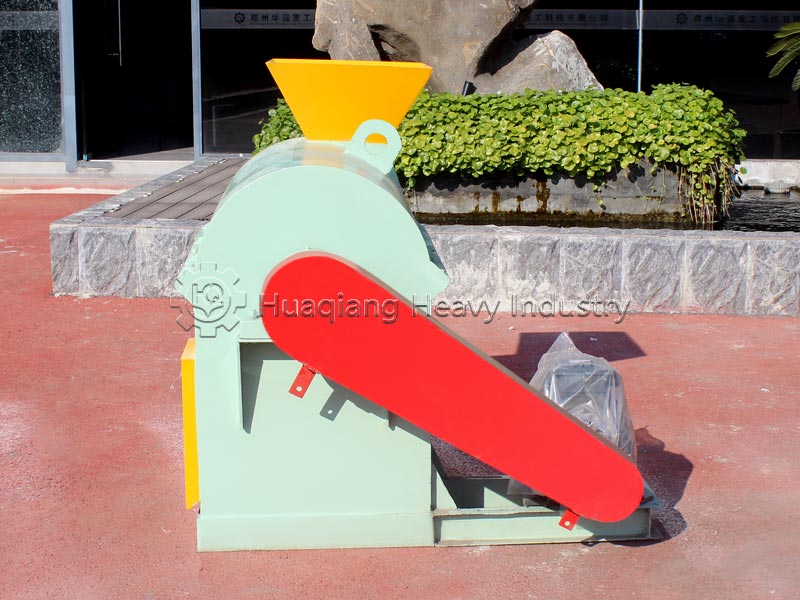
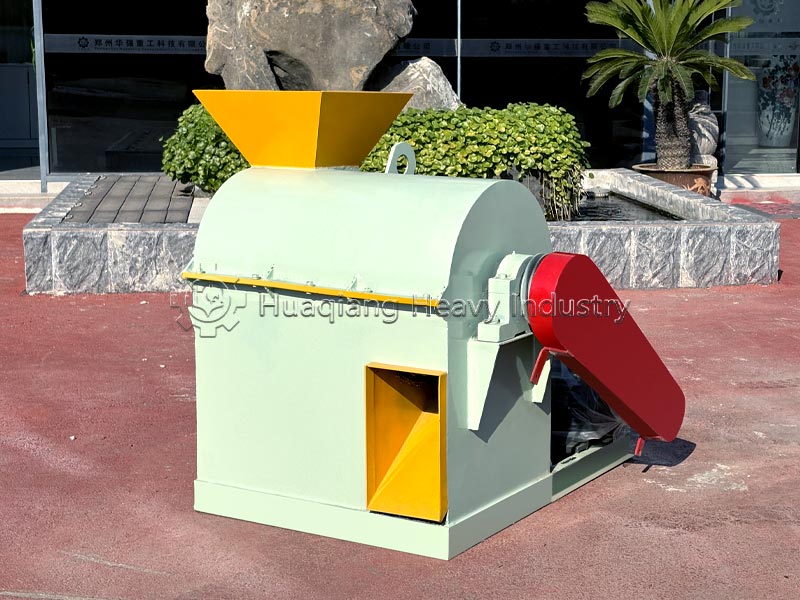


Equipment Introduction
Horizontal Crusher is a general term for crushing machinery in which all rotor shafts are placed horizontally and rotate at high speed around a horizontal axis to crush materials. As a major category of crushing machinery, horizontal crushers have a wide range of applications, including hammer crushers, ring hammer crushers, impact crushers, chain crushers, cage crushers, and many other types.
Compared to vertical crushers, horizontal crushers have significant advantages in that they have a longer crushing working section and can crush finer particles. Materials move linearly in the horizontal structure and are crushed at high speed. Combined with an open discharge, this results in higher crushing output. The structural characteristics of horizontal crushers are high production capacity, low energy consumption per unit product, and a large crushing ratio. They can replace multi-stage crushing, completing the entire product production process from coarse to fine crushing.
Horizontal crushers can be classified into several types according to their crushing method, such as chain crusher, hammer crusher, and blade crusher. According to their application and fineness, they can be classified into coarse crushers, fine crushers, and ultrafine crushers. According to their crushing principle, they can be classified into impact crushers, shear crushers, and airflow crushers.
This equipment is widely applicable to various industries such as organic fertilizer, compound fertilizer, chemical, feed, food, medicine, building materials, and mining. It is a highly versatile crushing equipment.
Equipment Structure
The structure of a horizontal pulverizer varies depending on the type, but it generally consists of the following main parts:
| System Classification | Components | Function Description |
|---|---|---|
| Body & Frame Assembly | Upper housing, lower housing, frame/base frame, feed hopper, discharge outlet | Upper and lower housings are welded with high‑quality steel plates to form enclosed crushing chamber; thick channel‑steel welded frame supports the whole machine; feed hopper for raw material feeding, discharge outlet for crushed finished product output |
| Crushing Mechanism (Core Part) | Rotor, main shaft, crushing cutter set / hammer blades / chains, toothed plate / liner plate, star‑shaped disc | Main shaft is horizontally fixed, rotor mounted on main shaft; crushing cutter set, hammer blades and chains serve as main crushing elements; toothed plate and liner plate cooperate with rotor for material breaking; star‑shaped disc optimizes material flow to prevent blockage |
| Screening & Discharging Section | Screen plate (sieve mesh), fan, discharge pipe | Screen plate semi‑encloses rotor outer side, separates crushing chamber from discharge outlet and controls discharging particle size; fan cooperates with discharge pipe to convey and output crushed materials |
| Transmission & Power Section | Motor, transmission belt / coupling | Motor provides power; transmission belt or coupling transfers power to main shaft and drives rotor rotation |
| Auxiliary Devices | Feed‑in roller cutter, water‑cooling unit, magnetic separator | Feed‑in roller cutter assists uniform feeding; water‑cooling unit adapts to heat‑sensitive material processing; magnetic separator (optional for organic fertilizer models) adsorbs iron impurities in raw materials |
Applicable Raw Materials for the Equipment
The horizontal pulverizer has a wide range of raw material adaptability, mainly including the following categories:
- Organic Fertilizer Raw Materials
Livestock and poultry manure (chicken manure, pig manure, cow manure, sheep manure, etc.)
Grass peat, rural straw waste, industrial organic waste
Mushroom residue, biogas residue, kitchen waste
- Feed Raw Materials
Corn, wheat, rice, oats, sorghum, soybean meal, and other grains
- Chemical Fertilizer Raw Materials
Compound fertilizer lumps, superphosphate, nitrogen fertilizer, potash fertilizer, etc.
Phosphorus fertilizer with moisture content <14% and free acid content <6%
- Chemical Raw Materials
Foaming agents, white carbon black, carbon black, phenolic resin, surfactants, etc.
- Mineral Raw Materials
Calcium carbonate, bentonite, talc, kaolin, graphite, and other non-metallic minerals
- Other Materials
Wood blocks, bamboo, fruit shells, traditional Chinese medicine, bark, leaves, etc.
Plastics, paper, circuit boards, etc.
- Moisture Content Requirements:
Standard Horizontal Crusher: Moisture content less than 10%
Special Model for Semi-Wet Materials: Can handle high-moisture materials with a moisture content of 30%~40%
Horizontal Chain Crusher for Fertilizer: Can handle materials with a moisture content of 14%
Working Principle of the Equipment
The material is fed uniformly into the sealed grinding chamber via a variable frequency quantitative feeding system. The high-speed rotating grinding disc generates a powerful impact force, which, combined with the shearing, friction, and airflow impact of the toothed ring, instantly completes the ultra-fine grinding of the material. The ground material then enters the grading zone with the high-pressure airflow. The variable frequency grading rotor precisely filters the particle size. Qualified fine powder is collected by a cyclone collector with the airflow, while trace amounts of dust are purified by a pulse dust collector. Coarse particles are intercepted by the grading rotor and automatically returned to the grinding chamber for secondary grinding. The entire process is a closed-loop operation with no dust leakage and precise controllable particle size.
Equipment Operation and Maintenance Methods
Operating Procedures: Strictly adhere to GMP operating standards. Before starting the machine, thoroughly clean and disinfect the equipment cavity, pipelines, and collection devices; preheat the machine under no-load for 3-5 minutes and calibrate the grading speed; adjust the feeding speed and grading parameters according to the material characteristics, and prohibit overloading; after operation, empty the entire machine of materials, complete disinfection and cleaning, and keep accurate equipment operation records.
Maintenance Methods: Clean the cavity, air ducts, and filters daily, and check the operating status of the grading rotor; check the fan pressure, bearing lubrication status, and seal sealing weekly to prevent dust leakage; calibrate the grading accuracy and motor speed monthly, and check the wear of the crushing disc and gear ring; replace the dust collector filter and aged seals quarterly, and calibrate and adjust the overall machine accuracy.
Common Equipment Problems and Solutions
| No. | Fault Phenomenon | Main Causes | Solutions |
|---|---|---|---|
| 1 | Uneven powder particle size, low fine powder yield | Improper speed of classification rotor; blocked air duct; worn crushing accessories | Adjust classification rotor speed; clean blocked air duct; replace worn‑out crushing accessories |
| 2 | Dust leakage & sealing failure | Aging of housing seals; loose pipe joints; insufficient tightening of connecting parts | Inspect housing seals and pipe connections; replace aged sealing parts; fasten connecting positions |
| 3 | Reduced classification efficiency, large coarse residue output | Deviated parameters of classification system; material sticking on classification rotor | Calibrate classification system parameters; clean materials adhered to classification rotor |
| 4 | Declined crushing fineness | Worn crushing disc; worn gear parts; misaligned equipment coaxiality | Replace worn crushing discs and gear parts; recalibrate equipment coaxiality |
| 5 | Air duct blockage, poor material conveying | Powder accumulation inside air duct; unreasonable airflow parameters | Stop machine to disassemble and clean air duct and accumulated powder; optimize airflow parameters |
| 6 | Insufficient fan pressure, poor powder collection | Fan failure; improper air pressure & air volume setting; clogged dust‑removal filter element | Check fan fault; adjust air pressure and air volume; replace clogged dust‑removal filter element |
| 7 | Cross‑contamination of materials | Incomplete equipment cleaning; inconsistent cleaning standards; mixed processing of different materials | Standardize daily cleaning procedures; disassemble parts for deep cleaning; process different materials separately |
Applications of the Equipment in Production Lines
It is primarily used as a core pre-processing device at the front end of the production line, connecting to feeders and conveyors, and then connecting to screening machines, mixers, granulators, packaging machines, and other equipment at the rear end. In organic fertilizer production lines, solid waste treatment production lines, biomass fuel production lines, and ore fine crushing production lines, it undertakes the coarse crushing, fine refining, and dispersing of raw materials, providing uniformly sized raw materials for subsequent fine processing and ensuring the stable and efficient operation of the entire production line.
Analysis of the advantages and disadvantages of the equipment
| Category | Item | Detailed Description |
|---|---|---|
| Advantages | Longer Crushing Stroke & Fine Output Particle Size | Longer crushing section compared with vertical pulverizer, finer discharge fineness; maximum fineness D97=3μm |
| High Production Capacity | Large‑scale models can exceed 10 tons per hour | |
| Large Crushing Ratio | Complete coarse crushing to fine pulverization in one pass, simplifying production workflow | |
| Obvious Energy‑saving Performance | Under equal power condition, output reaches 1.2‑1.5 times of similar equipment with lower unit energy consumption | |
| Wide Material Compatibility | Process hundreds of materials for fertilizer, feed, chemical, pharmaceutical, food, building material, mining and other industries | |
| Integrated Crushing & Mixing | Selected models combine crushing and mixing functions to reduce auxiliary equipment investment | |
| Diversified Structural Options | Optional chain‑type, hammer‑type and blade‑type crushing structures according to material properties for strong adaptability | |
| Disadvantages | Sensitive to Material Moisture Content | General models fit for material moisture<10%; high‑moisture materials tend to stick and cause blockage |
| Fast Wear of Wearing Parts | Hammers, chains and blades wear quickly and require regular inspection and replacement | |
| Vulnerable to Hard Impurities | Hard substances such as stones and metal entering chamber will easily damage working components | |
| High Operating Noise | Obvious noise generated during high‑speed rotation | |
| Heavy Load on Bearings | Main shaft bears heavy load and needs regular lubrication and maintenance | |
| High Model‑selection Difficulty | Horizontal pulverizer has numerous sub‑models, precise selection based on material characteristics is required |
Have Any Problem? Please, Contact
Integrity
Adhere to honesty and trustworthiness, be responsible to customers, employees, partners, and society, and establish long-term trust relationships.
Win win
Establish win-win relationships with all stakeholders such as customers, suppliers, and employees to share the fruits of enterprise development.