
One Line or Two Lines? Understanding the Selection Logic of Organic Fertilizer and Compound Fertilizer Production Lines
Many new fertilizer manufacturers ask the same question: I want to produce both organic and compound fertilizers simultaneously; do I need to buy two completely different sets of equipment? The answer depends on your raw materials, processes, and expected production capacity. This article helps you clarify your selection process.
Three Core Differences: Process, Raw Materials, and Production Capacity
Before deciding on the configuration, understand the fundamental differences between the two types of production lines.
Process Differences:
Organic Fertilizer Production Line: Must include a fermentation and composting stage—turning and aeration, temperature control and dehydration, and sterilization. This is a unique process for organic fertilizer, accounting for approximately 30%-40% of the total equipment investment.
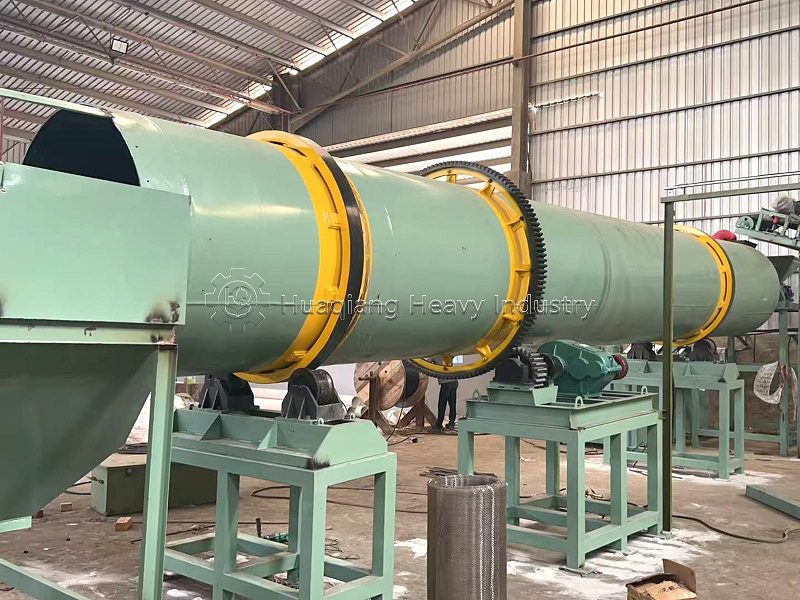
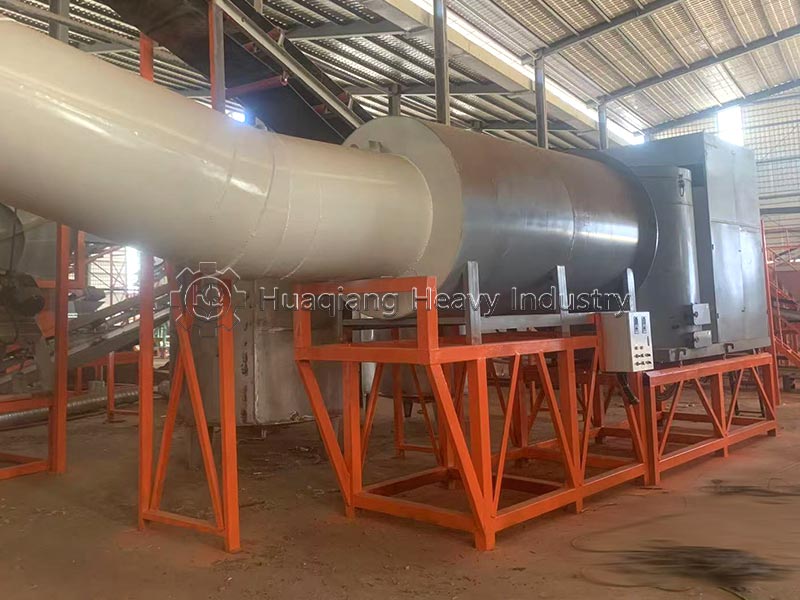
Compound Fertilizer Production Line: Does not require fermentation, but usually requires a drying and cooling system because steam or water is added during granulation. Hot air furnaces, rotary dryers, and coolers are standard equipment.
Raw Material Requirements:
Organic Fertilizer Raw Materials: Livestock manure, straw, mushroom residue, etc., need to undergo semi-wet crushing and fermentation treatment, reducing the moisture content from over 70% to below 30%.
Compound fertilizer raw materials: Potassium chloride, ammonium sulfate, diammonium phosphate, urea, and other fertilizer powders, generally with a moisture content below 5%, can be directly mixed and granulated.
Production capacity range: Both commonly have capacities of 1-20 tons/hour, but the actual output of an organic fertilizer production line is affected by the fermentation cycle—even if the equipment can granulate 10 tons per hour, sufficient well-fermented composted material needs to be prepared.
Selection points: Start with three questions
- What type of product do you plan to produce?
For pure organic fertilizer only: Configure a fermentation zone (turning machine + tank) + crusher + granulator (roller extrusion or new wet process recommended) + screening and packaging.
For compound fertilizer only: Configure a batching system + granulator (drum or disc) + drying and cooling + screening and packaging. No fermentation equipment is needed.
For both: Packaging and screening systems can be shared, but the granulation process is recommended to be separate—organic fertilizer and compound fertilizer should ideally use dedicated granulators to avoid cross-contamination and parameter conflicts. The fermentation zone and drying zone should be independent. 2. What are your main raw materials?
If you have a large quantity of inexpensive manure and straw on hand, prioritize an organic fertilizer line—low raw material costs and higher product added value.
If you can stably purchase chemical fertilizer raw materials (such as urea and potash), a compound fertilizer line is more suitable, offering more stable profit margins.

A compromise: an organic-inorganic compound fertilizer production line—mixing 30%-50% of well-rotted organic materials with chemical fertilizers for granulation, thus spreading the investment in fermentation equipment while producing a higher-priced, differentiated product.
- What are your site and environmental conditions?
Organic fertilizer lines require a large open-air or semi-open-air fermentation area (approximately 200-300 square meters for a daily manure processing capacity of 10 tons), and must include a rain shelter, leachate collection tank, and deodorization system.
Compound fertilizer lines require a more compact site, but necessitate a flue gas treatment system for hot air furnaces (such as cyclone dust collectors + water spray) to meet atmospheric emission standards.
III. Sharing vs. Independence of Two Production Lines
If you have the capacity to simultaneously operate two types of products, you can plan the shared sections as follows:
Shared Backend: Screening machine, packaging scale, palletizer – switch between receiving organic fertilizer granules and compound fertilizer granules via conveyor belts.
Independent Frontend: Fermentation zone (dedicated to organic), batching silos (dedicated to compound fertilizer), and separate granulation and drying systems.
This separate line design meets process requirements while saving approximately 20% of investment (compared to two completely independent lines).
Based on industry experience, a production line with an annual output of 10,000 tons of organic fertilizer (1-2 tons/hour) requires an equipment investment of approximately 250,000-400,000 RMB; a compound fertilizer line with the same capacity requires a drying system, requiring an investment of approximately 400,000-600,000 RMB. The payback period for both is 12-18 months.
The decision to produce organic and/or compound fertilizers hinges on raw materials, process, and capacity. For pure organic fertilizer, the organic fertilizer fermentation process is essential, using a chain, trough, or wheel turner. Raw materials (manure, straw, moisture >70%) require organic fertilizer raw material processing equipment, such as a half-wet material crusher machine, before granulation. The organic fertilizer production equipment set includes crushers, mixers, granulators, and screens. Within the organic fertilizer granulator series, options for organic lines include a new type two in one organic fertilizer granulator (combining mixing and granulation) or a disc granulator for spherical granules. For a complete organic fertilizer disc granulation production line, the disc granulator is the core. For compound fertilizer, a roller press granulator production line (dry process) requires no fermentation but includes a drying and cooling system. For a disc granulation production line for compound fertilizer, a dryer/cooler is needed. For producing both products, separate granulation and drying systems are recommended to avoid cross-contamination, but packaging and screening systems can be shared. A compromise is an organic-inorganic compound fertilizer line (30%-50% organic material mixed with chemical fertilizers), spreading fermentation investment while producing a higher-priced product. For a 10,000 t/year organic line (1-2 t/h), investment is ~250,000-400,000 RMB; a compound line of same capacity (requires drying) is ~400,000-600,000 RMB. Payback period: 12-18 months. Small-batch trial production (50 kg sample) with the equipment manufacturer is recommended before signing the contract. Understanding the distinct roles of organic fertilizer production equipment and compound fertilizer equipment is key to building a cost-effective, efficient production system.
Finally, a reminder: Regardless of which line you choose, it is recommended to conduct a small-batch trial production first. Obtain a 50 kg sample from your raw material supplier and send it to the equipment manufacturer for granulation and drying tests. Sign the contract only after obtaining the actual test data. This can avoid repeated production adjustments due to incorrect selection.