
Rotary Drum Granulator: The Spinning Cradle of Fertilizer Granules
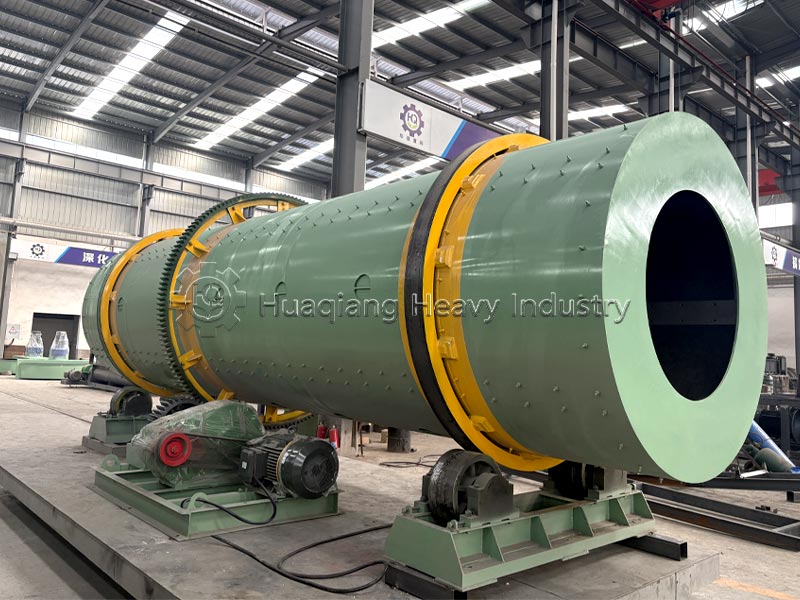
In the granulation arena of modern fertilizer production, where efficiency, uniformity, and high capacity are paramount, the Rotary Drum Granulator stands as a classic and formidable workhorse. Imagine a massive, slightly inclined cylinder spinning tirelessly—this is the “spinning cradle” where fertilizer powder is nurtured into robust, spherical granules. Through a gentle yet persistent tumbling action, it transforms a fine blend of raw materials into dense, uniform pellets, ready for drying and coating, making it the heart of large-scale compound and organic-inorganic fertilizer production.
Core Advantages: High Capacity, Robust Granules & Simple Operation
The rotary drum granulator’s enduring popularity stems from its straightforward yet highly effective principle, delivering unmatched benefits for industrial-scale output.
Unrivaled Continuous Processing Capacity
Its primary strength is massive, continuous throughput. Unlike batch processors, material is constantly fed into one end of the rotating drum and discharged as finished granules from the other. This allows for seamless integration into a continuous production line, enabling 24/7 operation with outputs ranging from several to over fifty tons per hour, satisfying the demands of the largest fertilizer plants.
Production of Dense, High-Strength Granules
The granulation mechanism—agglomeration by coalescence—occurs as the moistened powder is lifted by the drum’s rotation and then cascades down in a curtain. Particles collide and stick together, growing layer-by-layer like a snowball. This produces granules with high crushing strength and bulk density, excellent for withstanding the rigors of storage, long-distance transport, and mechanical spreading without excessive dust formation.
Mechanical Simplicity & Process Adaptability
The design is fundamentally simple: a rotating shell supported by trunnion rollers. This simplicity translates to robustness, low maintenance, and ease of operation. It is highly adaptable, capable of granulating a wide range of formulations, from high-nitrogen compound fertilizers to organic-inorganic blends, by adjusting parameters like drum speed, inclination, and liquid binder spray.
Synergistic Role: The Central Transformation Unit in a Granulation Line
The rotary drum granulator is rarely a standalone unit; its performance is maximized within a perfectly orchestrated sequence of equipment.
Receiving the Perfect Premix: It depends on a perfectly homogenous and finely ground feed from upstream double shaft mixers or crushers. Consistent raw material is non-negotiable for uniform granule formation.
Integration with Binder Systems: A critical component is the internal liquid spraying system, which evenly distributes water, steam, or a chemical binder (e.g., molten ammonium salts) onto the tumbling powder bed, initiating the agglomeration process.
Feeding the Post-Granulation Thermal Train: The moist, “green” pellets discharged from the drum are immediately conveyed to a rotary dryer to reduce moisture, then to a rotary cooler to stabilize their temperature. The drum granulator’s output consistency is crucial for the efficiency of these downstream thermal processors.
Closing the Loop with Screening: The dried and cooled granules are screened. Oversize particles are crushed and recycled back to the mixer or drum feed, while fines are directly returned to the drum inlet as seed particles, optimizing raw material use and granulation yield.
Comparison with Other Granulation Methods
| Feature | Rotary Drum Granulator | Disc (Pan) Granulator | Double Roller Press Granulator |
| Principle | Coalescence growth in a rolling bed. | Layering growth on a rotating inclined pan. | Compaction by extreme mechanical pressure. |
| Granule Shape | Spherical or rounded. | Very spherical. | Irregular flakes (broken into granules). |
| Capacity | Very High (Continuous, large-scale). | Moderate to High. | High. |
| Granule Strength | High. | Moderate to High. | Very High (Dense, low-porosity). |
| Soluble Salt Use | Excellent for high-salinity melt granulation. | Good. | Not applicable for melt processes. |
| Process Control | Good, but requires steady, high feed rates. | Excellent, easy to observe and adjust on the pan. | Good, primarily pressure control. |
The Future: Smarter, Cleaner, and More Efficient
Innovation focuses on enhancing control, sustainability, and flexibility.
Advanced Process Control: Integration of infrared moisture sensors and vision systems inside the drum to monitor granule growth in real-time, automatically adjusting liquid spray rates and feed composition for optimal size control.
Internal Design Optimization: Modern drum internals feature specialized lifters and flight arrangements to optimize the cascading motion, improve heat transfer in steam granulation, and prevent wall scaling.
Dust and Emission Containment: Improved sealing systems at the feed and discharge ends, coupled with integrated dedusting airflows, to capture and recycle fine particles, creating a cleaner working environment and improving material efficiency.