
Equipment Introduction
The rotary drum screener, also known as a rotary drum screener, is a specialized static screening device for grading finished products and separating return materials in organic fertilizer and compound fertilizer production lines. Unlike vibrating screens, it operates without severe vibration, relying on a low-speed rotating drum to complete particle grading. The Huaqiang GS series is a standard model in the fertilizer industry.
Core Advantages
- Smooth and low-vibration operation; no high-strength concrete foundation required; suitable for installation on factory floors and simple ground surfaces.
- Self-cleaning and anti-clogging design: Material continuously tumbles with the drum, automatically removing adhering material; suitable for dried wet fertilizer granules; optional beater completely eliminates screen clogging.
- Modular segmented screen; single/double layer multi-stage grading; easy screen replacement.
- Low breakage and low noise; low-speed operation (10~22 r/min); fertilizer granule breakage rate is far lower than vibrating screens.
- Optional sealed and environmentally friendly design; equipped with a fully enclosed dust cover, preventing dust leakage during screening.
- Compatible with all production lines, covering hourly capacities from 1 to 25 tons, matching fertilizer production lines from 10,000 to 500,000 tons. The core process function is to separate the dried and cooled fertilizer into three categories: qualified finished products, fine powder return materials, and large lumps: qualified granules are sent to the coating/packaging section, while fine powder and large lumps are returned to the granulator for secondary processing, achieving zero loss of raw materials.
Equipment Structure Composition
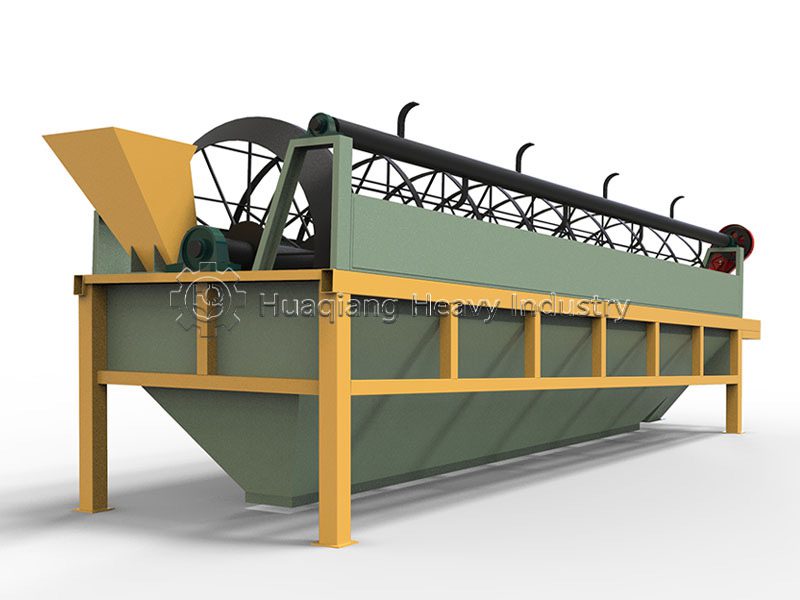
The entire machine is divided into three main parts: the frame assembly, the drum screen body, and the transmission system, as well as the infeed/outfeed and auxiliary accessories.
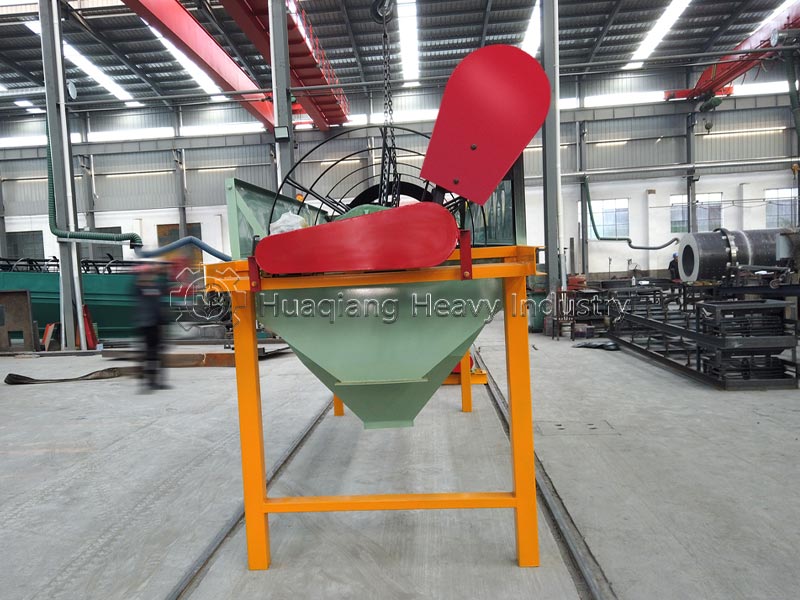
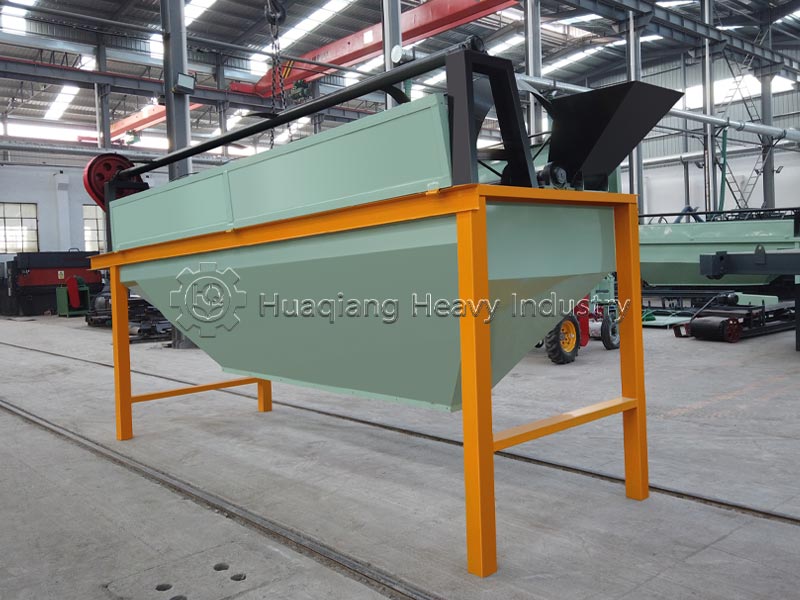
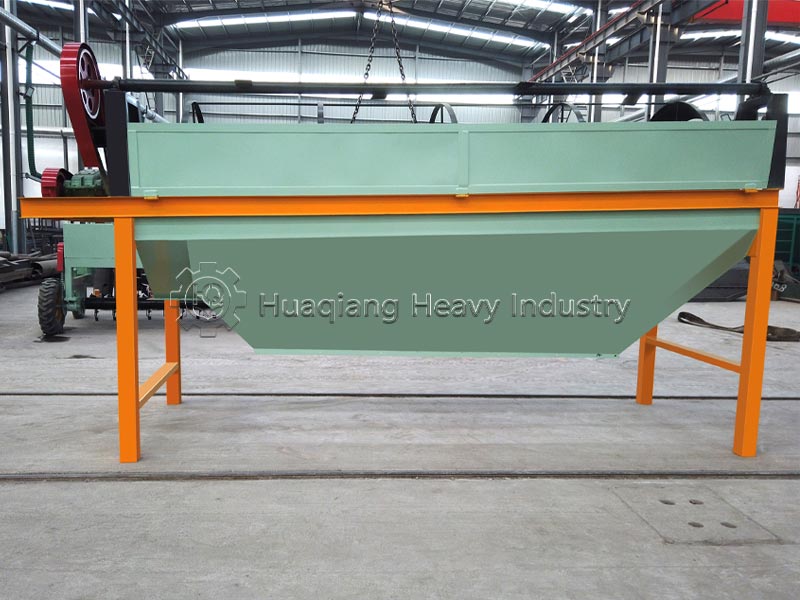
- Frame Assembly: A lightweight, integrally welded support frame made of channel steel and steel plates, eliminating the need for a heavy base. It features separate hoppers for finished products, fine powder, and coarse materials, providing multi-channel material collection.
- Drum Screen Body (Core): A cage-type drum spindle is installed at a 5°~15° inclination. The drum body is segmented and equipped with perforated screens (carbon steel/304 stainless steel optional). The drum contains internal lifting ribs to enhance material tumbling and dispersing. Bearing seats at both ends support the drum rotation.
- Transmission System: A standard motor + V-belt + ZQ series reducer + sprocket and chain drive; providing stable low-speed torque output and easy disassembly and maintenance of transmission components.
- Supporting Auxiliary Components: A fully enclosed dust cover, infeed flange, three-channel discharge chutes, anti-clogging beater rollers, inspection and observation port, and grounding protection.
Working Principle
The drum is driven by a motor and reducer to rotate at low speed. The entire machine is arranged with a slight inclination. Material enters the drum from the high-end feed inlet:
- The lifting ribs inside the drum rotate with the drum body, continuously lifting and dropping fertilizer granules, loosening clumps;
- Qualified granules and fine powder with a particle size smaller than the screen mesh size pass through the screen and fall into the corresponding hopper below;
- Large clumps and oversized coarse particles cannot pass through the screen and move along the inclined drum wall to the end, exiting from the coarse material outlet;
- An optional beating device continuously taps the outer wall of the screen, automatically removing adhering wet fertilizer and preventing clogging even after long-term use;
- The three types of materials are continuously discharged through separate channels and transported to the packaging and granulation return sections respectively.
Applications of the Equipment
Drum screens have a wide range of applications:
- Fertilizer Production (Core Application)
Organic Fertilizer, Bio-organic Fertilizer: Grading and screening of finished granules
Compound Fertilizer, Compound Fertilizer: Separation of finished product from returned material
Pre-screening of fermented material: Removal of impurities such as stones
Powdered Fertilizer: Impurity removal treatment
- Other Industries
Widely used in mining, metallurgy, building materials, chemical, power plants, coking, and other industries, suitable for screening and grading materials such as coal, coke, lime, sand, and gravel.
- Material Adaptability
Drum screens are particularly suitable for screening materials of various properties, including moist and easily clogged materials. The maximum undersize product is less than 100mm, the middle size is 10-50mm, and the finest can be ≤3mm.
Equipment capacity range
| Equipment Model | Cylinder Diameter × Length (m) | Matching Motor (kW) | Hourly Capacity (t/h) |
|---|---|---|---|
| GS1.0×3.0 | Φ1.0×3.0 | 4.05 | 1~3 |
| GS1.2×4.0 | Φ1.2×4.0 | 5.5 | 3~10 |
| GS1.8×6.0 | Φ1.8×6.0 | 7.5 | 10~25 |
The drum speed is uniformly 10~22r/min. Different mesh sizes of screens can be replaced according to the particle size, and the capacity fluctuates slightly with the size of the screen holes.
Application of Equipment in the Production Line
- Core Position in the Fertilizer Production Line
The drum screen plays the role of “quality gatekeeper” in the fertilizer production line. It is usually located after drying and cooling and before packaging, serving as the final checkpoint before the finished product leaves the factory.
Complete Processing Flow:
Raw Material Pretreatment → Fermentation and Composting → Crushing → Ingredient Mixing → Granulation → Drying → Cooling → Drum Screening → Coating → Packaging
- Specific Functions in the Production Line
(1) Separation of Finished Products and Returned Materials
Finished product granules that meet specifications pass through the screen to the next process, while oversized granules or clumps that do not meet specifications are returned to the production line for reprocessing.
(2) Finished Product Grading
The finished products are divided into multiple grades according to particle size through screens of different apertures, ensuring uniform classification.
(3) Pre-screening of Fermentation Material
Stones, large impurities, etc., are removed from the material before or after fermentation.
(4) Grading after Granulation
The granulated particles are graded according to particle size, separating qualified finished products from unqualified returned materials.
- Screen mesh size selection
| Application Scenario | Recommended Sieve Aperture | Sieve Mesh Material |
|---|---|---|
| Pre‑screening of Fermented Material | 10‑20mm | Manganese Steel Woven Mesh / Perforated Plate |
| Finished Product Grading after Granulation | 2‑4.5mm | Stainless Steel / High‑Carbon Steel / Manganese Steel |
- Special design: For screening semi-wet materials, the mesh is prone to clogging, generally requiring the installation of an anti-clogging impact device. Some equipment also features a plate-type automatic screen cleaning mechanism for automatic cleaning.
Summary table of common faults and solutions for drum screeners
| Fault Phenomenon | Main Causes | Solutions |
|---|---|---|
| Screen hole blockage, low screening efficiency | High‑humidity material easily clogs screen holes; improper screen mesh tension; abnormal operation of cleaning mechanism with poor cleaning effect | Manually clean screen holes regularly; reduce material feeding humidity; properly adjust screen mesh tension; use secondary vibration anti‑blocking; fasten tension bolts; install auxiliary knocking device according to working conditions |
| Excessive equipment noise | Loose bolts and fasteners of each part; abnormal noise caused by vibration during operation | Fully check fasteners of the machine; retighten loose bolts and accessories to eliminate vibration source |
| Wrong rotation direction (drum reverses) | Wrong wiring of motor power supply leads to reverse running of equipment | Cut off power and check motor wiring; reconnect power cables to ensure forward rotation of drum |
| Difficult motor start‑up, overheating of machine body | Excessive feeding capacity, equipment overload operation; improper tightness of transmission belt (too loose or too tight) | Adjust feeding volume reasonably to avoid overload operation; adjust belt tightness properly to prevent slipping and overheating and extend service life |
| Poor screening quality, off‑standard classification | Blocked screen holes leading to poor material passing; damaged screen mesh; uneven material distribution on screen with local material accumulation | Clean blocked screen holes timely; inspect screen surface and replace damaged mesh immediately; install material distributing device for uniform feeding to improve screening uniformity and finished product quality |
| Insufficient equipment rotating speed | Over‑loose transmission belt; large power transmission loss, unable to reach rated rotating speed | Adjust transmission belt tightness timely to ensure stable power transmission and restore rated working speed |
Target Audience:
- Professional manufacturers of organic fertilizers, compound fertilizers, bio-fertilizers, and slow-release fertilizers;
- Large-scale livestock and poultry farming groups with their own manure-to-fertilizer processing workshops;
- Enterprises engaged in the resource-based and environmentally friendly disposal of sludge and kitchen waste;
- Fertilizer equipment integrators and production line engineering service providers;
- Agricultural input foreign trade buyers and overseas small and medium-sized fertilizer processing plants.
Summary of Equipment’s Comprehensive Technical Features:
- Low vibration and easy installation: No heavy concrete foundation required; suitable for retrofitting both new and old workshops.
- Self-cleaning and anti-clogging design suitable for wet fertilizer: Double cleaning with tumbling and beating ensures stable screening of high-moisture organic fertilizer.
- Flexible grading: Segmented combined screens allow for simultaneous coarse, medium, and fine three-stage sorting.
- Excellent finished product protection: Low particle breakage rate during low-speed operation results in better fertilizer product appearance.
- Simple operation and maintenance: Standardized wear parts and screen clamps allow for quick replacement by a single person.
- Environmentally friendly and enclosed: Equipped with a fully enclosed dust cover, eliminating dust pollution in the screening section and meeting environmental acceptance standards.
Have Any Problem? Please, Contact
Integrity
Adhere to honesty and trustworthiness, be responsible to customers, employees, partners, and society, and establish long-term trust relationships.
Win win
Establish win-win relationships with all stakeholders such as customers, suppliers, and employees to share the fruits of enterprise development.