


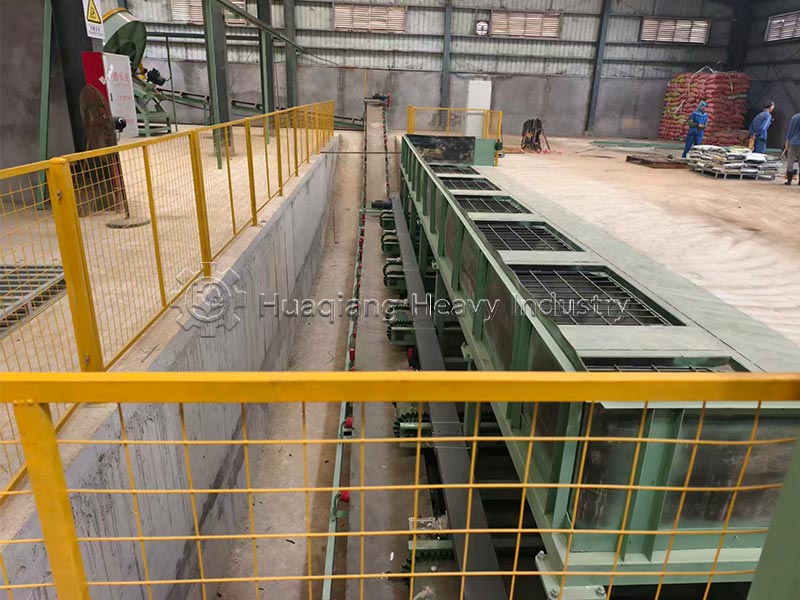

Equipment Introduction
The Single Silo Single Weigh Dynamic Automatic Batching System is the most basic and classic automated batching solution in the fertilizer production field. It adopts an independent configuration of “one silo, one scale”—each raw material silo corresponds to a dedicated high-precision weighing module.
The core value of this system lies in upgrading the traditional manual weighing or volumetric measurement method to automated, precise batching controlled by a microcomputer. It can independently weigh, distribute, and mix various raw materials according to a preset formula, avoiding interference and measurement errors between raw materials from the source.
Equipment Structure
The core structure of a single-silo single-weighing system consists of four main components:
- Storage Silo: Used to temporarily store a single raw material to be batched. Each silo is independently designed and corresponds to only one type of raw material, physically eliminating the risk of mixing. The silo body is usually made of stainless steel with an anti-corrosion treatment.
- Weighing Module: Each silo is equipped with an independent weighing module, typically using high-precision strain gauge sensors. The system uses a “one silo, one weigher” configuration, with each weighing module operating independently without interference.
- Feeding Device: Responsible for conveying materials from the silo to the weighing equipment. Different types of feeders can be flexibly configured according to different material characteristics:
1)Screw feeder: Suitable for free-flowing granular materials
2)Vibrating feeder with stirring function: Suitable for easily agglomerated powdery materials
3)Belt feeder: Suitable for high-flow continuous batching
- Control System: The “brain” of the system, usually based on a PLC or microcomputer. It is responsible for analyzing sensor data and outputting control commands to achieve fully automated operation. The system can store hundreds of recipe parameters and has functions such as fault self-diagnosis, audible and visual alarms, and data logging.
Operating Principle of the Equipment
The single-silo single-weighing system operates as an automated closed-loop control process, primarily divided into three stages:
Stage 1: Pre-dosing
After system startup, based on the preset formula, the feeding device rapidly delivers the target material to the weighing module in a “fast-feed” mode.
Stage 2: Dynamic Compensation
When the weight approaches the set value, the system automatically switches to a “medium-feed, slow-feed” stepped feeding mode. The dynamic weighing algorithm captures weight changes during the material’s descent in real time, precisely controlling the feeding speed and effectively mitigating the impact of material impact on weighing accuracy.
Stage 3: Error Self-Correction
The system learns from historical data and compensates for system errors in real time. After each raw material is weighed independently, it is conveyed into the mixing equipment by a conveyor device.
Summary table of equipment application scope and applicable raw materials
| Classification | Item | Detailed Description |
|---|---|---|
| Application Scope | Fertilizer Production (Core Application) | It can be matched with complete production lines for BB fertilizer, organic fertilizer, compound fertilizer and compound‑mixed fertilizer. Especially suitable for fertilizer production conditions with many raw material types, large proportion differences and complex processes, featuring high batching accuracy and strong adaptability. |
| Applicable Material Conditions | Supports automatic precision weighing and batching for powdery, granular, flaky and small‑block solid materials. It adapts to mixed proportion processes of various raw material forms in organic fertilizer production. | |
| Other General Industries | Besides fertilizer industry, it is widely applied in automatic material batching and quantitative proportioning processes for solid materials in chemical, pharmaceutical, food, building materials and other industries. | |
| Applicable Material Forms & Configuration | Applicable Material Types | Powdery materials: various mineral powder and fertilizer powder such as phosphate powder and ore powder; Granular materials: chemical fertilizer granules including urea and compound fertilizer particles; Flaky/small‑block materials: stable batching for common solid bulk materials. |
| Differentiated Matching Solutions | Good‑flow granular materials: equipped with screw feeder for stable feeding; easy‑caking powder: adopt vibrating feeder with agitator to prevent bridging and blockage; high‑humidity fermented materials and light humus soil: stable batching realized by adjusting control parameters. The whole machine adopts stainless steel to resist corrosion from acidic fertilizer materials. | |
| Application Boundary Limitation | Not applicable: liquid and pasty materials cannot realize quantitative batching; Conditionally applicable: materials with ultra‑high viscosity or extreme caking tendency require additional feeding devices for normal operation. |
Equipment Applications in Production Lines
- Core Position in Fertilizer Production Lines
The single-silo, single-weighing batching system is the core equipment at the front end of the fertilizer production line, located after raw material input and before mixing/granulation.
Complete Processing Flow:
Raw Material Input → Single-Silo, Single-Weighing Automatic Batching → Mixing and Stirring → Granulation → Drying → Cooling → Screening → Packaging
- Application in Organic Fertilizer Production
Organic fertilizer raw materials come from a wide range of sources, including agricultural waste such as livestock and poultry manure and straw, as well as industrial by-products such as humic acid and amino acids. This system can flexibly configure the feeding device according to the characteristics of different raw materials to ensure stable batching. Actual testing shows that the system can control the batching accuracy of organic fertilizer raw materials in different forms, such as granular and powdered forms, within ±0.2%, far exceeding the industry average of ±1%.
- Application in BB Fertilizer/Compound Fertilizer Production
In BB fertilizer and compound fertilizer production, this system is commonly used in NPK fertilizer mixing, DAP mixing, and other scenarios. Compared to traditional semi-automatic batching lines, this system can increase the batching rate per unit time by over 30%, and raise the equipment’s effective operating rate from 75% to over 90%.
- Flexible Switching Between Multiple Formulas The system can store hundreds of formula parameters, enabling rapid recall and modification of formulas. Production formulas can be adjusted at any time according to the fertilization needs of different crops and soil types. Batching accuracy can reach ±0.5%, and control accuracy ±1%.
Production capacity range
| Model Bin Quantity | Single Bin Volume (m³) | Total Hourly Batching Capacity (t/h) | Single Bin Weighing Range |
|---|---|---|---|
| 2‑bin | 0.8~1.2 | 3~6 | 0~1000kg |
| 4‑bin | 1.2~1.6 | 6~15 | 0~1500kg |
| 6‑bin and above | 1.6~2.4 | 15~40 | 0~3000kg |
Matching accuracy: Static ≤ ±0.2%, dynamic belt conveyor ≤ ±1%, the number of silos can be increased or decreased as needed.
Common Faults, Causes, and Standardized Solutions
| Fault Phenomenon | Root Cause | Professional Solutions |
|---|---|---|
| Excessive batching error of single bin | Weighing bin deformation, aging shock‑absorbing pad, too‑fast fine feeding speed | Independently clean the weighing unit, replace shock‑absorbing pad, reduce fine feeding speed, perform independent zero‑point calibration |
| No discharging & material bridging of single silo | Damaged vibration arch‑breaking motor, fertilizer moisture absorption and caking | Repair vibration motor, control workshop humidity, install auxiliary stirring rod inside bin |
| Simultaneous flow fluctuation of multiple bins | Deviation of bottom collecting belt, workshop vibration transmitted to weighing body | Correct belt, install thickened shock‑absorbing pads for each weighing unit |
| Loss of sensor signal | Moist terminal box, loose signal wire, sensor burnout from overload | Dry terminal box, fasten wiring, replace damaged weighing module |
| Massive dust overflow during discharging | Blocked dust‑suction opening of single‑bin dust removal, damaged flexible sealing connection | Clean filter bag, replace bin‑mouth sealing parts |
| Feeding motor overload tripping | Large caked material blocks screw / belt | Stop machine and empty materials in this bin, install impurity‑removal screen at front‑end |
Target Customers for this Equipment:
- Organic Fertilizer Manufacturers: The diverse types and varying proportions of raw materials are typical characteristics of organic fertilizer production. The independent compartment design of the single-compartment, single-weighing system ensures that the feeding and weighing processes of each raw material do not interfere with each other, making it particularly suitable for the complex batching requirements of organic fertilizer production.
- BB Fertilizer/Blended Fertilizer Manufacturers: BB fertilizer production requires high precision in batching, necessitating the precise mixing of multiple raw materials. This system effectively ensures that the nitrogen, phosphorus, potassium, and trace element content of each batch of fertilizer meets the formula requirements.
- Compound Fertilizer/Blended Fertilizer Manufacturers: Companies requiring automated batching of multiple raw materials.
- Companies Building or Expanding Fertilizer Production Lines: Fertilizer production projects requiring a modern batching system. The system’s fully automated control enables seamless integration of production processes.
- Small and Medium-Sized Fertilizer Plants Seeking Quality Upgrades: For companies transitioning from manual to automated batching, the single-compartment, single-weighing system is a cost-effective, entry-level automation solution.
Have Any Problem? Please, Contact
Integrity
Adhere to honesty and trustworthiness, be responsible to customers, employees, partners, and society, and establish long-term trust relationships.
Win win
Establish win-win relationships with all stakeholders such as customers, suppliers, and employees to share the fruits of enterprise development.