
Equipment Introduction
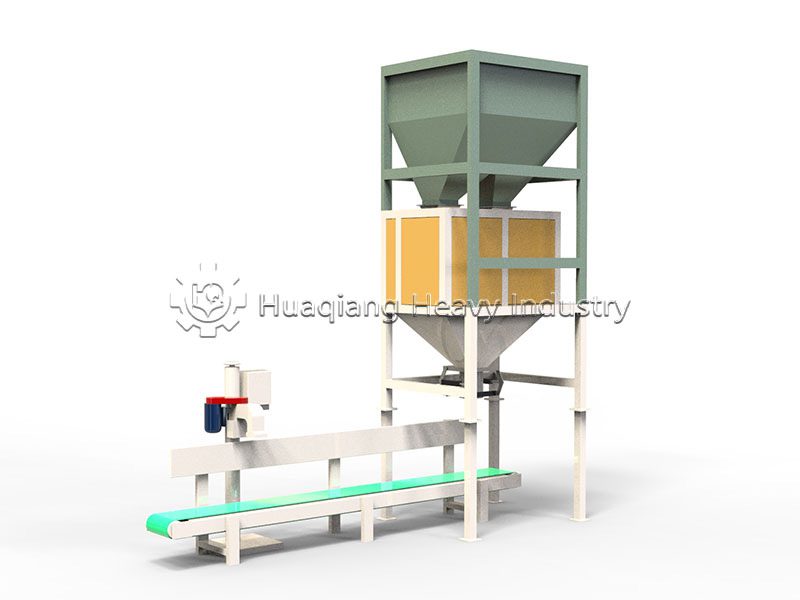
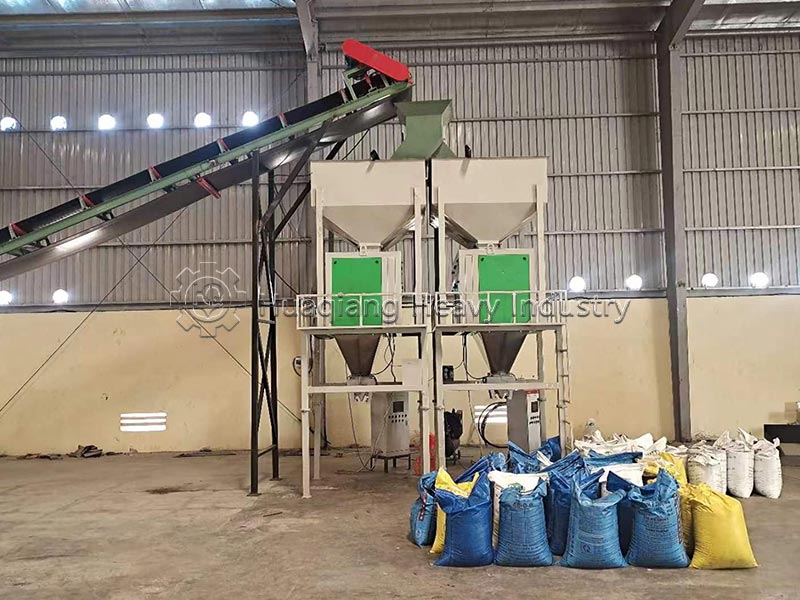
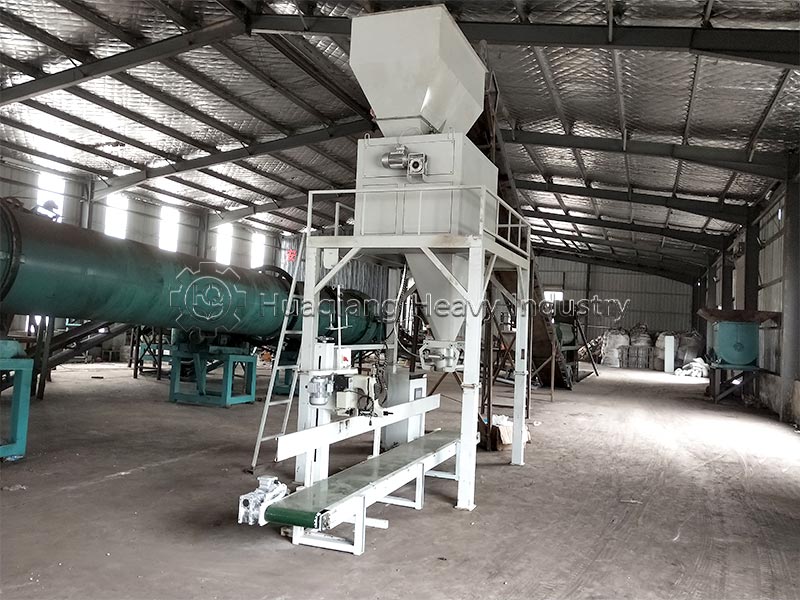
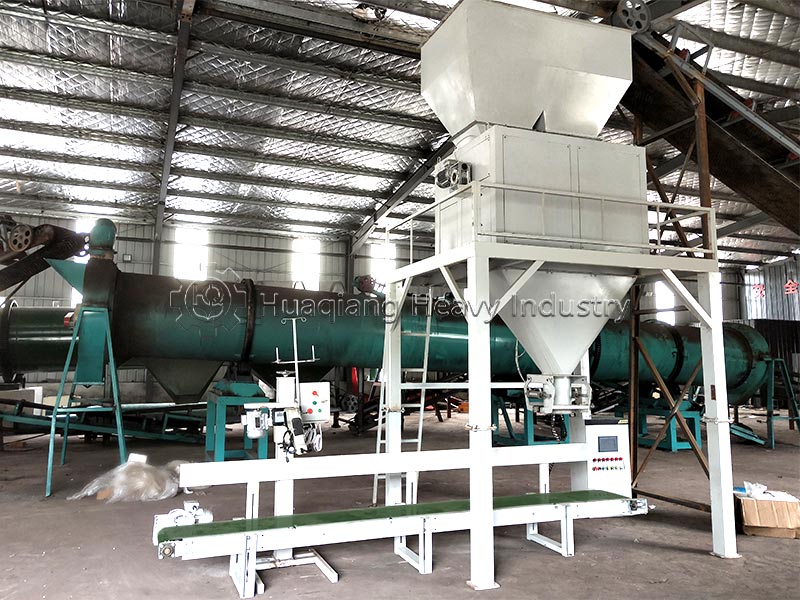
The ton bag fertilizer packaging machine, also known as a ton bag machine, large bag packaging machine, or ton bag packaging scale, is a large-scale packaging equipment specifically designed for weighing and packaging bulk materials such as fertilizers into bags ranging from 500 to 2000 kg/bag.
The ton bag fertilizer packaging machine is a core piece of equipment for bulk packaging at the end of the fertilizer production line. It integrates electronic weighing, automatic bag removal, and dust removal, offering a high degree of automation, high packaging accuracy, and adjustable packaging speed. This equipment is suitable for large-bag packaging of powdery, granular, flake, and small block fertilizers, and is a crucial link between finished product warehousing and logistics transportation.
Equipment Structure Composition
The entire machine is divided into five main modules: a buffer feeding unit, a weighing and metering unit, a ton bag clamping and lifting unit, a dust removal and vibration unit, and a PLC electrical control system.
- Buffer Feeding Mechanism: High-level buffer hopper; powder mill models have a built-in vibrating arch-breaking motor + stirring rod; pellet mill models are equipped with double-layer gates (coarse material gate, fine material gate); screw feeder models use variable frequency double screw independent speed regulation.
- Core Weighing Unit: Heavy-duty weighing bridge + high-precision tension/pressure sensors, available in net weight type (weighing before filling) and gross weight type (simultaneous weighing with bag hanging); the weighing base is equipped with shock-absorbing pads to isolate external vibrations from interfering with metering accuracy.
- Ton Bag Clamping and Lifting Assembly: Four lifting hooks/pneumatic clamps, large-diameter sealed dust removal skirt, and lifting cylinder; manual hanging straps for the manual version, and a mechanical bag-supporting robot for the fully automatic version, completely covering the outlet of the bag to prevent powder spraying.
- Dust Removal and Compaction Auxiliary Unit: High-power pulse negative pressure dust collector, simultaneously removing dust during filling; low-frequency vibration platform at the bottom, intermittent vibration during filling to compact the fertilizer.
- Intelligent Electrical Control System: Touch screen PLC control cabinet, supporting multiple formula storage, automatic tare, out-of-tolerance audible and visual alarms, production statistics, and fault self-diagnosis; the entire machine is anti-static grounded, and explosion-proof electrical control is optional for powder workshops.
- Supporting Auxiliary Equipment: Finished product belt conveyor, ton bag sealing and sewing machine, forklift pallet conveyor line, palletizing robot (optional).
Working Principle of the Equipment
The workflow of the ton bag fertilizer packaging machine is a semi-automatic or fully automatic closed-loop control process:
Step 1: Manual Bag Loading (Semi-automatic) or Automatic Bag Loading (Fully Automatic)
In semi-automatic models, the operator hangs the four straps of the ton bag on the hook and places the discharge port over the sealed discharge port. In fully automatic models, this is accomplished by the automatic bag loading system.
Step 2: Bag Clamping and Automatic Tare
The bag clamping and sealing switch is activated, clamping the bag opening onto the discharge pipe. The weighing system automatically tares and zeros the weight, deducting the weight of the empty bag.
Step 3: Graded Feeding
The feeding mechanism feeds material at two speeds (high and medium, or fast and slow):
Fast Feeding: The feeding screw rotates at high speed, quickly filling the bag.
Slow Feeding: The feeding speed decreases as the material approaches the set value, ensuring accuracy.
The feeding method can be selected based on the material characteristics: gravity feeding, screw feeding, vibratory feeding, or belt feeding.
Step 4: Weighing and Judgment
The sensor monitors the weight in real time and stops feeding when the set value is reached. Packaging accuracy is typically ±0.1% to ±0.6%.
Step 5: Bag Release and Hook Unhooking
After weighing, the bag-pressing cylinder releases the bag opening, and the hook automatically unhooks. The packaged bag falls onto the conveyor equipment.
Step 6: Conveying and Palletizing
The packaged ton bags are transported to the warehouse or loading area via conveyor equipment.
Summary table of application scope and applicable raw materials for ton bag fertilizer packaging machines
| Fault Phenomenon | Main Causes | Solutions |
|---|---|---|
| Inaccurate metering, overweight deviation exceeds standard | Weighing sensor damp, material sticking, uneven force; too‑fast feeding speed, heavy powder impact; material sticking on inner wall of weighing hopper; malfunction of coarse/fine feeding mechanism, excessive or insufficient supplementary feeding | Clean sensor surface, ensure horizontal installation; adjust valve opening, add buffer device; fasten wiring terminals, recalibrate with standard weights; spray PTFE coating on hopper inner wall to reduce sticking; inspect coarse/fine feeding valves and adjust screw speed |
| Material blockage at discharge port and conveying pipeline | Moist caking powder with poor flowability; worn or jammed screw blades; undersized discharge opening; foreign objects entering pipeline | Power off before clearing blockage, do not strike equipment with hard objects; crush and sieve caked material in advance; inspect screw blades and replace heavily‑worn parts; install vibratory feeder on silo; optimize discharge opening dimension |
| Dust leakage and powder overflow | Aged and damaged sealing parts; insufficient dust‑removal fan air volume, clogged filter screen; packaging bag misaligned with discharge spout | Replace seals and dust‑proof components, add sealing gaskets; clean dust collector screen and replace filter cartridges, inspect fan; adjust bag positioning mechanism to fully insert spout into bag opening |
| Screw feeding fault, unstable feeding speed, slow discharging | Long‑term worn screw blades; clearance between housing and blade>2mm causing material leakage; caked material jamming screw shaft | Disassemble and inspect screw blades, replace when wear exceeds 30%; repair housing gap or replace whole unit; regularly clear caked material at feeding inlet |
| Abnormal control system, batch packaging overweight or underweight | Manual wrong modification of metering parameters; disordered PLC program | Check and restore correct metering parameters; re‑download and repair PLC program; calibrate emergency‑stop button and photoelectric sensor sensitivity |
Application of Ton Bag Packaging Machines in Fertilizer Production Lines
(I) Complete Process Link: Granulation/Crushing Section → Drum Screen → Finished Product Silo → Bucket Elevator → Ton Bag Fertilizer Packaging Machine → Belt Conveyor → Sealing/Pallet Palletizing → Warehouse/Truck Transportation
(II) Section Support Logic
- Large-volume Export Support: Supports bulk raw material shipments from fertilizer plants and full-truckload shipments from farms/agricultural wholesalers in ton bags, replacing a large number of 25/50kg small bags and significantly reducing packaging and transportation labor costs;
- Raw Material Transfer and Recycling: Fermentation raw materials and purchased mineral powder in ton bags are directly fed into the batching section after warehousing;
- Dual-line Parallel Solution: The production line is simultaneously equipped with small bag packaging machines and ton bag packaging machines at the back end, accommodating both retail small bag and bulk ton bag orders;
- Dust Closed-Loop Recovery: Fine fertilizer powder collected during filling and dust removal is returned to the buffer silo, resulting in zero raw material loss.
Target Customers:
- Large-scale production plants of organic fertilizer, compound fertilizer, humic acid powder, and water-soluble fertilizer;
- Large-scale livestock and poultry breeding groups and farms with their own fertilizer processing workshops, storing large quantities of fertilizer in bulk in ton bags;
- Agricultural input wholesale distribution centers and fertilizer trading transit warehouses, repackaging bulk fertilizer into ton bags for export;
- Municipal sludge and kitchen waste resource utilization enterprises, packaging fermented organic fertilizer in large quantities for shipment;
- Fertilizer complete equipment integrators and suppliers of fully automated packaging and palletizing lines;
- Overseas fertilizer and organic fertilizer processing plants purchasing export equipment.
Common Faults, Causes, and Standardized Solutions
| Fault Phenomenon | Root Cause | Professional Solution |
|---|---|---|
| Excessive packaging weight error | Material accumulation on weighing bridge, aging shock‑absorbing pad, excessive fine feeding flow | Clean weighing platform daily, replace shock‑absorbing pad, reduce fine feeding speed, perform zero‑point calibration |
| Large amount of dust overflow during filling | Damaged sealing skirt, insufficient dust remover air volume, clogged filter bag | Replace dust‑proof skirt, clean blocked filter bag, overhaul induced draft fan |
| No powder discharging, material bridging in silo | Failure of vibration flow‑aid motor, fertilizer caking due to moisture absorption | Increase vibration frequency, install stirring device in silo, dehumidify and control temperature in workshop |
| Ton‑bag hook / clamp fails to act | Insufficient air pressure, clogged solenoid valve, faulty sensor probe | Adjust air source pressure, clean solenoid valve, replace proximity switch |
| Motor overload of feeding mechanism | Jammed large material lumps, screw / gate blockage | Stop machine and empty silo, add impurity‑removing sieve at front‑end |
| Continuous drift of whole‑machine weighing | External vibration interference, loose sensor wiring | Build independent concrete foundation for equipment, fasten sensor wiring terminals |
Comprehensive Technical Features of the Equipment:
- High-capacity, high-efficiency filling: 500–2000kg per bag, significantly reducing packaging steps and suitable for bulk shipments.
- Dual compatibility for powder and granules: a dual-stage coarse and fine feeding structure that balances high granule capacity with high-precision powder metering.
- Environmentally friendly, dust-free production: fully enclosed negative pressure dust removal, ensuring compliance with environmental standards for high-dust organic fertilizer and phosphate-potassium fertilizer production.
- Anti-caking vibration compaction design: simultaneous vibration compaction during filling solves the problem of fertilizer caking during long-distance transport of ton bags.
- Wide range of automation options: semi-automatic (low cost) and fully automatic (labor-saving), suitable for fertilizer companies of different sizes.
- Durable and corrosion-resistant: stainless steel material in contact with fertilizer, suitable for long-term continuous production of acidic and high-salinity fertilizers.
Have Any Problem? Please, Contact
Integrity
Adhere to honesty and trustworthiness, be responsible to customers, employees, partners, and society, and establish long-term trust relationships.
Win win
Establish win-win relationships with all stakeholders such as customers, suppliers, and employees to share the fruits of enterprise development.