
Windrow Compost Turning Machine: The Mobile Factory for Efficient Composting
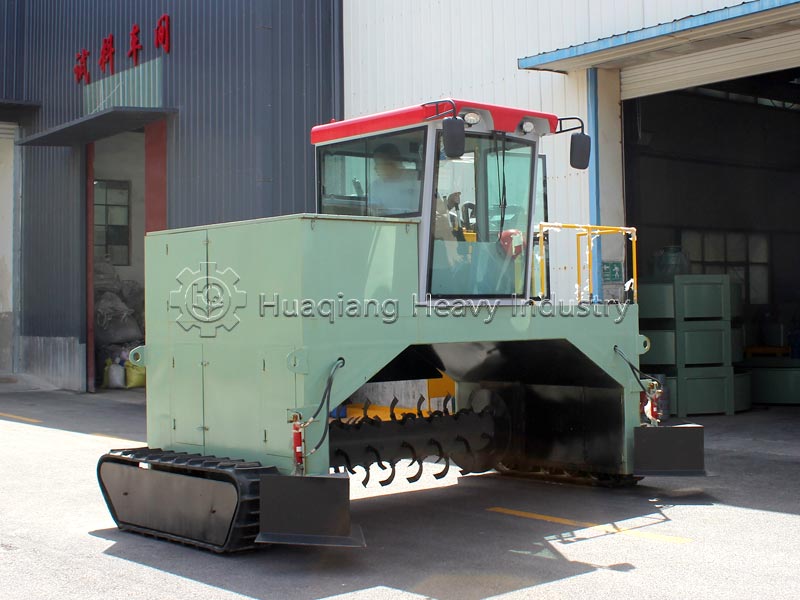
In the field of organic waste treatment, there exists a piece of equipment renowned for its flexible and efficient operation, serving as the core machinery for windrow composting—the Windrow Compost Turning Machine. Functioning like a “mobile fermentation plant,” it transforms mixed raw materials into high-quality compost along pre-formed windrows on open composting pads, showcasing a perfect balance of scalability and cost-effectiveness.
Efficient and Flexible Processing
Specifically designed for windrow compost turning machine, this machine operates directly on open ground without the need for fixed fermentation tanks or buildings. Its mobile design handles large windrows up to 3-5 meters wide and 2 meters high, using a powerful rotating drum to thoroughly turn, crush, and re-mix the materials. Compared to trough compost turners confined to fixed channels, windrow turners offer significant advantages in site adaptability and lower capital investment, making them particularly suitable for seasonal agricultural waste or large-scale municipal sludge processing.
Deep Aeration and Intelligent Control
Equipped with an adjustable-height turning drum, the machine performs three-dimensional turning that reaches the core of the windrow, ensuring even oxygen distribution and effectively preventing anaerobic zones. Modern models feature intelligent monitoring systems that detect real-time windrow temperature and moisture, automatically adjusting turning frequency and travel speed for precise compost management. Compared to static turning or manual labor, this mechanized operation significantly shortens the fermentation cycle and improves compost quality consistency.
Versatility and Economic Operation
The windrow turner can be outfitted with various attachments based on material characteristics, such as spray systems for moisture adjustment or spreading devices for simultaneous windrow formation. Utilizing diesel-hydraulic or fully electric drive systems, its energy consumption is notably lower than continuous aeration systems. The modular design facilitates maintenance and transport, allowing a single machine to serve multiple composting sites—true “multi-site versatility.” From family farms to regional processing centers, it offers flexible solutions ranging from several tons to hundreds of tons of daily processing capacity.
Environmental Contribution and Sustainable Development
Through efficient mechanical turning, the windrow compost turner significantly enhances aeration efficiency and temperature uniformity during composting, accelerating organic matter stabilization and reducing methane and odorous gas emissions. The resulting compost improves soil structure and can replace chemical fertilizers, promoting circular agricultural economies. In the global context of advocating resource regeneration, this equipment has become a key technological asset for the safe and resource-efficient treatment of organic waste.
Conclusion: The Reliable Choice for Scalable Composting
In summary, the windrow compost turning machine holds a vital position in various composting scenarios due to its operational flexibility, moderate investment, and processing efficiency. It preserves the site advantages of traditional windrow composting while overcoming the efficiency and quality limitations of manual turning through mechanization, making it an ideal choice for composting projects that prioritize both practicality and economy. With ongoing technological refinements, this “mobile factory” is poised to play an increasingly important role in global green agriculture development.