
Windrow Composting Machine: The Earth-Roaming “Compost Steward”
In the vast landscape of organic fertilizer production, there exists a piece of equipment that operates like a tireless “earth gardener,” processing hundreds of thousands of tons of organic waste in the most natural way possible—the Windrow Composting Machine. While most equipment is housed within factory buildings, this machine roams open composting yards with ease. Under open skies, it meticulously transforms seemingly disorganized rows of raw material into uniformly fermented, high-quality compost.
Core Advantage: A Revolutionary Tool for Open-Air Composting
The design philosophy of the windrow compost turning machine stems from a deep understanding of large-scale, low-cost composting production. It has completely transformed the inefficient practices of traditional manual or rudimentary mechanical turning, delivering three fundamental changes:
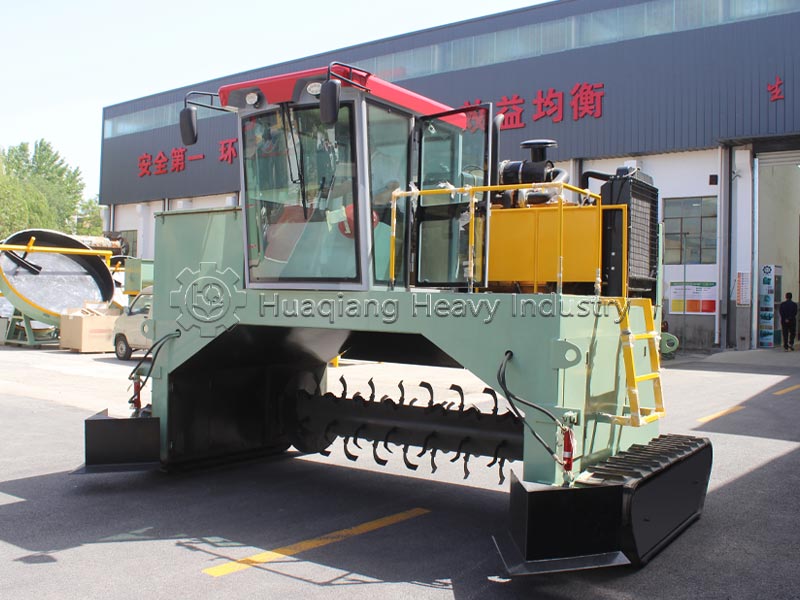
Exceptional Mobility and Adaptability: The machine operates like a “compost tank,” moving autonomously across the yard and easily traversing different windrows. Whether handling livestock manure, straw, sludge, or garden waste, it can process materials efficiently by adjusting turning parameters. Compared to the fixed fermentation troughs required by trough compost turners, the windrow composter offers producers great freedom in site selection, making it particularly suitable for large-scale farms and organic waste treatment centers with ample open space.
Deep and Efficient Turning Capability: Its core working component—a high-speed rotating drum or large-diameter flail wheel—can penetrate deep into the pile, thoroughly lifting, breaking apart, and remixing the material. This “full-cross-section” turning method not only effectively breaks up clumps but also ensures even distribution of oxygen and temperature, reducing traditional composting cycles by 30%-50%.
The Ultimate Balance of Cost-Effectiveness: It eliminates the need for expensive fermentation building investments, significantly lowering infrastructure costs. Compared to complex chain-type turners or equipment requiring supporting rails, its structure is simpler and maintenance more straightforward, making it the unrivaled choice for large-scale composting with high cost-effectiveness.
Strategic Role in the Fertilizer Production System
The windrow composting machine is not an isolated unit; it is a critical link in the modern organic fertilizer production ecosystem:
Receiver of Upstream Processes: After raw materials are pre-processed by a half-wet material crusher and formed into neat windrows, the compost turner begins its periodic “patrol,” driving the fermentation process toward high efficiency.
Foundation for Downstream Processes: Well-matured compost can be transferred via mobile belt conveyors to subsequent processes like the rotary drum dryer for drying or to a flat die pelleting machine for commercial granule production. The quality of turning directly determines the efficiency of further processing and the quality of the final product.
Complement to Different Technologies: Compared to chain compost turners operating in enclosed tanks, the windrow machine is the “main force on the open battlefield,” while the latter is the “special forces for precision control.” Each holds distinct advantages depending on the application scenario and investment budget.
Technological Innovation: Evolution from Mechanization to Intelligence
Modern windrow composting machines have evolved from simple turning tools into comprehensive management systems integrated with intelligent functions:
Automatic navigation and travel systems allow pre-setting of turning routes for unmanned operation.
Remote monitoring and data collection enable real-time tracking of pile temperature and moisture, providing scientific basis for fermentation control.
Modular design and quick-change attachments allow for swapping different working components based on material characteristics, adapting to a wider variety of compost feedstocks.
Perfect Unity of Environmental and Economic Value
Choosing the windrow composting process means opting for a path that balances ecological and economic benefits:
Environmental Contribution: By enabling large-scale resource recovery of organic waste, it reduces landfill and incineration, helping process tens of thousands of tons of organic solid waste annually and significantly cutting greenhouse gas emissions.
Agricultural Value: The compost produced improves soil structure and fertility, reduces reliance on chemical fertilizers, and supports ecological agriculture.
Return on Investment: With its relatively low initial investment and operating costs, it offers investors a viable path to quick returns and is an ideal starting point for entering the organic fertilizer industry.