
Bio Organic Fertilizer Production Line: From Farm Waste to Black Gold
Have you ever watched a field of vegetables burst with life and wondered what gives them that extra spark? Often, the answer isn’t a chemical in a bottle—it’s a handful of dark, crumbly, earth smelling organic fertilizer, teeming with beneficial microbes. But turning raw manure, crop residue, and food waste into that living soil booster is no simple trick. It takes a full production line—a carefully choreographed sequence of machines that transform waste into wealth.
Let’s walk through a typical bio-organic production fertilizer line, from stinking start to silky finish.
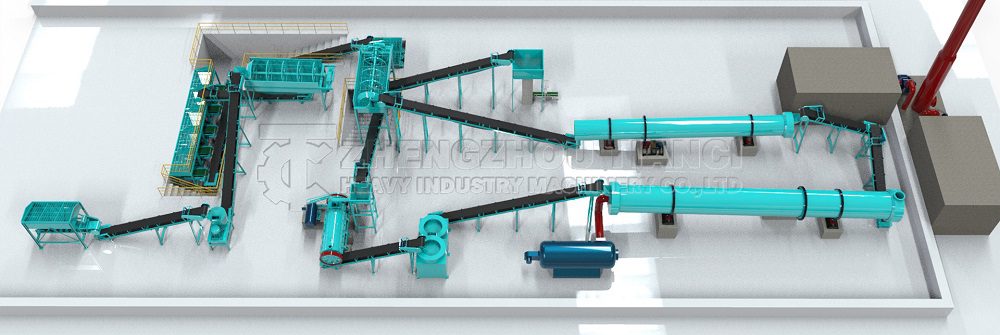
- Raw Material Preparation: The Mix
Everything begins with a recipe. Poultry litter, cow manure, mushroom compost, rice husks, maybe some soybean meal—they all arrive at the yard. A mixer or blender combines them in precise proportions, along with a starter culture of beneficial bacteria (like Bacillus or Trichoderma). The goal is a uniform pile with the right carbon to nitrogen ratio and moisture content—around 50-60%—so microbes can feast. - Fermentation: The Heartbeat
Raw organic material is alive, but it needs oxygen to transform. Enter the compost turner. Often a doublscrew compost turner or a windrow compost turner, it straddles long rows or fermentation grooves, churning the material regularly. With each pass, it fluffs the pile, injects oxygen, and evens out temperature. The pile heats up to 60 -70°C, killing weed seeds and pathogens, while friendly microbes multiply. After 15-25 days of turning (and sometimes a secondary aging period), the material becomes stable, odor free humus. - Crushing & Screening: Refining
Even after fermentation, there may be lumps or foreign particles. A crusher breaks down any large pieces, and a vibrationscreener machine separates the fine, uniform powder from oversize material, which is sent back for further processing. - Mixing with Functional Strains
To make bio organic fertilizer, the base compost is often enriched with additional functional microbes. A horizontal mixer or double shaft paddle mixer gently blends the powdered compost with concentrated beneficial strains, ensuring every particle carries the biological power. - Granulation (Optional but Common)
Many farmers prefer granules for easy spreading. A granulator—disk, drum, or extrusion type—rolls the fine powder into round pellets. Granules are stronger, release nutrients slowly, and allow precise application. - Drying & Cooling
Fresh granules are soft and moist. A rotary dryer uses warm air to reduce moisture below 10-12%, preventing mold during storage. Then a cooler brings the temperature down to ambient, so the granules won’t clump or degrade. - Coating (For Extra Protection)
Some producers add a coating machine to apply a thin layer of oil, wax, or anti caking agent. This protects the beneficial microbes and keeps the granules free flowing. - Screening & Packaging
A final screener ensures only granules of the right size proceed. An automatic packer weighs, fills, and seals bags, ready for shipping. Throughout the line, conveyors, elevators, and dust collectors keep the process seamless and clean.
Why does this lineup matter? Because bio organic fertilizer isn’t just about nutrients—it’s about life. The microbes in it enhance soil structure, suppress diseases, and unlock nutrients plants can’t reach alone. And to protect those fragile microbes through processing, each piece of equipment must be carefully selected and operated.
From the first whiff of raw manure to the last sealed bag, the bio organic fertilizer production line is a story of transformation. It’s a team effort where every machine plays a role: the turner wakes up the microbes, the dryer protects them, the coater gives them a safe home. And when you spread that final product, you’re not just feeding plants—you’re reviving the soil itself.
So next time you see a bag marked “bio organic,” remember the steel symphony behind it. Because great harvests start beneath the surface, with the oldest alchemy of all: turning waste into life.