
The Double Screws Compost Turner: When Two Rotors Are Better Than One
You’ve seen the classic windrow turner—that mighty machine striding along piles of manure, spinning drum churning away. It’s impressive. It gets the job done. But what if I told you there’s another beast in the composting world, one that works differently, faster, and in tighter spaces? Meet the double screws compost turner, the unsung hero of intensive composting operations.
The Problem with Wide Open Spaces
Here’s the thing about traditional windrow turners: they need room. Lots of it. Long, straight piles, plenty of turning space at the ends, and a wide berth to operate. But what if your farm doesn’t have acres of land? What if you’re composting indoors, under a roof, where every square foot costs money? What if your material is especially dense or sticky?
That’s where the double screws design changes everything.
Two Screws, Infinite Possibilities
Picture this: instead of one massive drum, imagine two powerful augers—massive screw-like rotors—mounted side by side. They spin in opposite directions, lifting, mixing, and hurling material upward and outward with astonishing force.
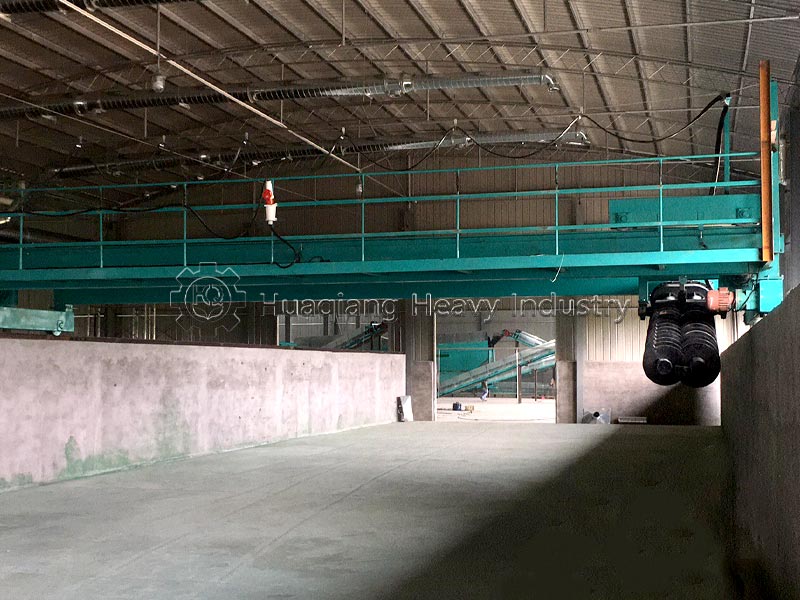
Why two? Because sometimes one just isn’t enough.
The double screws create a unique mixing action. Material gets pulled from the bottom, lifted to the top, and thoroughly blended in a matter of seconds. It’s like comparing a spoon stirring a pot to two hands kneading dough—the difference in intensity is unmistakable.
The Science of the Spin
Let’s get into the nitty-gritty of how these twin titans work.
As the machine moves forward, the rotating screws dig deep into the pile. Their helical flights catch the material, lifting it from the bottom and sending it upward in a spiraling motion. By the time it reaches the top, it’s been flipped, torn apart, and aerated multiple times.
But here’s the real magic: the counter-rotation creates a folding effect. Material from the left screw meets material from the right screw, mingling and merging in a chaotic, beautiful dance. Hot spots are eliminated. Wet clumps are shattered. Anaerobic pockets are obliterated.
Where Double Screws Shine
The double screws compost turner isn’t trying to be everything to everyone. It has its specialties, and it excels at them.
Indoor Operations — Because these machines are typically more compact than their windrow compost turner, they’re perfect for covered composting facilities. You can pack more material into less space, turning profit from every square foot.
High-Density Materials — Got tough stuff? Manure mixed with heavy bedding? Thick, sticky sludge? The dual-screw design powers through material that would bog down a standard drum.
Precision Mixing — Need to blend amendments evenly? Sawdust, straw, or biochar? The double screws create a thorough mix that single-drum turners can’t match.
The Farmer Who Switched
I spoke with a dairy operator in Wisconsin who made the switch last year. He was composting bedding-packed manure from three hundred cows, and his old turner just couldn’t keep up. The piles were too dense, the mixing too uneven.
“First time I ran the double screws through,” he told me, grinning, “I couldn’t believe my eyes. That machine chewed through material like it was nothing. In one pass, I had compost that looked better than my old machine could manage in three.”
He’s since reduced his turning frequency, improved his product quality, and even started selling bagged compost to local landscapers. Not bad for a machine he initially thought was “overkill.”
The Rhythm of Rotation
Using a double screws turner changes your whole composting rhythm. Because the mixing is so intense, you might need fewer passes overall. Some operators find they can turn every five to seven days instead of every two to three, saving fuel and labor while still achieving faster decomposition.
The key is watching your temperatures. With that powerful aeration, you’ll see the pile heat up quickly after each turn—then cool down just as fast as the microbes feast and multiply. It’s a faster cycle, a more efficient process, and ultimately, better compost.