
From Microbial Strain to Finished Product: A Seven-Step Production Method for Bio-fertilizers
What is Bio-fertilizer?
Bio-fertilizer refers to products containing specific living microorganisms. Through the life activities or metabolic products of these microorganisms, it provides nutrients to plants, promotes nutrient absorption, or enhances plant resistance. Unlike chemical fertilizers, bio-fertilizers do not directly provide nitrogen, phosphorus, and potassium; instead, they activate potential nutrients in the soil through biological pathways such as nitrogen fixation, phosphorus solubilization, and potassium solubilization.
Step 1: Strain Selection and Purification
The core of bio-fertilizers is functional microorganisms. Commonly used strains include: nitrogen-fixing bacteria (such as *Azotobacter chrysophagus*), phosphate-solubilizing bacteria (such as *Bacillus megaterium*), potassium-solubilizing bacteria (such as *Bacillus mucilaginosa*), and growth-promoting bacteria (such as *Pseudomonas fluorescens*). The strains need to be streaked on a sterile work surface, and single colonies are transferred to test tubes for slant culture. The purified strains need to undergo functional verification—the nitrogenase activity of nitrogen-fixing bacteria should not be less than 50 nanomoles of ethylene per minute per milliliter of culture medium, and the ratio of the diameter of the phosphate-solubilizing zone to the colony diameter of phosphate-solubilizing bacteria should be greater than 2. Purified bacterial strains can be stored at 4°C for 3 to 6 months.
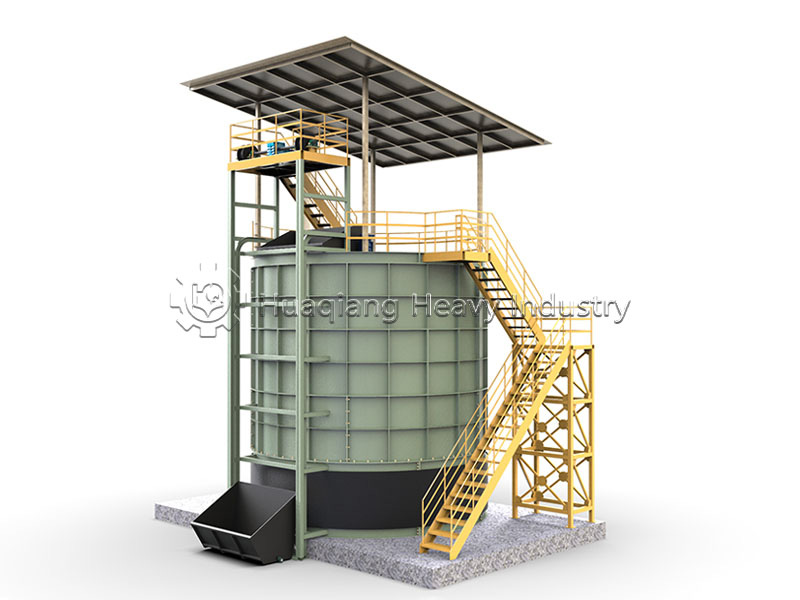
Step 2: Shake Flask Propagation
Pick a loopful of bacterial growth from the test tube slant and inoculate it into a 500 mL Erlenmeyer flask containing 100 mL of liquid culture medium. The culture medium formulation varies depending on the strain: nitrogen-fixing bacteria use nitrogen-free medium, and phosphate-solubilizing bacteria use tricalcium phosphate medium. Shake flask incubation conditions are: temperature 28 to 30°C, rotation speed 180 to 220 rpm, and incubation time 24 to 48 hours. The endpoint for shaking flask incubation is determined by: a turbidity (OD600 value) of 1.0 to 1.5, and a viable cell count of at least 1 billion cells per milliliter. Simultaneously, microscopic examination should be performed to confirm the absence of contamination; the contamination detection rate must be zero.
Step 3: Seed Tank Fermentation
Transfer the shake flask bacterial culture to a seed tank at an inoculum volume of 5% to 10%. The seed tank volume is typically 50 to 500 liters, with a filling coefficient controlled at 60% to 70%. Fermentation parameters are as follows: temperature 28-32 degrees Celsius (slight variations depending on the strain), pH 6.5-7.5, aeration rate of 0.5-1.0 volumes of air per minute per volume of culture medium, and stirring speed of 150-250 rpm. The seed tank culture period is 12-24 hours, with a final viable cell count of 2-5 billion per milliliter. During this stage, pH and viable cell counts should be tested every 4 hours.
Step 4: Large-scale fermentation in production tanks
Transfer the seed tank culture to the production tanks at an inoculum rate of 5-10%. Production tank volumes range from 1 ton to 50 tons, with a loading coefficient controlled at 60-70%. Fermentation parameters are similar to those in the seed tanks, but the aeration rate and stirring speed are automatically adjusted based on dissolved oxygen feedback. Defoamers (such as polyethers) are automatically added when necessary. The fermentation cycle typically lasts 24 to 48 hours, with the following endpoint indicators: a viable cell count of 5 billion to 20 billion per milliliter, a spore rate (for Bacillus species) exceeding 80%, and a contamination rate below 1%. After fermentation, samples are taken for plate counting and physiological and biochemical analysis.
Step 5: Bacterial Fluid Concentration and Carrier Adsorption
The fermented bacterial fluid needs to be concentrated to increase the bacterial content per unit product. Membrane filtration or centrifugation is used to concentrate the bacterial fluid volume to one-fifth to one-tenth of its original volume, increasing the viable cell count to 20 billion to 50 billion per milliliter. The carrier is the substrate for the bio-fertilizer; commonly used carriers include peat moss, vermiculite, bentonite, and diatomaceous earth. The carrier needs to be dried, pulverized, and sieved (80 to 100 mesh), with a moisture content controlled below 8%. The concentrated bacterial fluid and carrier are mixed in a specific ratio—for example, 50 to 100 liters of concentrated bacterial fluid are added per ton of peat moss, resulting in a final product viable cell count of 200 million to 500 million per gram. Step 6: Low-Temperature Drying and Packaging
The mixed wet material has a high moisture content (approximately 30% to 40%) and needs to be dried at a low temperature to below 20% to maintain the survival rate of the microorganisms. The drying temperature must not exceed 60 degrees Celsius; fluidized bed drying or vacuum drying at 35 to 45 degrees Celsius is typically used. The drying time should be controlled between 30 and 60 minutes, and the discharge temperature should not exceed the ambient temperature plus 10 degrees Celsius. The dried material should be passed through a 20 to 40 mesh sieve to remove lumps. Packaging uses aluminum foil bags or high-barrier plastic bags, sealed with nitrogen or vacuum to extend shelf life. The packaging room must maintain a cleanliness level of 100,000 and a relative humidity below 40%.
Step 7: Quality Inspection and Storage
Each batch of product must undergo full-item testing: viable bacteria content (plate count method, not less than 200 million per gram), contamination rate (not exceeding 10%), pH value (6.0 to 7.5), moisture content (below 20%), and appearance (powder or granules, odorless). Expiration date testing requires accelerated storage experiments at 4°C, 25°C, and 35°C to estimate the shelf life at room temperature—high-quality bio-fertilizers can have a shelf life of 6 to 12 months at room temperature. Finished products should be stored in a cool, dry, and dark warehouse, with a stacking height not exceeding 1.5 meters to avoid damage to the microorganisms due to pressure.
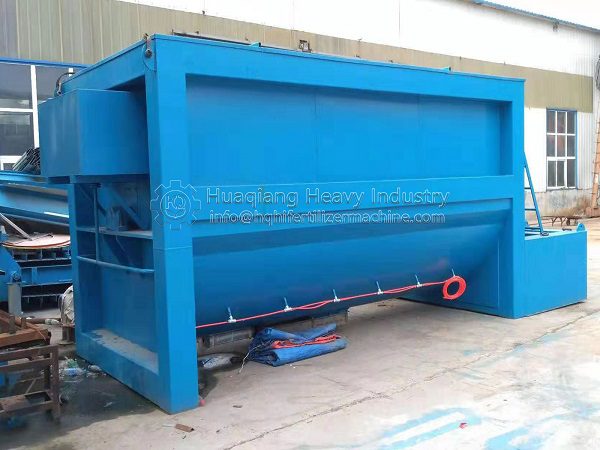
Quality Control Points Between Processes Of the seven steps, the three most critical quality control points are: aseptic testing of the seed tank (detection of contaminants results in batch rejection), spore rate control at the fermentation endpoint (products that have not fully formed spores have a significantly lower survival rate during drying), and protection against exceeding drying temperature limits (instantaneous overheating above 60°C can cause a drop in viable cell count by more than an order of magnitude). Proper control of these three points ensures the stability of the final product’s quality.
We provide complete bio-fertilizer production equipment and process solutions to help you consistently produce high-quality bio-fertilizer products with a viable cell count per gram that meets standards.
Bridging Microbial Science with Organic Fertilizer Manufacturing
The seven-step bio-fertilizer production protocol—from strain purification through low-temperature drying—represents the pinnacle of biological process control, yet its commercial viability is amplified when integrated with conventional organic fertilizer infrastructure. A modern bio organic fertilizer production line can leverage shared upstream equipment: an Animal manure processing machine such as a solid-liquid separator and half-wet material crusher machine prepares the organic substrate that serves as both carrier material and nutrient base, while a chicken manure fertilizer machine workflow generates the thermophilically stabilized compost that provides the ideal habitat for microbial inoculants. Within the organic fertilizer granulator series, low-temperature extrusion or disc granulation units can pelletize carrier-adsorbed bacterial products without exposing viable cells to lethal thermal stress, provided the fertilizer drying and cooling machine operates strictly below 60°C. For enterprises scaling beyond pilot production, a dedicated organic fertilizer manufacturing plant equipped with aseptic fermentation suites, membrane concentrators, and nitrogen-flush packaging lines transforms laboratory-grade organic fertilizer machine protocols into industrially reproducible outputs. By unifying microbial strain management with mechanical composting and controlled granulation, producers create synergistic bio-organic products that deliver both the immediate nutrient supply of decomposed manure and the long-term soil health benefits of functional microbiota.