
Chicken Manure/Pig Manure/Cow Manure Organic Fertilizer Production Line: Differences in Pretreatment Equipment for Different Raw Materials
Choosing the right pretreatment equipment is half the battle in the organic fertilizer treatment of livestock and poultry manure. Chicken manure, pig manure, and cow manure differ significantly in moisture content, fiber content, carbon-to-nitrogen ratio, and viscosity. Using a “one-size-fits-all” approach not only affects fermentation efficiency but also increases energy consumption and equipment wear. The following is an analysis of the differences in pretreatment equipment for these three types of raw materials.
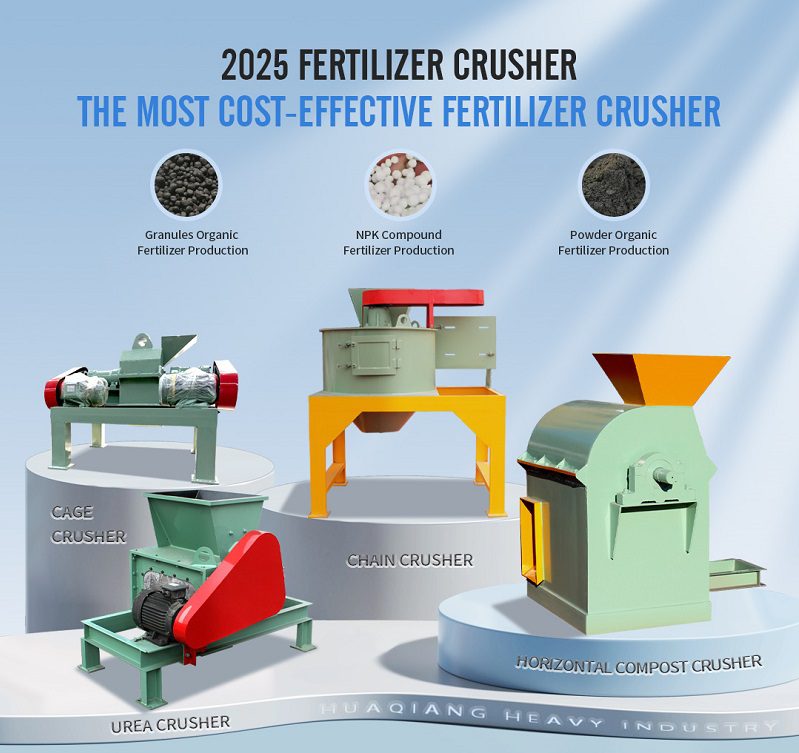
Chicken Manure: Dehumidification and Salt Reduction are Key
Chicken manure has a moisture content of approximately 50%-70%, extremely high nitrogen content, and a low carbon-to-nitrogen ratio (approximately 10-15:1), classifying it as “hot” manure. Its high viscosity, fine fibers, and tendency to clump make it the most challenging raw material in the pretreatment stage.
Core Equipment: A screw extruder dewatersers can reduce the moisture content of fresh chicken manure from 80% to 60%-65%; a screening device removes impurities such as stones and feathers; a semi-wet material pulverizer refines the material to a suitable particle size; and an anti-sticking ribbon mixer mixes chicken manure with low-nitrogen, high-carbon auxiliary materials such as sawdust and rice husks, adjusting the carbon-to-nitrogen ratio to 25-30:1.
Key Process Points: The core of chicken manure pretreatment is reducing salt content and adjusting the carbon-to-nitrogen ratio. After dewatering, the moisture content is controlled at 50%-55%, supplemented with deodorizing bacteria to reduce ammonia volatilization at the source.
Pig Manure: Breaking Up Clumps is Key. Pig manure has a moderate moisture content (approximately 65%-80%) and a moderate carbon-to-nitrogen ratio (approximately 15-20:1), but it is highly viscous, has poor air permeability, and easily clumps together. If pretreatment is inadequate, the turning resistance is high, and oxygen transfer is hindered.

Core Equipment: Inclined screen or drum-type solid-liquid separator separates raw pig manure with 80% moisture content into liquid and solid states; horizontal pulverizer refines solid pig manure to 40-60 mesh; mixer or crusher with dispersing function breaks up clumps; horizontal mixer simultaneously adds auxiliary materials such as straw and mushroom residue.
Key Process Points: The key to pig manure pretreatment lies in breaking up clumps and improving permeability. After solid-liquid separation, the solid moisture content is reduced to 50%-60%, and then mixed with porous auxiliary materials such as rice husks and mushroom residue to enhance the porosity of the compost pile.
Cow Manure: Cutting Fibers is Key. Cow manure has a high moisture content (approximately 70%-85%), is rich in coarse fibers (lignin, cellulose), and has a relatively high carbon-to-nitrogen ratio (approximately 20-30:1). It decomposes slowly, heats up gradually, and easily clumps together.
Core Equipment: A cow manure processing machine (slurry pumping + dewatering) can reduce moisture content to approximately 40%; a heavy-duty chain crusher or semi-wet material crusher effectively cuts long fibers; a vertical crusher with a multi-layer turbulent chain hammer structure prevents sticking and clogging; a horizontal mixer mixes cow manure with fillers such as straw and rice husks, as well as microbial agents.
Key Process Points: The focus of cow manure pretreatment is fiber breaking and moisture adjustment. Adding straw and microbial agents to the mixer adjusts the moisture content to 55%-65%.
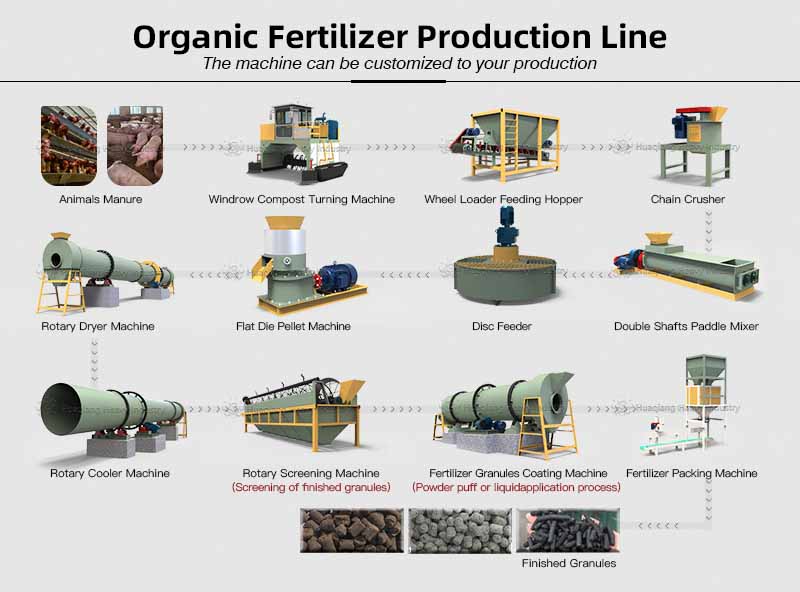
Quick Reference for Selection Recommendations
Chicken Manure: Screw extruder dewatering machine → impurity removal screening → crusher → anti-sticking mixer. Focuses on solving stickiness and high nitrogen issues.
Pig Manure: Solid-liquid separator → crusher → dispersing mixer. Focuses on solving agglomeration and air permeability.
Cow Manure: Manure processing machine → heavy-duty chain crusher → mixer. Focuses on solving fiber breaking and moisture adjustment.
Three Selection Questions: ① What is the moisture content of the raw material? (Chicken and pig manure need dehydration; cow manure can be directly compressed.) ② What is the fiber content? (Cow manure requires heavy-duty crushing; chicken and pig manure can be conventionally crushed.) ③ How viscous? (Chicken manure requires anti-stick mixing; pig manure requires a dispersing device.) — These three questions determine the best equipment choice and prevent pitfalls.
The pretreatment differences for chicken, pig, and cow manure are not arbitrary—they are dictated by each manure’s unique moisture, fiber, and nitrogen profile. Once properly conditioned, however, all three can be fed into a unified organic fertilizer production process that leverages a complete commercial organic fertilizer production line. A powdered organic fertilizer production line may suffice for direct soil application, while a granular line integrates an organic fertilizer granulator series (disc, drum, or extrusion) to produce high‑value pellets. For poultry operations, the chicken manure fertilizer machine and poultry manure fertilizer making machine handle dewatering and crushing, while the chicken manure fermentation turning process is accelerated by a large wheel compost turning machine or a windrow composting machine, depending on site scale. After fermentation, the material enters an organic fertilizer combined granulation process (e.g., drum + disc) for optimal sphericity and strength, followed by a fertilizer drying and cooling machine to lock in moisture and stability. An automatic organic fertilizer batching system ensures precise nutrient blending across all feedstock types, making the entire line adaptable to seasonal variations in manure composition. Ultimately, the right pretreatment equipment is not an end in itself—it is the gateway to a flexible, efficient production system that transforms three very different wastes into a consistent, high‑quality organic fertilizer, ready for any market or crop need.
If you have any questions about fertilizer production equipment and processes, or would like to learn more about customized solutions, please contact us immediately. Whether it’s equipment selection and pricing, installation, commissioning, and operation training, or later maintenance and process upgrades, we can provide you with professional and timely answers and support to help your project be implemented efficiently.