
【FAQ】How to Troubleshoot and Improve Low Screening Efficiency?
Screening efficiency is a critical indicator in fertilizer production lines, determining the pass rate of finished particle sizes and overall production capacity. A drop in screening efficiency—manifested as a low proportion of qualified particles in the oversize fraction or incomplete recovery of fine powder from the undersize fraction—directly leads to reduced product yield and increased material recirculation, thereby placing a heavier load on the granulator and dryer. A systematic troubleshooting approach should cover three areas: screen condition, material characteristics, and vibration parameters.
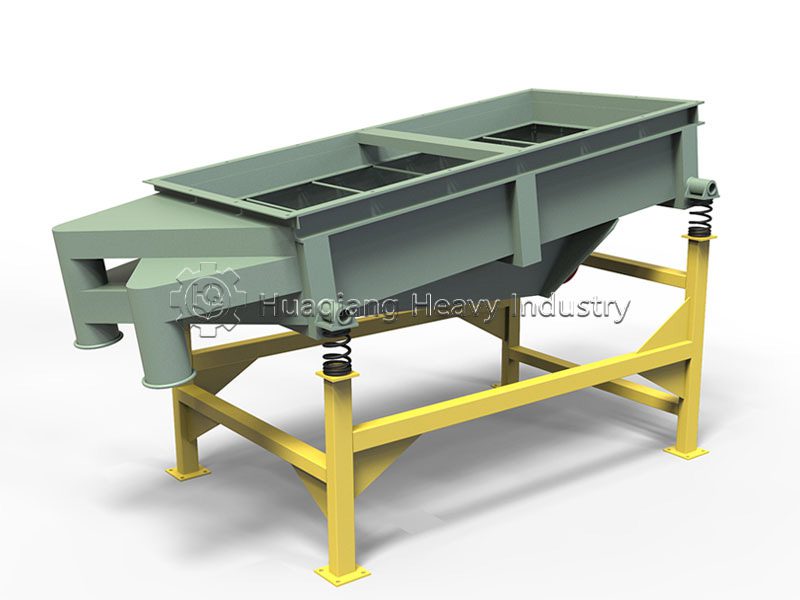
Checking Screen Condition: The screen mesh is the core working component of the screening machine. First, inspect the mesh for damage or holes; even minor damage allows large particles to mix into the finished product, compromising its appearance and nutrient uniformity. Second, check the mesh tension; a loose mesh “flaps” during vibration, reducing the effective screening area and accelerating wear. It is recommended to inspect the screen surface after every shift and replace it immediately if damage is found, as well as to measure tension monthly to ensure it remains above 90% of the design value. For vibrating screens, also check the screen frame springs for breakage or fatigue; spring failure causes abnormal amplitude, directly affecting the material’s bouncing speed on the screen surface and the overall screening efficiency.
Assessing Material Characteristics: Material moisture content is the most sensitive factor affecting screening efficiency. When the moisture content of material entering the screener exceeds 8%, fine powder tends to adhere to the mesh and gradually clog the apertures—a phenomenon known as “blinding” or “pasting”—which drastically reduces the effective screening area. In this case, upstream processes should be reviewed: check if the discharge moisture from the drum fertilizer dryer exceeds limits or if the dehumidification performance of the cooler has declined. Additionally, if the material contains significant fibrous matter (such as incompletely fermented straw residues), these can tangle into clumps on the screen surface, obstructing normal screening. It is advisable to install a pre-screening device or adjust fermentation turning parameters to ensure the material is fully decomposed and sufficiently broken down. Vibration Parameter Adjustment:
For vibrating screens, amplitude and frequency are parameters that operators can directly adjust. If the amplitude is too low, material movement on the screen surface is insufficient, resulting in low screening efficiency; if the amplitude is too high, material bounces excessively, causing particles to jump off the screen surface and leading to material loss. Generally, it is recommended to control the amplitude between 3–5 mm and the frequency between 800–1,200 cycles per minute; specific values should be determined through on-site testing based on material density and particle size distribution. For rotary screeners (trommels), the drum inclination angle (typically 2°–4°) and rotational speed (15–20 rpm) must be checked; an excessive inclination angle causes material to pass through too quickly, resulting in incomplete screening, while an excessively high rotational speed generates centrifugal force that causes material to adhere to the drum wall, thereby negating the screening effect.
Practical Improvement Recommendations: Establish a daily monitoring mechanism for screening efficiency—sample and test efficiency (yield of qualified product / total feed × 100%) every two hours, aiming for a value of ≥85%. If the efficiency falls below 80% in two consecutive tests, shut down the machine immediately for troubleshooting. Regularly (weekly) clean adhered material from the screen surface using a high-pressure air gun or a specialized scraper; replace the screen mesh quarterly and record the service life of each batch to establish a spare parts inventory alert system. For sticky materials, consider installing ultrasonic anti-clogging devices or elastic bouncing balls on the screen; high-frequency vibration and impact effectively prevent screen aperture clogging, potentially increasing screening efficiency by 10%–15%.