
Bio-Organic Fertilizer Production Line: Why Is It the Darling of Modern Agriculture?
In today’s global wave of sustainable development, the agricultural sector is undergoing a silent revolution. The bio-organic fertilizer production line, as the core of this revolution, not only enhances fertilizer production efficiency but also wins widespread acclaim for its environmental benefits. Imagine farm waste no longer being discarded but transformed into fertile soil nutrients through advanced equipment—this is no longer a dream but a reality. By integrating automation technology with ecological cycling principles, these production lines are driving agriculture toward a greener future.
The advantages of bio-organic fertilizer production line are first reflected in efficiency and environmental friendliness. For example, equipment such as crushers, large wheel compost turning machine, and rotary drum granulator work in synergy to rapidly process organic waste like crop residues and livestock manure, turning waste into treasure. A vivid case comes from “GreenFarm Company” in California, USA: after introducing a fully automated bio-organic fertilizer production line, their fertilizer output soared by 40%, while waste utilization reached an astounding 98%. This not only reduced landfill pressure but also saved the company 30% in operational costs. The production line employs intelligent control systems, minimizing manual intervention and making the process as smooth as flowing water—from raw material feeding to finished product packaging, each step is precise and elegant, with a rhythmic cadence.
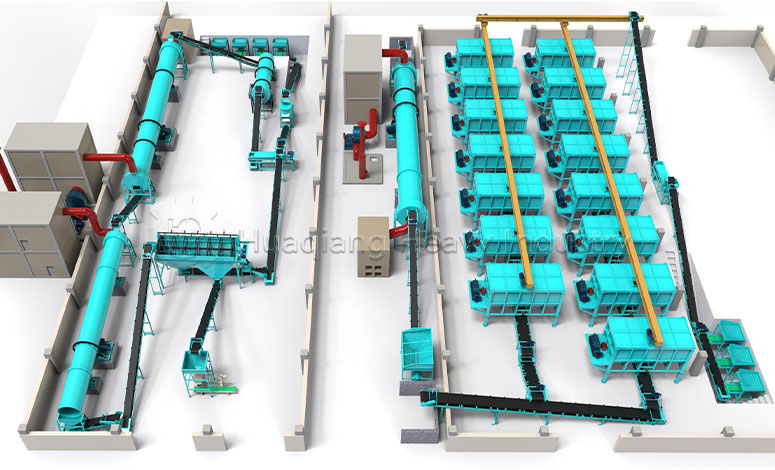
Secondly, this equipment significantly improves soil health. Compared to traditional chemical fertilizer production lines, bio-organic fertilizer is rich in active microorganisms that enhance soil structure and boost crop resilience. Long-term use of chemical fertilizers often leads to soil compaction and environmental pollution, whereas bio-organic fertilizer acts like a gentle doctor, slowly reviving the earth’s vitality. For instance, on a large farm in Australia, after implementing a bio-organic fertilizer production line, soil organic matter content increased by 20%, crop yields grew steadily, and farmers hailed it as a “green miracle.” Additionally, the production line can easily integrate with other fertilizer equipment, such as irrigation systems for precise fertilization or composting devices to form a complete circular agriculture chain.
Other fertilizer equipment also plays a vital role in this ecological system. Take chemical fertilizer production lines, for example: while they quickly provide nutrients, they often rely on chemical synthesis, posing ecological risks. In contrast, bio-organic fertilizer production lines emphasize natural harmony, yielding safer products. Meanwhile, auxiliary equipment like modern granule packagers and conveyor belts streamline the entire process, meeting international market demands for quality and sustainability. The combination of these devices is like a symphony orchestra, with each instrument performing its part to collectively play the melody of agricultural sustainability.
In summary, the bio-organic fertilizer production line is not just a technological leap but also a heartfelt declaration to the planet. With efficiency, environmental friendliness, and health as its core advantages, combined with real-world cases and the synergy of other equipment, it injects new vitality into global agriculture. In the future, as more innovations emerge, this production line is set to become a standard for green farming, guiding us toward a more prosperous and harmonious world. Let’s embrace this transformation and sow the seeds of hope together!