
Can This Machine Really “Eat” Wet Material?
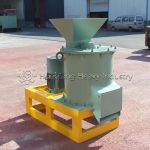
Walking into the installation site of a fertilizer production line, the first thing that catches your eye is a sturdy half-wet material crusher. It squats quietly on a steel platform, like an iron beast not yet awakened. Several workers are busy around it—some aligning flange bolts, others adjusting the gap of the knife rotor, and a few repeatedly checking the base with a spirit level. Sweat drips down the edges of their hard hats, but no one stops.
Why call it a “half-wet material crusher“? Because ordinary crushers get hopelessly clogged when dealing with high-moisture chicken manure, straw, or sludge. This machine, however, is designed to chew those wet, sticky “tough bones.” Inside, rows of high-strength alloy blades are mounted. As the rotor spins at high speed, the material is repeatedly cut and smashed, finally turning into loose powder. Beside it sit bags of fresh wet chicken manure—soon to be fed to the machine for a test run.
Of course, a complete organic fertilizer line involves far more than just this “big eater.” To its left, a double-shaft mixer is being hoisted into place. The two mixing shafts act like giant hands, blending different raw materials evenly and thoroughly. Further ahead, a rotary screener machine has already been mounted on its support frame, its silver-white cylinder glinting in the sunlight. Conveyor belts run like blood vessels, connecting all the equipment in sequence: material from the crusher falls onto the belt, is sent to the screener, where fine powder moves on to granulation, while coarse material returns to the crusher for another “punishment.”
The scene is filled with a chorus of welding sounds, hammering, and shouts from walkie-talkies. An experienced technician squats by the crusher’s feed inlet, feeling the blade edges with his fingers, then measuring the gap with a feeler gauge. He turns to his apprentice and says, “Even half a millimeter off won’t do. Wet material is tricky—if the gap is too big, it will wrap around the shaft.” The apprentice nods and tightens the bolts two more turns with his wrench.
At three in the afternoon, the last bolt is tightened. Power is connected, and the motor emits a low rumble. The operator presses the start button, and the crusher spins up from slow to fast, eventually becoming a steady roar. Someone grabs a handful of wet chicken manure and tosses it in—there’s a sharp “shwoosh,” and seconds later, fine powder falls from the discharge port. Everyone smiles in unison. This “beast” really can devour wet material cleanly.
Looking down from a higher vantage point, the mixer, crusher, screener, and belts work together like a well-rehearsed band, each playing its own part yet blending into a complete melody. The installation site is no longer just lines on a drawing—it is a reality forged by sweat and focus. Who said wet material is hard to crush? This machine, with its “teeth,” has already given the answer.