
Conversion Path of High-Moisture, High-Fiber Materials: Selection Guide for Organic Fertilizer Raw Material Processing Equipment
Raw Material Pretreatment Process: The raw material pretreatment stage in organic fertilizer production encompasses the entire conversion process from raw organic waste to granulizable powder. The core process is: fermentation and turning → crushing → mixing → granulation. These four processes are interconnected, each with corresponding specialized equipment, collectively determining the quality and production efficiency of the final product.
Unlike the finished product processing stage, the pretreatment stage deals with raw materials that are high in moisture, high in fiber, and complex in composition, placing higher demands on the adaptability and reliability of the equipment.
Fermentation and Turning Equipment: Fermentation is the first step in raw material pretreatment, aiming to transform fresh manure or organic waste into mature, stable, odorless, and harmless organic materials. The turning machine is the core equipment in the fermentation process, responsible for supplying oxygen to the compost pile and regulating temperature and moisture.
Depending on production scale and site conditions, different types of turning machines can be selected: Trough-type turning machine: Installed on a fixed fermentation trough, it operates reciprocally along a track. Turning depth is 0.8-1.5 meters, suitable for continuous, large-scale production. The equipment operates smoothly and can be used with a bottom aeration system for precise oxygen supply.
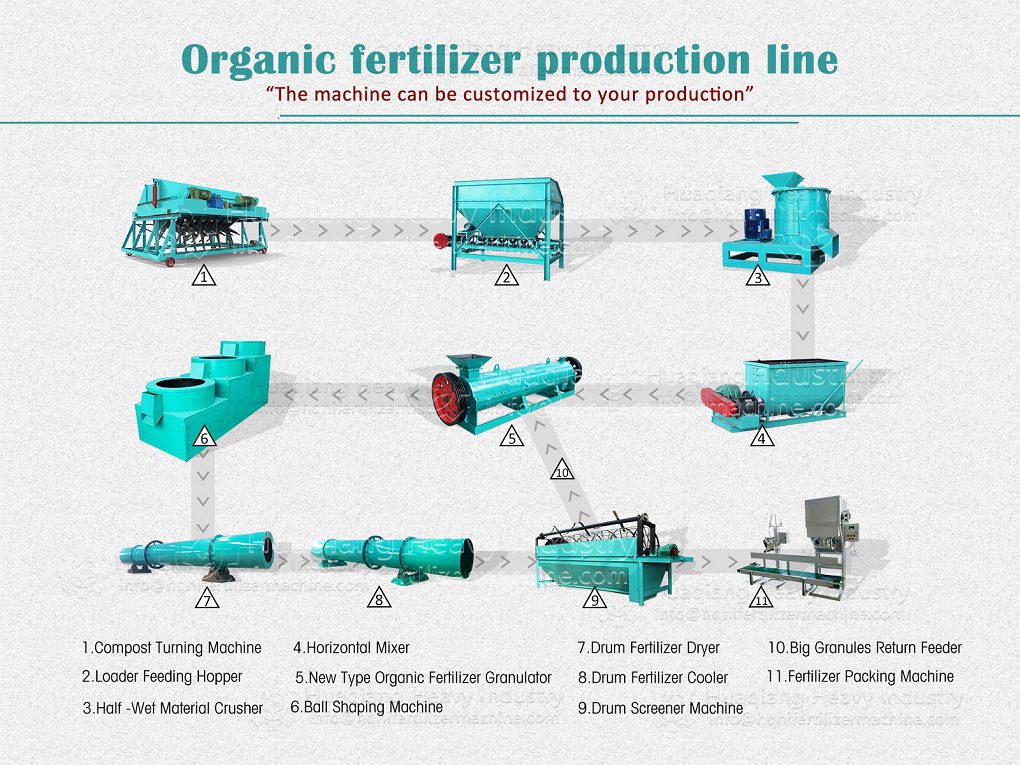
Wind stack turner: Works straddling a windrow pile, requiring no civil engineering investment. Turning width 2-6 meters, suitable for small to medium-sized farms or seasonal production. Self-propelled models offer flexible operation; one machine can serve multiple piles.
Double helix turner: Utilizes two counter-rotating helical shafts, achieving a turning depth of up to 1.8 meters. It provides better cutting and mixing of fibrous materials, suitable for processing high-fiber raw materials such as straw and coconut coir.
The fermentation cycle typically lasts 15-30 days, requiring 5-10 turnings. Well-rotted material is dark brown or blackish-brown in color, without ammonia or manure odor, and the pile temperature drops to near ambient temperature.
Crushing and mixing equipment: Rotten materials often exhibit caking, lumps, or fibrous entanglement, requiring crushing equipment for breaking down and fine grinding. The semi-wet material crusher is specifically designed for fermented materials and can process wet materials with a moisture content of 25%-40%. Its dual-rotor counter-rotating structure, with blades that combine shearing and tearing functions, reduces the likelihood of clogging. The discharge particle size can be controlled between 3-10 mm, meeting the feeding requirements for subsequent granulation.
For production lines requiring even higher fineness (such as disc granulation requiring 80 mesh or higher), a fine powder pulverizer (chain or hammer mill) can be added after semi-wet grinding to further grind the material to below 0.5 mm.
Mixing equipment is used to uniformly blend organic materials or organic-inorganic formulations from different sources. Vertical disc mixers are compact and discharge thoroughly, suitable for small to medium batch mixing; horizontal ribbon mixers have high throughput and high uniformity, suitable for large-scale continuous production. The mixing process can be arranged before fermentation (to adjust the carbon-nitrogen ratio) or after grinding (to formulate the final formula).
Key Equipment Preparation Before Granulation
Before the material officially enters the granulator, several key aspects need attention:
Moisture Adjustment: Granulation typically requires the material to have a moisture content between 25% and 35%. If the fermentation output is too wet, it can be naturally dried or mechanically dehydrated before crushing; if it is too dry, a suitable amount of water should be sprayed during mixing.
Impurity Removal: Stones, metals, plastics, and other impurities may be mixed in the raw materials. These should be removed by sieving or manual sorting before crushing to avoid damaging the granulation equipment. A grid or iron separator can be installed at the feed inlet.
Metering and Batching: For production lines producing organic-inorganic compound fertilizers, a batching system is required before the mixing process. This system automatically weighs the inorganic fertilizer raw materials (urea, phosphate fertilizer, potash fertilizer, etc.) according to the formula ratio and then feeds them into the mixer along with the organic materials.
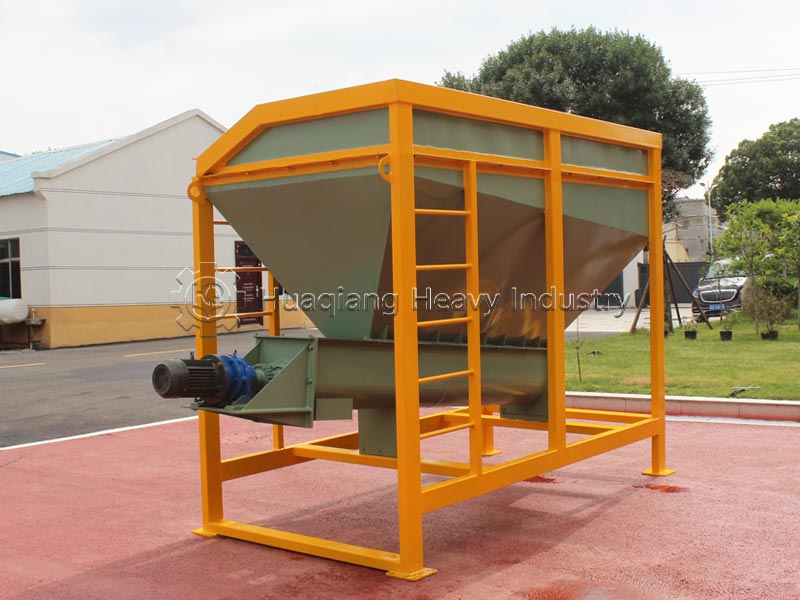
The raw material pretreatment stage—fermentation, crushing, mixing—is the foundation for successful organic fertilizer production granulation equipment performance. After fermentation (15-30 days, 5-10 turnings), the mature material is processed through a half-wet material crusher machine (for 25%-40% moisture materials) to 3-10 mm, followed by optional fine grinding (<0.5 mm for disc granulation). A mixer (vertical disc for small batch, horizontal ribbon for large scale) ensures uniform blending, with moisture adjustment to 25%-35% and impurity removal (stones, metals). For organic-inorganic blends, a batching system adds urea, phosphate, potash. The prepared material then enters the granulation stage. Within the organic fertilizer granulator series, options include a new type two in one organic fertilizer granulator (combining mixing and granulation), a disc granulator for spherical granules, or a drum granulator for high capacity. For a complete organic fertilizer disc granulation production line, the disc granulator is the core, producing round, aesthetically pleasing granules. The organic fertilizer production equipment set includes crushers, mixers, granulators, dryers, coolers, screens, and packers. The key is proper raw material pretreatment—correct moisture, fineness, and purity—to ensure smooth granulation and high-quality finished product. Understanding the role of each piece of organic fertilizer raw material processing equipment is essential for optimizing the entire production line. For a customized solution, contact us; we provide free trial runs with your raw materials to demonstrate the results.
After completing the above pretreatment, the materials can enter the granulation process. Depending on the product positioning and output requirements, equipment such as disc granulators, new organic fertilizer granulators, or rotary drum granulators can be selected. Proper raw material pretreatment is the foundation for smooth granulation and qualified finished products. For complete production line configuration solutions, please contact us. We can also provide raw material samples and offer free trial runs to demonstrate the results.