
【FAQ】Fertilizer Production Process and Flow – How to Determine if Organic Fertilizer Fermentation is Complete?
How to determine if organic fertilizer fermentation is complete?
The indicators for determining if organic fertilizer fermentation is complete can be summarized as “look, smell, measure temperature, and observe structure”: Whether the material color has turned brownish-black, whether there is any foul odor, whether the pile temperature has returned to room temperature, and whether the material has become loose, powdery, or granular. These four sensory indicators, combined with chemical testing, can comprehensively determine the degree of fermentation maturity.
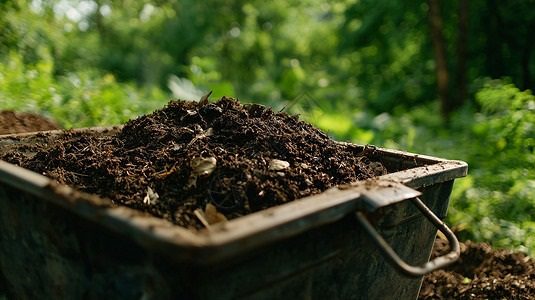
Color Change – From Light to Darker
In the early stages of fermentation, the material is mostly yellowish-green or light brown. As fermentation progresses, microorganisms continuously decompose organic matter and synthesize humus, gradually darkening the material’s color, eventually turning brownish-black or dark brown. Fully fermented compost has a uniform overall color with no obvious differences; the more uniform the color distribution, the higher the degree of maturity. If a large number of original color or light-colored patches still exist, it indicates insufficient fermentation.
Odor Changes – From Smelly to Neutral
In the initial stage of fermentation, the material releases pungent gases such as ammonia and hydrogen sulfide due to protein decomposition. As fermentation progresses, humic acids gradually form, and volatile fatty acids and sulfur compounds are decomposed, eventually resulting in a faint earthy aroma in the compost, with no obvious foul odor or ammonia smell. If a putrid odor remains, the fermentation time needs to be extended.
III. Temperature Changes – Returning to Ambient Temperature
During aerobic fermentation, the compost temperature follows a typical curve of “heating up → high temperature → cooling down.” When fermentation is complete, the compost temperature gradually drops to near ambient temperature (usually below 30°C), and there is no further heating due to turning the compost. If the temperature rises rapidly after turning the compost, it indicates that there is still decomposable organic matter remaining, and fermentation is not yet complete.
Material Structure Changes – Loose and Porous
Fully decomposed material has a loose, non-clumping structure. It is soft and elastic to the touch, easily crumbling into powder or loose fine particles when lightly rubbed. The fiber structure is noticeably softened and broken, and the tensile strength is significantly reduced. V. Auxiliary Testing Methods
For a more rigorous assessment, the following methods are recommended: Take 10g of fresh material, add 50mL of distilled water, shake to extract, and then measure the pH value. The pH of well-rotted compost is generally between 7.0 and 8.5. The seed germination index (GI) is the most reliable and widely recognized indicator—cultivate radish or water celery seeds in the compost extract. If the germination rate is ≥85% and the root length reaches more than 85% of the control, it is considered fully decomposed and free of phytotoxicity.
Judgment Recommendations
In production, it is recommended to use “temperature drop + no foul odor + dark brown color” as the three key elements for rapid on-site assessment, combined with the core criterion of no significant temperature rise after turning the compost. For precise testing, it is recommended to commission a professional laboratory to test the C/N ratio (dropping below 20) and GI value. If any of the four basic sensory indicators fails to meet the standard, the fermentation time should be extended and the turning and watering operations optimized to avoid the risk of seedling burn or soil-borne diseases caused by applying uncomposted fertilizer to the soil.

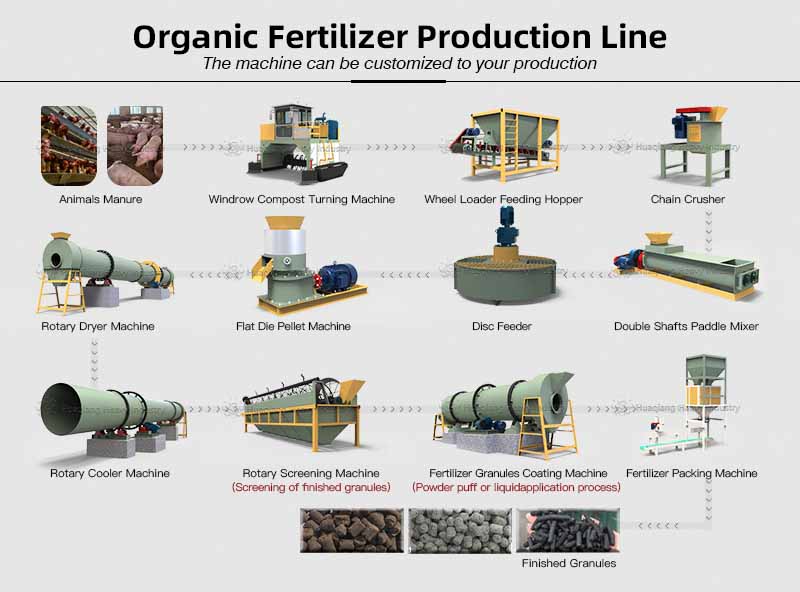
Mastering the judgment of fermentation maturity is the cornerstone of a successful organic fertilizer production process. From the initial “heating‑up” phase to the final “cool‑down” stage, every step of the organic fertilizer fermentation process must be carefully monitored — and that’s where mechanized turning plays a vital role. Using a large wheel compost turning machine ensures uniform oxygen supply and temperature distribution, accelerating humification while preventing anaerobic zones that cause foul odors. Once the compost passes the “temperature drop + no foul odor + dark brown” criteria and achieves a GI ≥85%, the mature material can be directed to the organic fertilizer granulator series for shaping into uniform, market‑ready pellets. For a full‑scale commercial organic fertilizer production line, integrating a poultry manure fertilizer making machine (which often includes pre‑crushing, mixing, and turning units) streamlines the entire flow — from raw manure to finished granules. In practice, we recommend combining real‑time temperature logging with periodic GI testing to establish a reliable “maturity‑control” protocol. A well‑managed fermentation, validated by both sensory and laboratory indicators, not only eliminates phytotoxicity risks but also enhances the nutrient‑release profile and microbial activity of the final product — delivering safe, high‑quality organic fertilizer that farmers can trust.