
Fineness Differences: Choosing Between Cage and Chain Crusher
In organic fertilizer production lines, the crushing stage plays a crucial role in setting the tone for subsequent processes—whether you’re producing directly packaged powdered fertilizer or preparing raw materials for granulation determines the required fineness of the crushing. Huaqiang Heavy Industry’s two main pieces of equipment, the cage crusher and the chain crusher, are designed specifically for crushing needs with varying fineness. This article will provide a comprehensive comparison from four dimensions: fineness of crushing, raw material compatibility, capacity differences, and process integration, helping you accurately choose the most suitable machine based on your product positioning.
Fineness of Crushing: 60-80 mesh vs. 20-40 mesh
This is the most fundamental difference between the two types of equipment and the primary basis for selection.
The cage crusher excels in fine crushing, capable of crushing materials to an ultrafine powder of 60-80 mesh. It consists of two opposing rotating cages. After the material enters the machine, it undergoes repeated impacts and friction between the cage teeth, ultimately being ground into extremely fine particles. At this fineness, the material’s specific surface area increases significantly, resulting in more even nutrient release, making it particularly suitable for products with high quality requirements.
Chain crushers, on the other hand, are primarily for medium-coarse crushing, typically producing a fineness between 20-40 mesh. They use a high-speed rotating chain to violently impact the material, breaking down hard lumps through impact force. While not as fine as cage crushers, this fineness is just right—ensuring sufficient adhesion for subsequent granulation while avoiding the moisture absorption and clumping problems caused by excessive fineness.
Raw Material Compatibility: Soft Materials vs. Hard Materials
The two types of equipment have different adaptability to raw material characteristics.
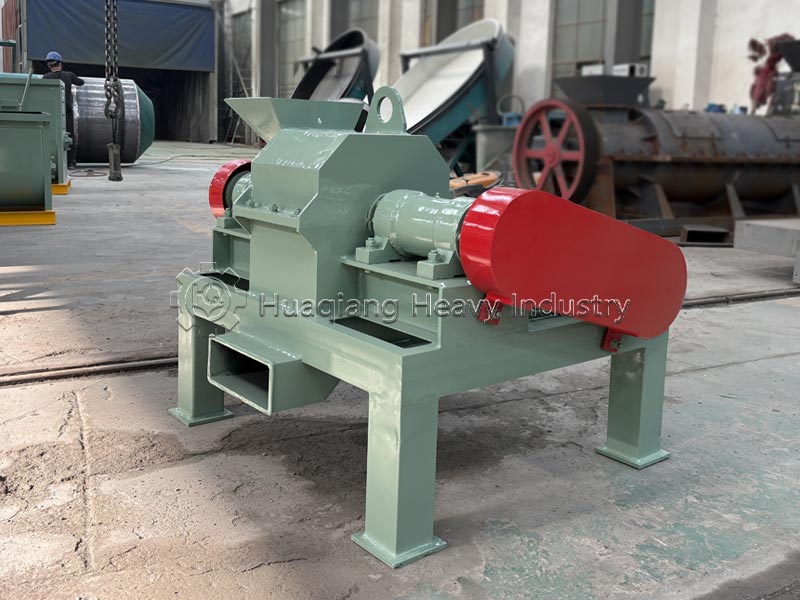
Cage crushers are best suited for processing fully decomposed, soft organic materials, such as fermented chicken manure, mushroom residue, and oilseed cake. These raw materials have a loose structure, and under the gentle grinding of the cage crusher, they can retain their original organic properties while achieving the ideal fineness. However, it has strict requirements for moisture content, usually needing to be controlled below 10%, and is not suitable for processing raw materials containing hard impurities. Chain crushers, on the other hand, are considered “tough guys,” particularly suitable for processing raw materials that have developed large amounts of hard, lumpy clumps after composting, such as cow or sheep manure stored for a long time, or mixtures containing small amounts of straw fibers. The high-speed impact of the chain easily breaks up hard clumps and has a certain tolerance to small stones and nails that may be mixed in with the raw materials (although it is still recommended to install a magnetic separator). It also has a wider adaptability range for moisture content, operating stably within 15%-20%.
III. Capacity Comparison: High-Efficiency Mass Production vs. Fine Grinding
When large-scale mass production is required, capacity becomes a crucial consideration.
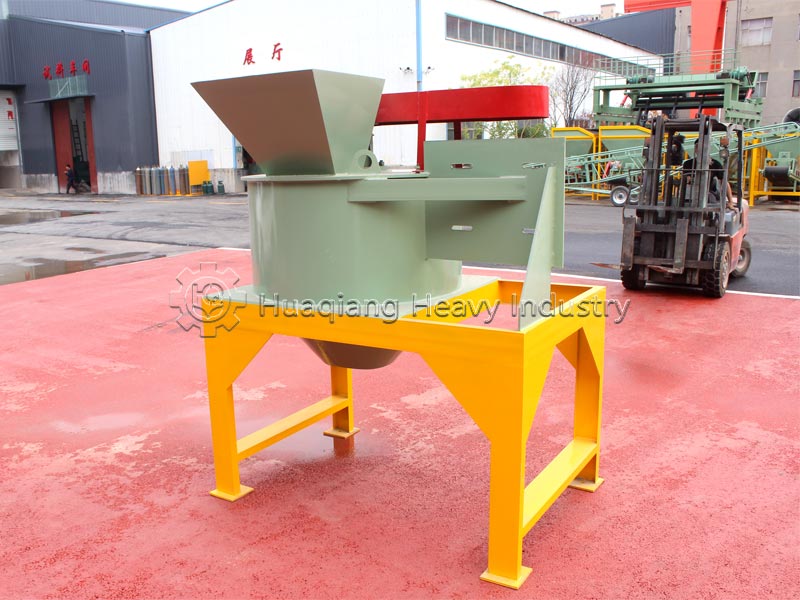
Chain crushers have a significant advantage in capacity. A single machine can achieve a capacity of over 10 tons per hour, with some large models even exceeding 20 tons per hour. This is due to its simple structural principle—the chain rotates at high speed, allowing material to pass through quickly and enabling strong continuous operation. For large-scale plants processing hundreds of tons of raw materials per day, chain crushers are a reliable choice to ensure upstream supply.
Cage crushers have a relatively moderate capacity, typically ranging from 3 to 8 tons per hour per unit. This is because fine grinding requires a longer processing time, resulting in a longer material residence time within the machine and a naturally reduced throughput per unit time. However, for factories specializing in the production of powdered organic fertilizer, this capacity is sufficient to meet their needs.
Process Integration: Packaging Pre-Production Station vs. Granulation Pre-Production Station
Different grinding finenesses determine the “position” of equipment on the production line.
The material pulverized by a cage crusher reaches the factory standard for powdered fertilizer. This means that after cage crushing, the material can directly enter the packaging stage, becoming commercial powdered organic fertilizer. This path eliminates subsequent processes such as granulation and drying, resulting in a simplified production line and low investment costs, making it ideal for factories specializing in the production of powdered fertilizer.
The material pulverized by a chain crusher, on the other hand, is ready for the granulation stage. A fineness of 20-40 mesh, combined with a suitable moisture content, allows the material to easily agglomerate into pellets in a disc granulator or agitator granulator. After using a chain crusher for raw material pretreatment, an organic fertilizer plant achieved a stable granulation rate of over 90% in its granulators, with uniform particle strength and a significant reduction in screen return material.
Scenario-Based Recommendation: Your Product Positioning Determines Equipment Selection
If you are targeting the powdered organic fertilizer market and desire a fine, uniform product suitable for direct packaging and sale, then a cage crusher is your best choice. Its fine grinding capabilities will allow your product to stand out among numerous powdered fertilizers, earning praise from farmers for its “easy dissolution and rapid fertilizer effect.”
If you are targeting the granulated organic fertilizer market and need to prepare raw materials for the granulation process, pursuing high efficiency and moderate fineness, then a chain crusher better meets your needs. Its high capacity and resistance to lumps ensure stable material supply at the front end of the production line and smooth granulation at the rear.
A Win-Win Solution for Large-Scale Production
Large-scale organic fertilizer plants often need to accommodate multiple product forms. At this point, Huaqiang Heavy Industry can provide a two-unit combination solution: a chain crusher is used at the front end for coarse crushing, processing a large amount of raw materials, with some material directly entering the granulation line to produce granular fertilizer; the other part of the material enters a cage crusher for secondary fine crushing, used to produce high-end powdered fertilizer or as an additive in compound fertilizers. This “coarse crushing + fine grinding” combination mode ensures both production capacity and product diversity.
From fine to coarse, from powder to granules, each crusher plays an irreplaceable role in the production line. Clearly defining your product positioning and understanding the differences in equipment characteristics will enable you to make the most accurate choice. Huaqiang Heavy Industry not only provides individual machines but can also recommend the optimal crushing solution combination based on your overall process design.
The detailed comparison between cage and chain crushers highlights the critical role of fertilizer raw material processing machinery and equipment in determining final product quality. Both are powerful fertilizer crusher machine options, but their optimal use depends entirely on the production goal. If your target is a high-quality powdered organic fertilizer for direct sale, a cage crusher with its 60-80 mesh fine grinding capability is the clear choice. However, if your aim is to feed a granulation line, a chain crusher providing a consistent 20-40 mesh product is ideal. This crushed material is the perfect feedstock for an organic fertilizer disc granulation production line. For materials with higher moisture content exiting the fermentation stage, a half-wet material crusher machine might be necessary before primary crushing. Ultimately, the selection of the right fertilizer crusher machine—cage, chain, or half-wet—is a strategic decision that aligns raw material preparation with the specific requirements of your downstream processes, whether that’s direct packaging or granulation.