
Malaysian Oil Palm Biomass: Oil Palm Empty Fruit Bunch (OPEFB)
A highly promising sustainable biofuel feedstock and fertilizer resource in the context of global energy challenges
Over the past few decades, global energy demand has increased dramatically, while traditional fossil fuels such as coal, oil, and natural gas have become increasingly scarce. Furthermore, the burning of these fossil fuels is a major driver of climate change, making it imperative to conserve existing energy resources and explore sustainable alternatives. Converting renewable energy materials into biofuels has emerged as a viable solution, offering a pathway to address pressing issues such as solid waste management, environmental pollution, the greenhouse effect, and energy shortages. Notably, oil palm biomass, a byproduct of the oil palm industry, is not only a highly promising biofuel feedstock but also has widespread and important applications in the fertilizer industry. Among these, oil palm empty fruit bunches (OPEFB), with their unique physicochemical properties, have become a high-quality resource in the fertilizer sector.
Malaysia is the world’s second-largest producer and exporter of palm oil, playing a crucial role in the global palm oil industry. In 2016, its production accounted for over 30% of the global total, and its exports accounted for 37% of global exports. This thriving industry generates a large amount of oil palm biomass annually—over 80 million tons of dry weight—a figure projected to increase by at least 40% by 2020. With the expansion of oil palm plantations, annual production is expected to increase by as much as 50 million tons by 2030. The main byproducts include palm kernel shells (PKS), oil palm empty fruit bunches (OPEFB), oil palm fronds (OPF), oil palm mesocarp fiber (OPMF), and palm oil mill effluent (POME). In 2017 alone, Malaysia generated 51.19 million tons of oil palm biomass residue from replanting, pruning, and processing activities, while the total amount of fresh fruit bunches processed during the same period was 101.02 million tons.
Unfortunately, due to the lack of effective utilization technologies, most of this biomass is discarded or burned, exacerbating waste problems, wasting cellulose-rich resources, and causing serious environmental problems such as air pollution. In fact, the value of oil palm biomass in the fertilizer industry is severely underestimated. Oil palm biomass is inherently rich in various essential plant nutrients such as nitrogen, phosphorus, potassium, calcium, and magnesium, and contains abundant organic matter, making it an ideal raw material for producing organic fertilizers. Oil palm empty fruit bunches (EFBs) are particularly noteworthy, as they have the lowest lignin content among all types of oil palm biomass (only about 14%), making them easier to decompose and mature, and allowing for faster release of nutrients into the soil.
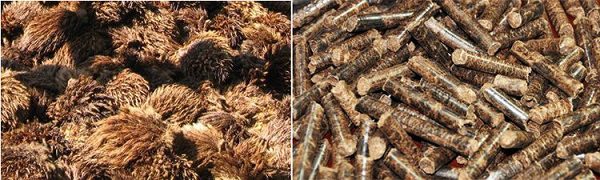
In practical applications, oil palm biomass and EFBs can be converted into fertilizer through various methods. The most common is composting, where EFBs are mixed with manure, palm oil mill effluent, etc., and fermented to produce high-quality organic fertilizer. This process activates the nutrients and kills harmful bacteria and insect eggs. When applied to farmland, this organic fertilizer significantly increases soil organic matter content, improves soil structure, enhances soil water and nutrient retention capacity, and promotes the activity of soil microbial communities, reducing soil compaction and erosion. Furthermore, EFBs can be converted into biochar fertilizer through pyrolysis technology. Biochar has a porous structure that not only improves soil fertility but also adsorbs heavy metals and harmful substances from the soil, proving particularly effective in improving acidic and peat soils. Additionally, components such as potassium carbonate can be extracted from oil palm biomass ash for the preparation of liquid fertilizers, enabling the precise recovery and utilization of nutrients.
Beyond its value in the fertilizer sector, oil palm residue and other lignocellulosic biomass are among the most abundant renewable green carbon sources on Earth, with the potential to become substitutes for petroleum-based products. Their carbohydrate composition makes them suitable raw materials for renewable energy production, capable of producing biofuels such as bioethanol, biobutanol, and biomethane, as well as various value-added products. Currently, second-generation bioethanol extracted from lignocellulosic biomass is the most advanced of these products. Lignocellulosic biomass is mainly composed of lignin, cellulose, and hemicellulose. While cellulose and hemicellulose can be converted into ethanol, the high lignin content in oil palm biomass poses a significant challenge due to its complex and difficult-to-decompose structure. Therefore, pretreatment (delignification) is crucial before enzymatic hydrolysis, fermentation, and distillation to reduce the recalcitrance of the biomass. Effective pretreatment can alter the chemical composition, macrostructure, and microstructure of biomass, reducing cellulose crystallinity and increasing porosity. Ideal pretreatment techniques should be inexpensive, easy to operate, and yield high product recovery.
Notably, the lignin content of different types of oil palm biomass varies significantly (14% to 36%), with oil palm fruit residue having the highest lignin content and oil palm empty fruit bunches having the lowest. This characteristic not only facilitates its efficient utilization in the fertilizer industry but also guides the selection of appropriate pretreatment methods for biofuel conversion. With the growing global demand for alternatives to fossil fuels, food security concerns prioritizing non-edible biofuel sources, and the increasing demand for green organic fertilizers in agriculture, oil palm biomass has attracted widespread research attention. Its dual value in both the biofuel and fertilizer sectors makes it an important resource for promoting sustainable energy development and ecological agriculture, with broad application prospects.
Conclusion: A Sustainable Cycle from Waste to Resource
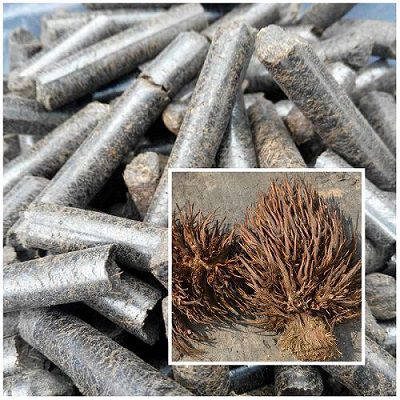
The Oil palm empty fruit bunch (OPEFB) exemplifies a perfect model of circular economy, transitioning from a major agricultural waste to a valuable resource. The primary uses of oil palm empty fruit bunch are realized through its integration into sustainable agricultural systems, most notably as a primary feedstock for organic fertilizer production.
To leverage OPEFB effectively, it is processed through a complete organic fertilizer manufacturing system. The journey begins with controlled organic fertilizer fermentation, optimized by advanced fermentation composting turning technology to accelerate decomposition and enhance quality. The resulting mature compost can then be processed through a bio organic fertilizer production line. For final product formation, the material undergoes organic fertilizer production granulation. Producers can choose specialized equipment like an organic fertilizer disc granulation production line or opt for a more versatile organic fertilizer combined granulation production line to shape the compost into uniform, market-ready fertilizer granules. This systematic approach transforms OPEFB waste into a high-value soil amendment, closing the nutrient loop sustainably.
Thus, by combining innovative biological treatment with modern mechanical processing, OPEFB is successfully converted from an environmental burden into a cornerstone of sustainable agriculture and green industry.