
Organic Fertilizer Plant Construction Guide: Five Common Mistakes for Beginners
Many beginners investing in organic fertilizer plants easily make mistakes due to a lack of experience, which can range from increased costs to severely impacting production. The following five mistakes must be avoided:
First, blindly going for high-configuration equipment. Beginners are advised to start with a small-scale powdered organic fertilizer production line to test the waters, rather than immediately going for a full set of high-configuration granular equipment, which can create financial strain.
Second, neglecting raw material supply. Before construction, it is essential to ensure a sufficient supply of raw materials such as manure and straw in the surrounding area, with a daily supply not falling below production needs; otherwise, the organic fertilizer production line will run out of fuel.
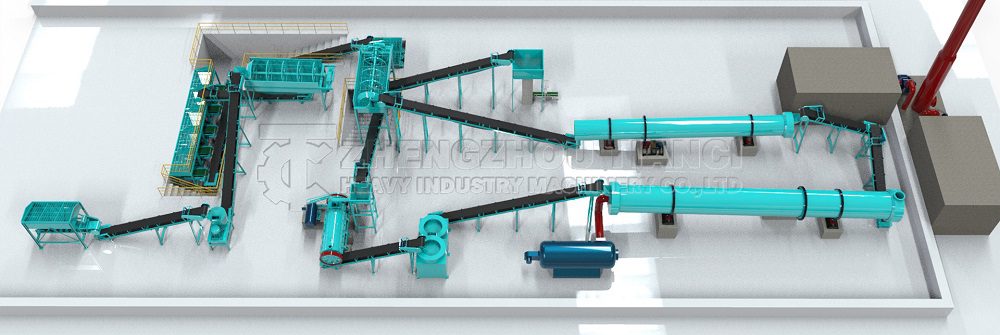
Third, unreasonable site planning for the organic fertilizer production line. Failure to separate the fermentation area, production area, and warehouse leads to chaotic transportation routes, low efficiency, and excessive dust.
Fourth, lack of understanding of fermentation processes. Assuming that purchasing equipment is sufficient for production, neglecting temperature and humidity control, turning and turning, and oxygen supply management can result in incomplete fertilizer decomposition, burning of seedlings, and foul odors.
Fifth, ignoring environmental requirements. Failure to implement deodorization and dust control measures can lead to complaints from nearby residents and failure to pass environmental impact assessments.
By avoiding these pitfalls, organic fertilizer plants can be built more smoothly, put into operation faster, and generate more stable profits.