
Roller Press Granulation Line: How Does Silent Steel Sing?
Have you ever watched a production line come to life from scratch—not on a drawing, but on a dusty site, amid sparks and chanting workers?
One early morning, the first truckload of equipment arrived. A double roller press granulator—two massive alloy rollers wrapped tightly in anti-rust film, like sleeping beasts. Piled nearby were a chain fertilizer crusher, a twin-shaft mixer, a rotary screener, a cooler, a coating machine, and an automatic packing scale. Dozens of tons of steel scattered across the open ground, waiting to be brought to life.
Installation began with positioning. A veteran foreman wielded a spirit level, as picky as a surgeon. The roller press had to be perfectly horizontal—tolerance no more than two millimeters. Otherwise, uneven pressure between the rollers would produce flakes thicker on one side, ruining granule uniformity. Workers pried at shims with crowbars. One push, two pushes. The machine slowly settled onto its designed elevation. At that moment, the only sound was the crisp clink of wrenches against bolts.
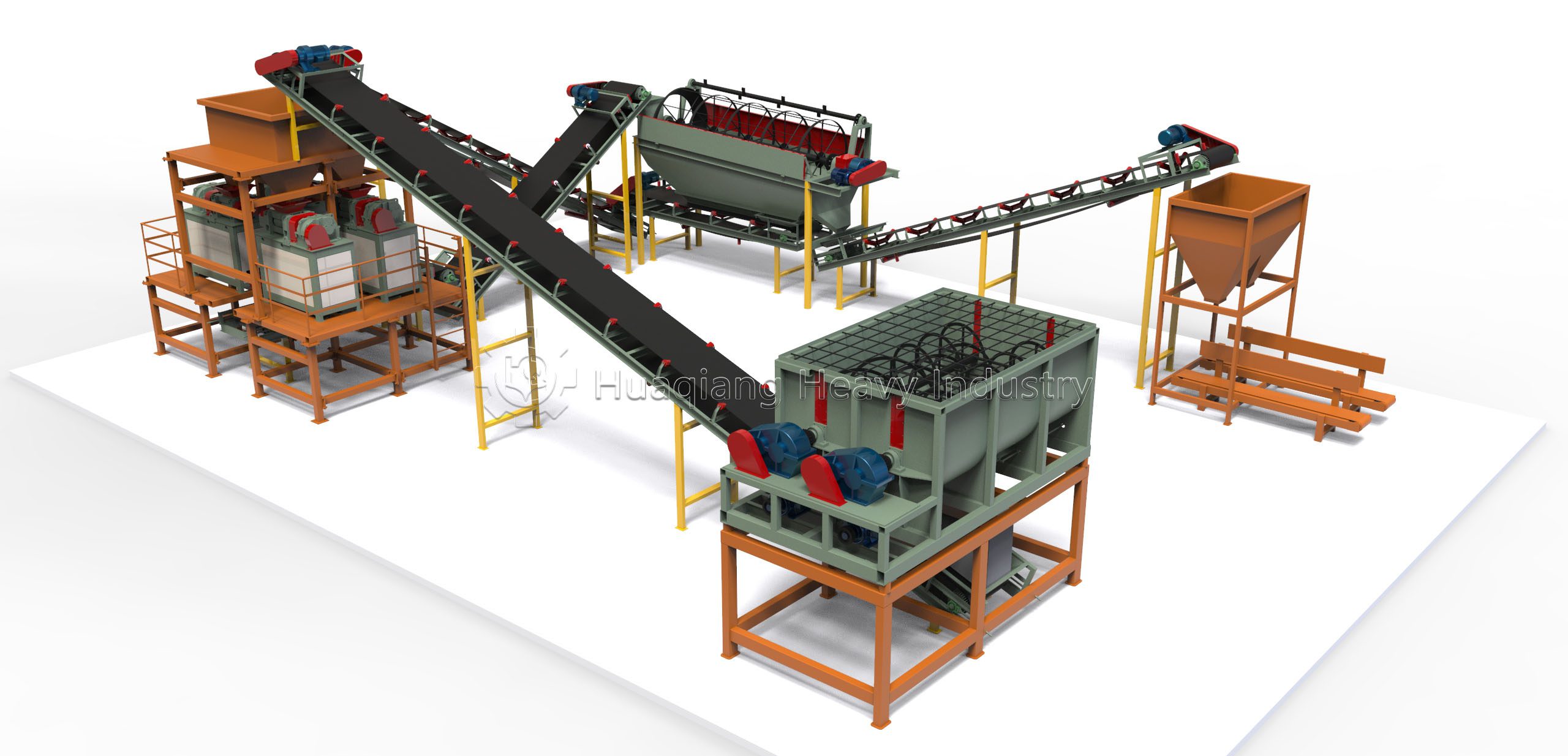
Next came the “bridging.” The crusher and mixer were linked by belt conveyors, and the mixer’s outlet fed directly into the press’s hopper. The trickiest part was sealing the connections—dust leakage not only wastes material but also turns the workshop into a hazy mess. A young welder squatted at the joint of the hopper, pulled down his mask, and sent arcs flashing. The weld beads lined up like fish scales.
Piping was equally thrilling. Cooling water loops had to serve the roller press bearings, compressed air lines had to drive the pneumatic mesh cleaner, and cable trays spiraled up steel columns—the whole line resembled a human body, with blood vessels, nerves, and bones all indispensable.
On the day of the power-on test, everyone held their breath. The operator pressed the start button. The motors hummed, and the rollers began to turn slowly. Half an hour of no-load operation—no abnormal noise, no vibration. Then a small batch of material was fed in. Powder was nipped between the rollers, instantly pressed into sheets, then crushed and screened. Oval-shaped granules poured down with a rustling sound. The quality inspector grabbed a handful, squeezed, and shouted, “Solid!”
Beside them, the cooler and coating machine started up one by one. Hot granules lost their heat to cold air, got a thin film of oil, and finally slid into the packing scale. Bag after bag… The production line flowed like a waking river, smooth and steady.
Someone asked: what’s the hardest part of installing a roller press granulation line? It’s not tightening bolts, not lifting heavy loads—it’s making every piece of equipment forget that it’s just a chunk of iron. When they work in silent harmony, that silent steel will sing a song of harvest.