
Straw Transformed into Additive: Crusher Facilitates Precise Carbon-Nitrogen Ratio Adjustment
In organic fertilizer production, coarse fibrous materials such as straw and rice husks play an indispensable role—they act as “regulators” for the carbon-nitrogen ratio, increasing the permeability of the compost pile and preventing root burn caused by excessive nitrogen fermentation. However, the challenge of crushing coarse fibrous materials deters many livestock farmers: corn stalks are tough, wheat straw is easily tangled, and rice husks are light and difficult to process. This article will provide a complete analysis of how to effectively use a straw crusher, from equipment operation and proportioning techniques to process matching, making carbon-nitrogen ratio adjustment simple and controllable.
Key Points for Straw Crusher Operation: From “Difficult” to “Easy to Use”
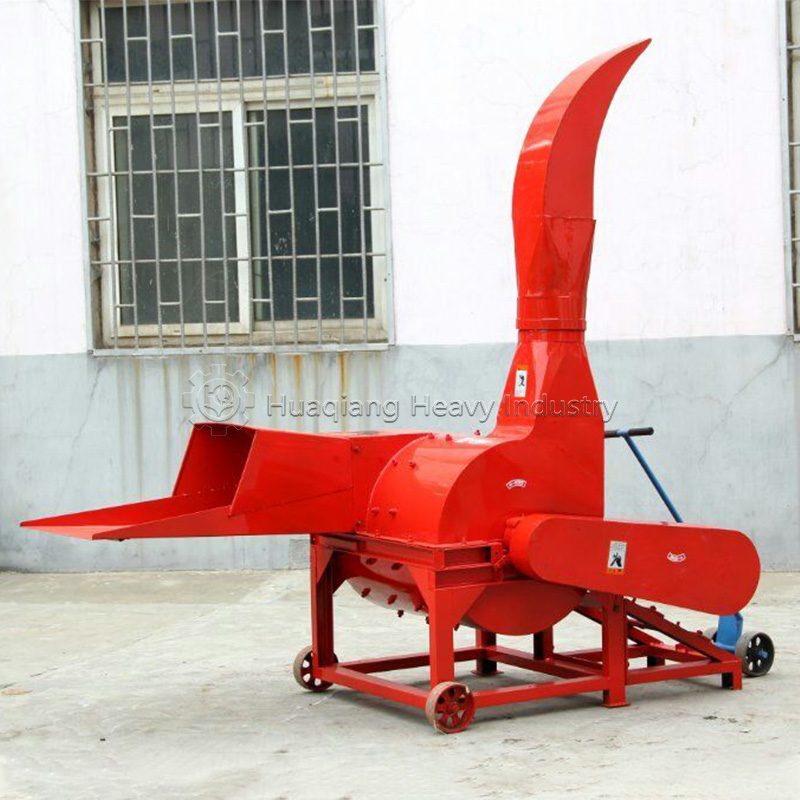
The core value of a straw crusher lies in processing long-fiber materials into short, shredded pieces suitable for mixing with manure. Correct operation methods can make this process much more efficient.
Pre-treatment: Chopping is the first step: Before feeding long straws such as corn stalks and cotton stalks into the crusher, it is recommended to chop them into sections, keeping the length within 30-50 cm. This not only improves crushing efficiency but also prevents jamming caused by excessively long straws tangling around the main shaft. Huaqiang Heavy Industry’s straw crusher is equipped with a forced feeding device; even slightly longer straws can be automatically wound in by the pressure rollers, greatly reducing the pre-treatment effort.
The optimal crushing fineness is 3-5 cm: This is an ideal range proven through extensive practical experience. Too short (less than 1 cm) will cause the straw to become powdery, losing its function of increasing permeability; too long (more than 8 cm) will be difficult to mix evenly with manure, easily forming a “straw layer” during fermentation. Huaqiang equipment allows for flexible control of the output length by changing screens with different aperture sizes. For relatively soft materials such as wheat straw and rice straw, it is recommended to use medium to low speeds to avoid over-crushing; for hard materials such as corn stalks, a high-speed setting can be selected to effectively cut the fibers using the impact force of the blades.
Feeding should be “uniform and continuous”: The worst approach to straw crushing is inconsistent feeding. Too much feed at once can cause excessive instantaneous load, even leading to machine stalling and shutdown; too little feed results in low efficiency. The correct approach is to maintain continuous feeding via conveyor belt or manual feeding, allowing the equipment to operate under a stable load. Observe the ammeter reading; controlling it to around 80% of the rated current is the optimal operating range.
Anti-entanglement design is key: Ordinary straw crushers often cause frequent shutdowns for cleaning due to fibers entangled in the main shaft. Huaqiang straw crushers employ a dual-shaft differential speed structure and anti-entanglement blade layout. The two main shafts rotate in opposite directions at different speeds, creating a mutual cleaning effect that prevents fibers from entangled and accumulating. This design reduces downtime caused by entanglement by more than 90%.
Straw to Manure Ratio Techniques: The “Golden Rule” of Carbon-Nitrogen Ratio Adjustment
Once you have crushed straw, how to scientifically ratio it with manure is the core factor determining fermentation efficiency.
Chicken manure: straw = 3:1 (volume ratio): Chicken manure is a high-nitrogen raw material, with a carbon-to-nitrogen ratio typically around 10:1. Fermenting it alone easily leads to nitrogen loss and produces an ammonia odor. Mixing chicken manure with straw at a ratio of 3 parts chicken manure to 1 part straw can raise the carbon-to-nitrogen ratio to the ideal range of 25:1-30:1. At this ratio, microbial activity is highest, fermentation temperature rises quickly, and the composting cycle can be shortened by 5-7 days.
Cow manure: straw = 2:1 (volume ratio): Cow manure itself has a carbon-to-nitrogen ratio of approximately 20:1, close to the lower limit of the ideal value. Mixing cow manure with straw at a ratio of 2 parts cow manure to 1 part straw can stabilize the carbon-to-nitrogen ratio at around 30:1, while significantly increasing the permeability of the compost pile and preventing anaerobic fermentation caused by the high moisture content of cow manure.
Tactile Judgment Method: In actual production, a simple tactile method can quickly determine if the ratio is appropriate—squeeze the mixture tightly; there should be slight moisture between your fingers but no water droplets seeping out. After releasing the grip, the material should clump together but crumble easily with a light touch. If the material immediately disperses after being released, it indicates too much straw, requiring an increase in the proportion of manure; if it clumps together but doesn’t disperse quickly and water seeps out, it indicates too much manure, requiring additional straw.
III. Equipment Matching Process: Efficiency Improvement from Single Machine to Integrated Operation
In large-scale production, straw crushers are often not isolated; their integration with other equipment can create greater value.
Straw Crusher + Horizontal Crusher = Two-Step Crushing Method: This is a classic combination. The straw is first cut into 3-5 cm pieces by the straw crusher, then mixed and crushed a second time with manure in a horizontal crusher. The hammers and blades in the horizontal crusher further knead and mix the straw and manure, achieving a homogeneous state where the two materials are intertwined. After adopting this combination, an organic fertilizer plant shortened the fermentation cycle from 25 days to 20 days, and the compost pile temperature became more uniform, with significantly improved consistency in decomposition.
Straw Crusher + Semi-Wet Material Crusher = Complete Process Compatibility: For production lines using high-moisture chicken or cow manure as primary raw materials, the straw crusher can first process the straw, then mix the crushed straw with fresh manure before fermentation. After fermentation, the composted material enters the semi-wet material crusher for final crushing. The presence of straw increases the looseness of the composted material, reducing the workload of the semi-wet material crusher and resulting in more uniform output fineness. This combination perfectly adapts to the entire process from raw material pretreatment to finished product crushing.
The supporting conveying system is indispensable: Straw is lightweight and bulky, often making conveying efficiency a bottleneck. It is recommended to use a closed screw conveyor or pneumatic conveying system before and after the straw crusher, which can improve conveying efficiency and reduce dust emissions. Huaqiang Heavy Industry can provide complete conveying solutions based on the production line layout.
Case Study: The Transformation Brought About by a Balanced Carbon-Nitrogen Ratio
A medium-sized organic fertilizer plant, primarily using cow dung as its raw material, previously relied on pure cow dung fermentation due to difficulties in straw processing. This resulted in a fermentation cycle of up to 28 days, and the product often caused “seedling burn” complaints from farmers due to incomplete decomposition. After introducing a Huaqiang Heavy Industry straw crusher, the plant began crushing corn stalks from surrounding farmland and mixing them with cow dung at a 2:1 ratio for fermentation. After just one batch, the effects were immediate: the pile temperature rose above 65℃ on the third day, and the decomposition cycle was shortened to 22 days, a full 5 days shorter than before. More importantly, product testing showed a stable carbon-nitrogen ratio of 28:1. After application to the field, crop root systems developed well, and seedling burn no longer occurred, leading to a rapid improvement in product reputation.
From a troublesome straw to a uniform mix of additives, and then to perfect integration with manure—the straw crusher plays the role of a “converter” in organic fertilizer production. It transforms previously difficult-to-manage agricultural waste into a valuable resource for adjusting the carbon-nitrogen ratio and improving product quality. As the temperature of the fermentation pile steadily rises and the composting cycle shortens, you’ll find that choosing the right straw crusher changes not only the crushing efficiency but also the quality and efficiency of the entire production line.
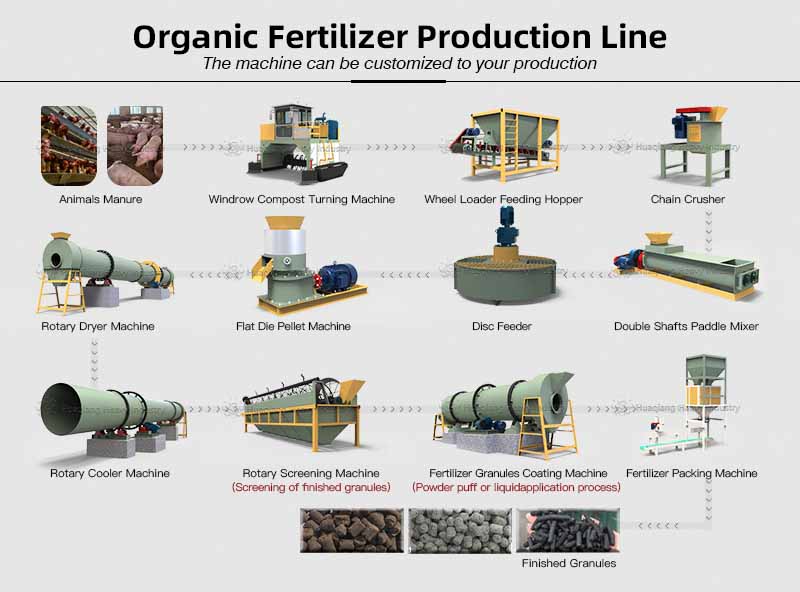
The properly prepared mixture of manure and crushed straw, with its optimized carbon-to-nitrogen ratio, is the ideal feedstock for the final stage of a comprehensive organic fertilizer manufacturing system. After fermentation, the composted material requires final size reduction before organic fertilizer production granulation. A half-wet material crusher machine is perfect for this task, handling the typical 25-55% moisture content. For different material characteristics, the organic fertilizer granulator series offers options like a chain crusher for harder lumps or a cage crusher for an ultra-fine grind. The prepared powder then enters the granulation stage. A complete organic fertilizer disc granulation production line, centered on a disc pan, rolls the material into premium spherical granules. As a space-saving, efficient alternative, a new type two in one organic fertilizer granulator can combine the final crushing and initial granulation steps. This integrated approach, from straw crushing to final granulation, forms a seamless and efficient system for transforming agricultural waste into high-value organic fertilizer.