
The Core of Biofertilizer Production: Strain Selection, Fermentation Process Control, and Efficacy Enhancement Techniques
In the wave of green transformation in agriculture, biofertilizers stand out from numerous fertilizer categories due to their unique role in improving soil and enhancing fertilizer efficiency. However, the effectiveness of market products varies considerably, and this fundamental difference often stems from core control in the production process. A successful biofertilizer production process is far from simply mixing bacterial powder with a carrier; it’s a precise control of bacterial activity, fermentation environment, and product stability, from the laboratory to the fermentation tank.
Strain Selection: From “What We Have” to “Why We Use It”
Bacterial strains are the soul of biofertilizers, and the selection criteria directly determine the product’s functional positioning and market competitiveness. Currently, mainstream functional strains are roughly divided into three categories: nitrogen-fixing bacteria (such as rhizobia and Azospirillum), phosphorus- and potassium-solubilizing bacteria (such as Bacillus megaterium and Bacillus mucilaginosus), and biocontrol and growth-promoting bacteria (such as Bacillus subtilis and Trichoderma).
Companies’ selection strategies should shift from “what bacteria do we have” to “what problems do users need to solve.” For example, for fields with continuous cropping of peanuts and soybeans, selecting highly efficient symbiotic nitrogen-fixing bacteria is crucial; for alkaline soils where phosphorus and potassium are fixed, the focus should be on phosphorus- and potassium-solubilizing bacteria. A more advanced strategy is to develop compound microbial agents, but this must be ensured through rigorous antagonism tests to ensure that different strains can coexist synergistically rather than inhibit each other. High-quality strains from professional strain preservation institutions are key to ensuring a strong starting point for the product.
Fermentation Process Control: Creating an “Ideal Home” for Microorganisms
Fermentation is the core process of expanding a test tube of bacterial strains from the laboratory into tons of highly active products. This process is like building and operating an “ideal home” for microorganisms to multiply rapidly, and its control precision directly determines the number of live bacteria and the cost of the final product.
The core of fermentation control techniques lies in the precise coordinated control of three parameters: temperature, dissolved oxygen, and pH. For example, most bacteria grow fastest at 28-37°C, while fungi such as Trichoderma may have different optimal temperatures. Dissolved oxygen (DO) control is particularly crucial, as aerobic bacteria require a continuous and uniform oxygen supply during fermentation. Maintaining the DO value within the optimal range (e.g., 20%-40% saturation) by adjusting the stirring speed and aeration rate is key to preventing oxygen deprivation and cell death, and improving yield. Simultaneously, as microbial metabolism progresses, the pH of the culture medium changes dynamically. Real-time neutralization with acid and alkali solutions is necessary to maintain the pH within the narrow optimal range for the specific bacterial strain (e.g., pH 6.5-7.5).
Furthermore, high-density fermentation technology, through optimized culture medium formulation and feeding strategies, can significantly increase the number of viable bacteria per unit volume of the final fermentation broth. This is a core technology for reducing downstream processing costs and enhancing product competitiveness.
III. Enhanced Effectiveness and Stability Assurance: Bridging the Gap from “Production” to “Field Application”
Producing a fermented liquid containing a large number of live bacteria is only half the battle. The greater challenge lies in formulating a product that can be stored for a long time on the shelf and can successfully colonize the soil.
The selection and treatment of the carrier is the first line of defense in ensuring product stability. Commonly used carriers, such as peat, composted organic fertilizer, or vermiculite, must undergo rigorous sterilization (or deep disinfection) to eliminate unwanted microorganisms and create a favorable survival environment for the target functional bacteria. The pH, water content, and adsorption properties of the carrier must match the characteristics of the bacterial strain.
The drying process is a critical hurdle for bacterial survival. Spray drying is highly efficient, but the hot air can severely damage the bacteria; freeze-drying offers extremely high survival rates, but is expensive. Currently, medium-temperature fluidized bed drying or vacuum low-temperature drying are better options for balancing cost and effectiveness. Adding protective agents (such as trehalose, glycerol, etc.) before and after drying can form a protective film on the bacterial surface, significantly improving their ability to survive against adverse conditions such as drying and high temperatures.
Finally, rigorous packaging selection and storage management are indispensable. Packaging materials with good barrier properties, such as aluminum foil bags, should be used, and storage instructions should specify a cool, dry place to prevent rapid bacterial death due to high temperature and humidity during transportation and storage.
The production of excellent biofertilizers is a complex, interconnected system engineering process. It begins with a precise strain selection strategy to address specific agricultural problems, matures with a set of precisely controlled and highly reproducible fermentation techniques, and finally stabilizes with a post-processing and packaging solution centered on preserving microbial activity.
For manufacturers, the core competitiveness is shifting from simply “having the right bacteria” to a systemic capability of “my bacteria live longer, colonize more effectively, and deliver consistent results.” Only by deeply understanding and mastering the entire chain of key technologies, from the microbial strain to the soil, can companies produce biofertilizers that truly stand the test of the market and the field, earning lasting trust in the wave of green agriculture.
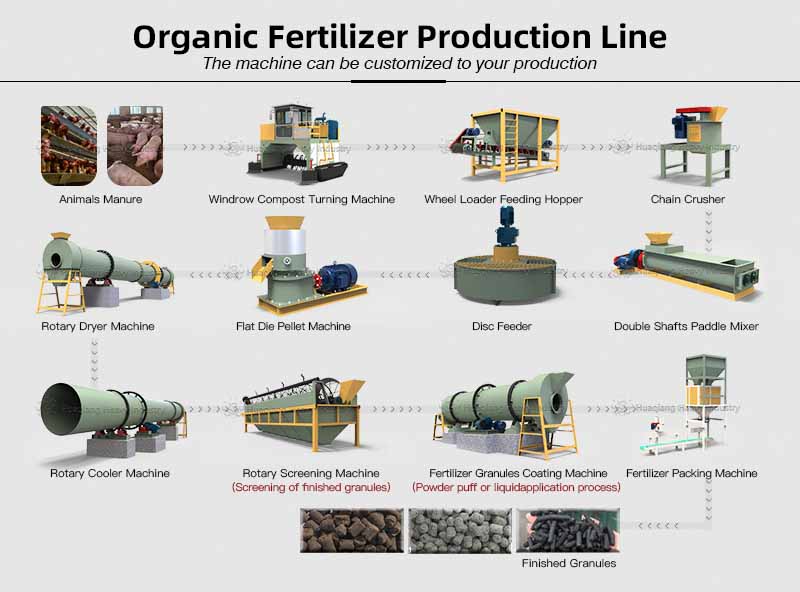
The production of high-quality biofertilizer extends beyond microbial fermentation to include the physical shaping of the final product. The process begins with a specialized, controlled organic fertilizer fermentation process that may utilize equipment like a chain compost turning machine for aerobic composting of the organic base. This forms the initial stage of a complete bio organic fertilizer production line. To transform the fermented and inoculated material into a marketable form, a sophisticated organic fertilizer manufacturing system is required. The core of this system is the organic fertilizer production granulation stage. For this, High-end organic fertilizer equipment such as a specialized granulator is used. Options include a versatile new type two in one organic fertilizer granulator for combined processing, or a dedicated disc granulator, to produce uniform, high-quality organic biofertilizer pellets that preserve microbial viability and ensure ease of application.