
Chain Compost Turner at Work: A Symphony of Steel on the Fermentation Floor
Step onto the factory floor, and the first thing that hits you is the smell—earthy, warm, surprisingly sweet. The second thing is the sound: a low, rhythmic rumble of chains and motors, punctuated by the soft thud of material being lifted and dropped. In front of you stretches a long, narrow fermentation trench, perhaps 50 meters long and 5 meters wide, filled with a dark, steaming mass of composting manure and straw. And straddling that trench, moving at a pace barely faster than a slow walk, is the chain compost turner.
This machine doesn’t look flashy. It’s a steel bridge on wheels, running on rails laid along the trench walls. Suspended from its frame hang rows of heavy duty chains, each fitted with hardened steel paddles. As the machine inches forward, the chains rotate—slowly at first, then with purpose—diving deep into the compost pile. They lift material from the bottom, shred clumps, and throw it backward in a sweeping arc. What was a stagnant, oxygen starved heap just seconds ago becomes a fluffy, aerated, biologically alive mass.
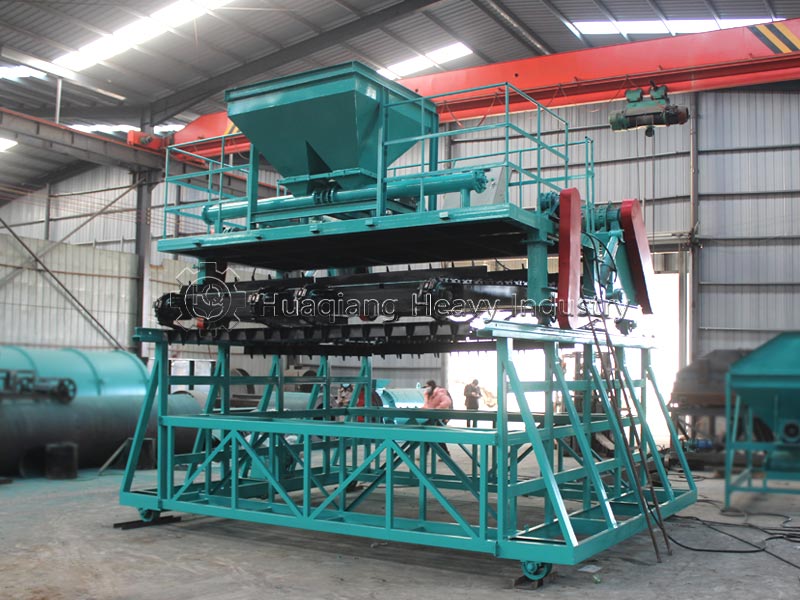
The operator sits in a small cabin at one end, watching through a glass window as the chains work. A hydraulic lever lets him raise or lower the rotor assembly—when he reaches the end of the trench, he lifts the chains clear, and the machine travels back to the start for another pass. One operator, one machine, turning hundreds of tons of material per hour. It’s efficient, it’s repetitive, and it’s absolutely essential.
But the chain turner doesn’t work alone. Walk a few meters to the left, and you’ll see the vertical disc mixer. It’s a massive horizontal paddle blender where raw materials—poultry litter, rice hulls, mushroom residue, maybe a splash of microbial inoculant—are combined into a consistent recipe. Without this machine, the turner would be dealing with uneven piles, some too wet, some too dry, some with pockets of pure manure that would go anaerobic. The mixer ensures every shovel of material entering the trench is balanced and ready for fermentation.
At the far end of the trench, you’ll spot a front end loader scooping mature compost from the exit area. After 20 to 25 days of regular turning, the material is dark, crumbly, and odorless—ready for the next stage. The loader dumps it into a hopper that feeds a crusher and a vibration screener machine. The crusher breaks up any remaining lumps; the screener separates the fine, uniform compost from oversized particles, which are sent back to the mixer for another round.
If the operation produces organic fertilizer, there’s more equipment waiting. A granulator—often a disc or drum type—rolls the fine compost into round pellets. Then a rotary dryer and cooler remove moisture and bring the temperature down, so the granules won’t mold or clump in storage. Sometimes a coating machine adds a thin layer of oil or anti caking agent, protecting the product and giving it a professional finish. Finally, an automatic packer fills bags, seals them, and stacks them on pallets. Throughout the process, conveyors and dust collectors keep everything moving smoothly and cleanly.
Back at the trench, the chain turner makes another pass. The operator checks a temperature probe inserted deep in the pile—68°C, perfect. The heat means microbes are thriving, pathogens are dying, and organic matter is breaking down efficiently. Tomorrow, he’ll turn it again. And the day after. For three weeks, this machine will run nearly every day, turning waste into resource, one trench at a time.
What strikes you most, watching the scene, is how quiet the whole operation feels. Not in terms of noise—there’s plenty of that—but in terms of flow. The mixer feeds the trench; the turner aerates; the loader moves material; the crusher, screener, and granulator refine; the packer finishes. Each machine has its role. None could do the job alone.
This is the reality of industrial composting: a choreography of steel and biology, where the chain compost turner plays the lead—but the rest of the cast makes the performance possible.