
The Chain Compost Turner: The Workhorse of Trough Fermentation
The Birth of a Specialist
Here’s the thing about composting: space is expensive. Whether you’re under a roof or just trying to maximize every square foot of your operation, sprawling windrows aren’t always practical. That’s where trough fermentation comes in—long, narrow channels built into concrete floors, holding deep beds of organic material. And the machine built for this job? The chain compost turner.
Unlike its cousins that roam free, this one knows its place. It runs on rails mounted atop the trough walls, back and forth, day after day, transforming raw waste into black gold with mechanical precision.
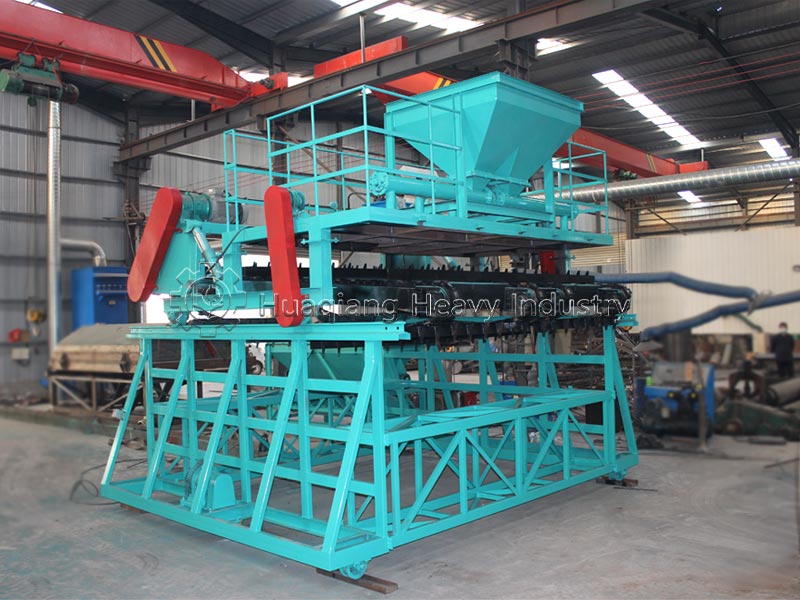
How the Chain Works
Let’s get visual for a moment. Picture a massive framework spanning the width of a fermentation trough. Suspended from this frame, reaching down into the material, is a continuous loop of heavy-duty chain fitted with steel plates or paddles.
As the machine travels slowly along the trough, that chain loop rotates continuously. The plates dig into the material at the bottom, scoop it up, and carry it to the top before releasing it in a cascade of fragmented organic matter. By the time it falls back into the trough, it’s been aerated, broken apart, and thoroughly mixed.
The depth is what impresses me most. While other turners skim the surface, chain turners reach deep—up to two meters or more. They don’t just tickle the top; they excavate the entire profile, ensuring nothing hides in anaerobic darkness.
Why Choose Chain?
Every turner has its strengths. Here’s why the chain design wins in certain situations.
Deep Reach — Because the chain plates lift material vertically, they can work in troughs much deeper than what a windrow compost turner or double screw compost turner could handle. More depth means more material per square foot, which means higher productivity from the same footprint.
Gentle Handling — The chain plates carry material upward rather than hurling it violently. This matters when you’re working with fragile microbial communities or when you want to preserve structure rather than pulverize everything.
One Machine, Many Troughs — Here’s a money-saving secret: chain turners can work with transfer cars. Finish one trough, lift the turning assembly, move the whole machine sideways to the next trough, and keep going. One machine serves multiple lanes, stretching your investment further.
Built-In Spraying — Many chain turners come equipped with bacterial liquid spray systems. As the machine turns, it can simultaneously inoculate the material with beneficial microbes—two jobs at once, saving time and ensuring even distribution.
The Rhythm of the Trough
Using a chain turner creates a predictable, manageable rhythm. Load a fresh trough with raw manure and amendments. Let it sit for a few days to start heating. Then run the turner through it—maybe daily at first, then every other day as things stabilize.
Because the turning is so thorough, oxygen reaches every particle. Temperatures climb high and hold steady. Pathogens die. Weed seeds sterilize. And after four to six weeks, depending on the season, you’ve got compost that smells like forest floor and sells like treasure.
The Smart Composter’s Choice
Here’s the bottom line. Composting isn’t one-size-fits-all. If you’ve got wide open spaces and need to move huge volumes fast, a windrow turner might be your answer. If you’re wrestling with ultra-dense material, double screws could be the ticket.
But if you want maximum production from a compact footprint, if you need consistent quality batch after batch, if you’re building an indoor facility where control matters—the chain compost turner deserves a long, hard look.