
Small to Large: A Complete Guide to Organic Fertilizer Production Process & Equipment
The world generates approximately 3 billion tons of livestock manure annually. If left untreated, it becomes a major pollution source; if properly converted, it turns into a valuable agricultural resource. The organic fertilizer production process is the systematic method that transforms waste into stable, harmless, high-nutrient commercial fertilizer.
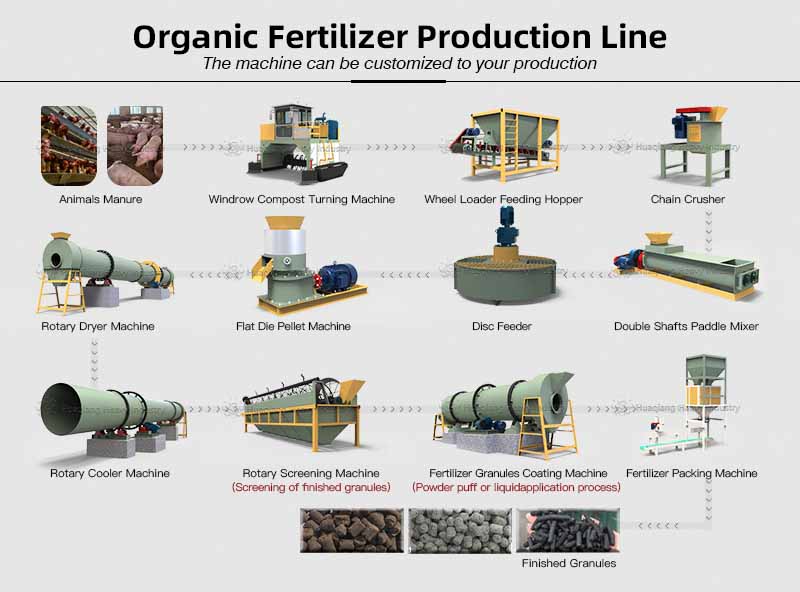
What Is the Organic Fertilizer Production Process?
The organic fertilizer production process refers to the complete technological route that converts organic waste (such as chicken manure, cow manure, and crop straw) into commercial fertilizer through consecutive steps: fermentation, crushing, mixing, granulation, drying, screening, and packaging. The standard process consists of two main stages: pre-treatment (fermentation) and post-treatment (granulation).
Organic Fertilizer Equipment Price & Configuration Guide
Small Scale Organic Fertilizer Plant (Annual Output: 1,000-10,000 Tons)
A small scale organic fertilizer plant requires approximately
7,000−7,000−8,500 USD in equipment investment (excluding buildings).
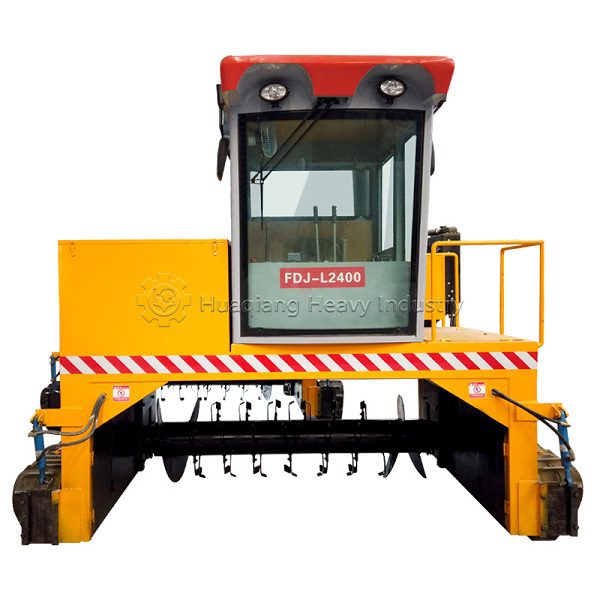
Fermentation Equipment: A turner is essential for mixing materials, supplying oxygen, and removing moisture during fermentation. A small self-propelled compost turner (compatible with 60-150HP tractor) with a working width of 2-3.5 meters is suitable.
Crushing Equipment: The half-wet material crusher is designed for high-moisture raw materials (25%-55% water content). It features a two-stage rotor design with no screen, permanently solving the clogging problem. Power ranges from 22-75kW, capacity 1-8 tons/hour.
Granulator Machine for Organic Fertilizer: The disc granulator is the most widely used granulator machine for organic fertilizer for small to medium scale plants. The KHL-700 model offers 5-7 tons/hour capacity, final particle size of 3.5-5.5mm, and a granulation rate exceeding 90%.
Screening & Packaging: A drum screener separates finished particles from fines, and an automatic packing scale completes bagging. A small line requires only 5-6 operators.
Medium Scale Plant (Annual Output: 10,000-30,000 Tons)
Equipment investment ranges from
35,000−35,000−110,000 USD. Upgrades include a trench-type or hydraulic compost turner (span 3-4 meters), a disc granulator (pan diameter 2.5-3 meters), plus a rotary dryer (reducing moisture to <15%) and cooler (cooling to <40°C).
Large Scale Plant (Annual Output: 30,000-100,000 Tons)
Equipment investment ranges from
140,000−140,000−420,000 USD. The line achieves full automation with PLC central control, requiring only 5-6 operators total. Fermentation uses large hydraulic turners, and multiple granulators operate in parallel.
Specialized Machines for Chicken Manure and Cow Manure
Chicken manure fertilizer machine requirements: Chicken manure has high nitrogen content, high viscosity, and rapid temperature rise during fermentation. Select crushing and granulating equipment with anti-stick properties, and install bio-filter towers for odor control.
Cow manure fertilizer machine requirements: Cow manure has high fiber content, very high moisture (often >80%), and low heat generation. Add straw to adjust the C/N ratio, and choose turners with strong cutting and crushing capabilities.
Organic Fertilizer Manufacturing Unit: How to Choose Equipment
When building an organic fertilizer manufacturing unit, follow these four steps:
Step 1: Characterize Your Raw Materials. Identify the manure type, annual quantity, and moisture content. This determines all subsequent equipment choices.
Step 2: Define Your Target Capacity (tons/hour). Add 15%-20% margin for production fluctuations.
Step 3: Select the Granulation Method. Disc granulation suits small to medium plants (high granulation rate, flexible operation). New wet granulators are ideal for high-organic content materials.
Step 4: Conduct a Pilot Test. Before purchasing, send raw material samples to the equipment supplier for a small-scale granulation test. Verify granulation rate and particle strength with real data.