
Why is granulation of cow manure easier than chicken manure? Raw material differences
Cow manure granulation does indeed have a lower risk of mold clogging and wall sticking than chicken manure: Chicken manure is extremely sticky and easily adheres to the inner walls of the equipment and mold holes even after composting, requiring higher standards for anti-sticking and dehydration; cow manure has a crude fiber content of about 30%-40%, and its stickiness decreases significantly after composting, making it less likely to clog the channels during extrusion or mixing. However, this “ease” has its limits: Cow manure fibers are elastic, and after being pressed into granules, they bounce back and disperse, with a pelleting rate often hovering around 50%-65%, not higher than the wet pelleting rate of chicken manure (often exceeding 85%). The difficulty with cow manure has shifted from “stickiness” to “fiber,” thus requiring different solutions.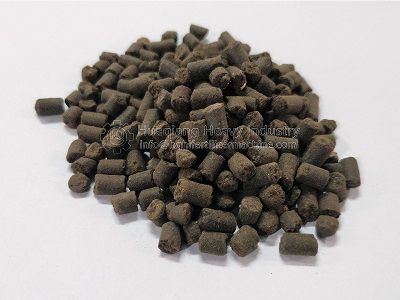
I. Cow Manure vs. Chicken Manure: Comparison of Fiber, Stickiness, Moisture, and Recommended Granulation Methods
Putting both raw materials in the same table is crucial to understanding which dimension best represents “ease” and “difficulty.”
| Comparison Dimension | Cow Manure | Chicken Manure |
|---|---|---|
| Crude Fiber Content | Approx. 30%—40%; fibers are thick, long, and elastic ② | Fibers are fine and fragmented; content is significantly lower than cow manure |
| Post-composting Viscosity | Low; fibers weaken the material’s cohesion, resulting in a lack of “liquid bridges” during granulation ③ | Extremely high; rich nitrogen and humic acid make the powder fine and viscous ② |
| Typical Moisture after Fermentation | 30%—45% ① | Usually stabilizes around 35%; fresh manure can reach 70%—80% ② |
| Moisture for Disc/Rotary Drum Granulation | 25%—32% ③ | Easy to form pellets within the wet process window, but anti-wall-sticking measures are required |
| Moisture for Double Roller Extrusion Granulation | ≤10%; requires drying first, otherwise it sticks to rollers and clogs molds ③ | High-viscosity materials easily clog holes during extrusion, usually not the first choice |
| Core Risks | Fiber elastic rebound → loose granules and low pelletizing rate; long fibers entangle mold holes ③ | Adheres to equipment inner walls and clogs mold holes; requires anti-sticking and dehydration measures ③ |
| Recommended Route | After sufficient shearing and crushing, use double roller extrusion or stirring teeth/disc; short fibers act as a skeleton to improve strength ② | Mainly stirring teeth (wet process); high pelletizing rate, no drying or preheating required ② |
| Reference Pelletizing Rate | Usually 50%—65%; can reach over 80% with sufficient shearing + extrusion ② | Usually ≥85% under stable wet process conditions; high-quality lines can reach 95% ② |
The direct implications for equipment selection: The “ease” of granulation with cow dung refers to the risk of equipment clogging, not the pelletizing rate. The difficulty with chicken dung lies in equipment adaptability (stickiness, clogging), while the difficulty with cow dung lies in pellet quality (looseness, breakage, resilience). Treating cow dung as “easier to granulate than chicken dung” in equipment selection will directly lead to problems with pelletizing rate.
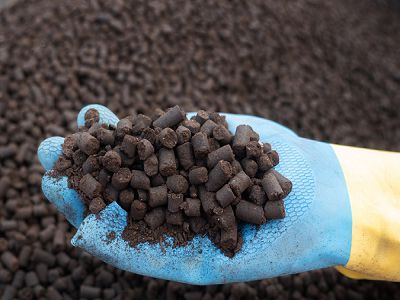
II. The dual impact of excessively long fibers: both a skeleton and a crack source
The problem with cow dung fibers is that their direction of action is conditionally dependent: when sheared to the appropriate length, short fibers act as a “skeleton” that enhances pellet strength; when sheared improperly, long fibers become “crack sources” that create defects.
Positive aspect (short fibers, sheared to below 5 mm): Short fibers interweave within the pellet, forming a support structure similar to reinforcing steel bars, compensating for the insufficient stickiness of well-rotted cow dung, allowing extruded or agitated pellets to achieve acceptable compressive strength. Some data sets cow dung fiber length below 5 mm as a shearing target, with some high-fiber applications further requiring ≤3 mm. Under this premise, the strength of cow dung pellets can reach 15-20 N, meeting the requirements of conventional storage and transportation.
Negative aspects (long fibers, exceeding 5-10 mm): Long fibers bring three problems during pelleting. First, entanglement in the die and roller surfaces: During roller extrusion, fibers directly wrap around the roller die, causing blockage and stalling; in the agitator, fibers entangle the main shaft and agitator teeth, reducing shear force. Second, surface defects: When fibers exceed 10 mm, burrs easily appear on the pellet surface. During drying, moisture evaporates rapidly along the fiber direction, causing the pellets to crack along the fiber direction, significantly reducing the pass rate. Third, elastic rebound: Cow dung fibers themselves are elastic; after compression, they spring back, making it difficult to achieve dense pellets. This is one of the core reasons why the pelleting rate has long been stuck at 50%-65%.
The operational dividing line is clear: Fiber length should be managed as the primary quality indicator for cow dung pelleting, with higher priority than binders and moisture adjustment. If the shearing is inadequate, subsequent parameter adjustments will have limited effect. It is recommended to use a half-wet material crusher or chain crusher to break up the fibers, controlling the output particle size to 1-2 mm, with long fibers not exceeding 5 mm. Long fibers on the sieve should be returned for secondary crushing and not directly flow into the granulation section.
III. The Position of Solid-Liquid Separation in the Cow Manure Production Line: It should be placed before fermentation, not before granulation.
Fresh cow manure typically has a moisture content of 75%-85%. Directly entering fermentation or granulation will shift the moisture burden to later stages. The function of the solid-liquid separator is to remove the largest moisture load before fermentation, rather than trying to “remedy” it before granulation.
Process Position: Solid-liquid separation should be performed after raw material reception and before auxiliary material mixing and fermentation. A screw extrusion solid-liquid separator can dehydrate cow manure with a moisture content of 70%-85% to 50%-65%, while intercepting impurities such as stones and wires, protecting subsequent crushing and granulation equipment. The separated liquid portion can enter the biogas slurry or liquid fertilizer system, while the solid portion then enters the fermentation and granulation process.
Why can’t it be done later? If high-moisture fresh cow manure is directly fed into fermentation, the amount of auxiliary materials (straw, mushroom residue, etc.) added will increase significantly, simultaneously lengthening the pile volume and fermentation cycle. If drying is relied upon after fermentation, heat consumption will be concentrated in the drying section after granulation, further increasing the energy burden of the wet process. The value of solid-liquid separation lies not in “reducing water to the granulation window,” but in eliminating the water that needs to be absorbed by auxiliary materials and dried by hot air at the lowest-cost stage.
Impact of pre-processing in the granulation route: Solid-liquid separation doesn’t directly determine whether to use extrusion or disc granulation, but it determines whether the moisture content after fermentation is likely to fall into the dry extrusion window. If no dehydration is done at the front end, the moisture content of the fermented cow manure will most likely remain above 35%, eliminating the “≤10%” feed threshold for roller extrusion in the first stage. With solid-liquid separation, the starting point for further reducing moisture through aging and remixing is more advantageous.
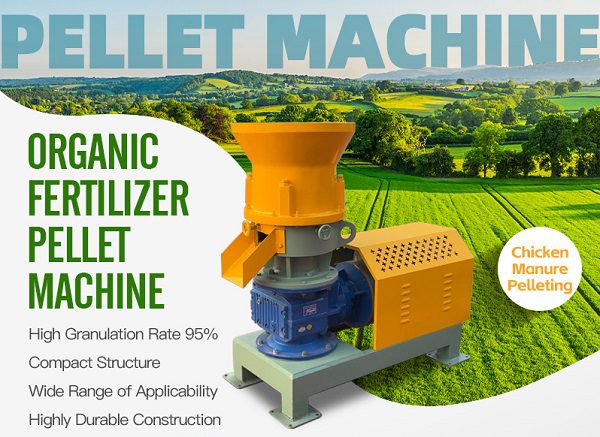
IV. FAQ: Frequently Asked Questions Comparing Cow Manure and Chicken Manure Granulation Lines
Q1: Can cow manure and chicken manure granulation lines be shared?
Some sections can be shared, but the granulation and drying sections should not be shared. Batching, crushing, screening, and packaging sections can be shared provided the materials are compatible. However, the core issue with chicken manure is its stickiness and wetness, requiring anti-sticking design and wet granulation support. The core issue with cow manure is its fiber and resilience, requiring strong shearing and a fiber-adaptive structure for the rollers/stirring teeth. Using the same granulator for both raw materials usually results in chicken manure sticking to the walls and cow manure having a low pelleting rate, ultimately leading to unstable pellet quality for both. If sharing is unavoidable, the granulator selection should be based on cow manure (which is more difficult to pelletize) (or a stirring tooth model with wider fiber adaptability), and separate anti-sticking and dehydration measures should be configured for chicken manure.
Q2: Cow manure granulation has a pelleting rate of only 60%. What should be checked first?
Check fiber length first, then check for viscosity supplementation. The root cause of low pelleting rate in cow manure is mostly due to inadequate fiber shearing: long fibers become entangled, spring back, and crack the particles. Adjusting moisture and binders has limited effect at this stage. Only after confirming that the fiber size is below 5 mm should you consider adding 20%-30% chicken manure or bacterial residue to improve viscosity, or adding 1%-5% bentonite as a binder.
Q3: Can cow manure with a 35% moisture content after fermentation be directly extruded using roller presses?
No. The moisture content of the feed material for roller presses is usually required to be ≤10%. 35% is far above the required moisture level, and direct feeding will cause the material to stick to the rollers and clog the die. It is necessary to first age, remix with dry material, or dry the material to draw the moisture into the extrusion window. If you don’t want to handle the drying process, you should consider a wet agitator/disc route, rather than forcibly extruding the material.