
How to Choose Between NPK Steam Granulation and Extrusion Granulation
What are Steam Granulation and Extrusion Granulation?
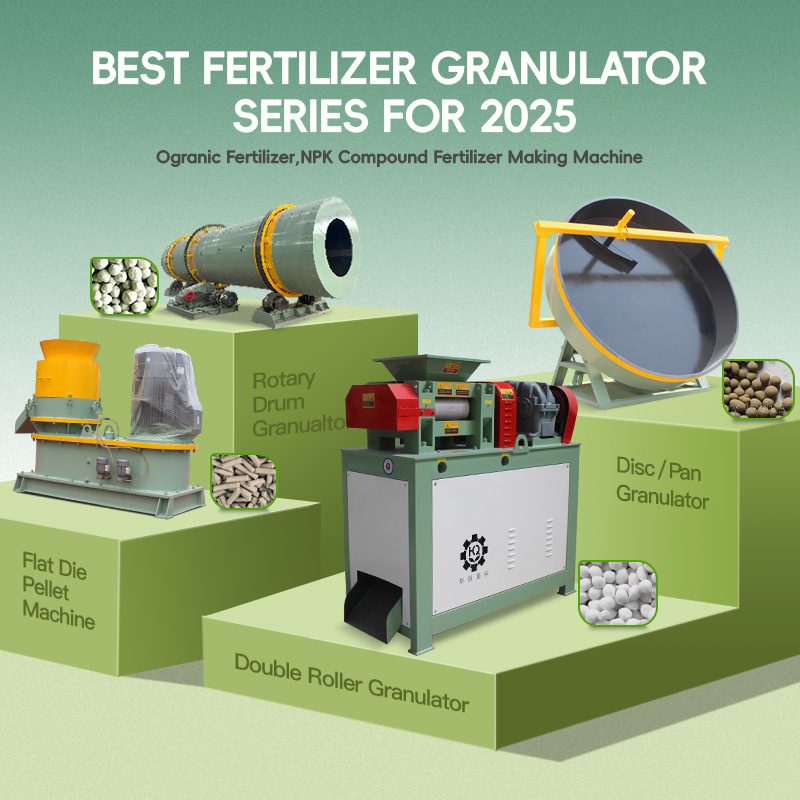
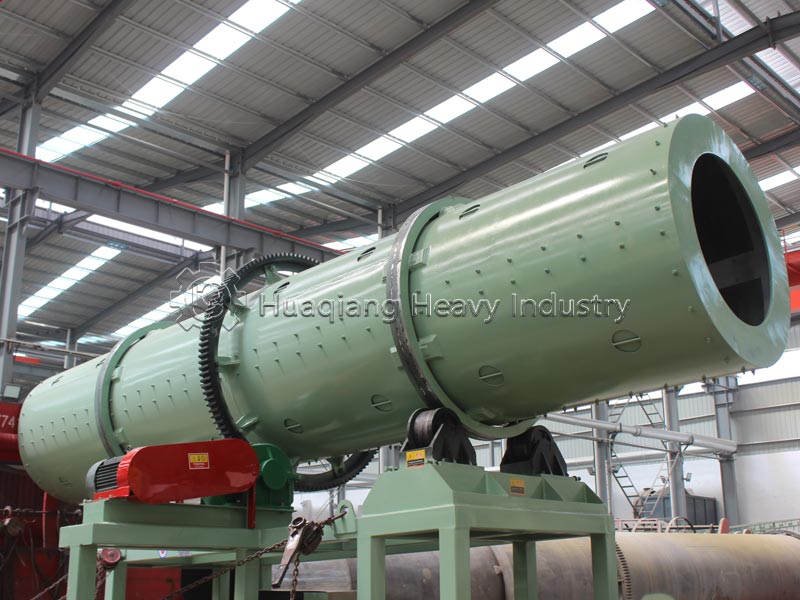
Steam granulation is a wet process where saturated steam is introduced into a drum granulator to heat and humidify the material particles, causing them to agglomerate into spherical particles during rolling. Extrusion granulation, on the other hand, is a dry process that uses rollers or flat dies to directly compress powdered materials into irregular granules under high pressure, without adding water or steam. The two processes differ significantly in particle morphology, energy consumption, investment, and raw material adaptability, and each has its own focus in applicable scenarios.
Particle Morphology and Market Acceptance
Steam granulation produces spherical particles with a smooth surface, high roundness, and a compressive strength of 15 to 25 Newtons. Spherical particles have good flowability, are suitable for mechanized application, and their appearance is similar to imported high-end compound fertilizers, allowing them to obtain a 10% to 20% premium in the retail market. Extrusion granulation produces irregular polygonal or lentil-shaped particles with even higher compressive strength (20 to 30 Newtons) and a pulverization rate of less than 3%. However, its appearance score is lower than that of spherical granules, making it more difficult to promote in the retail market where “appearance” is important. It is more suitable for applications such as base fertilizer and blended fertilizer raw materials where roundness is not critical.
Energy Consumption and Operating Costs Steam granulation requires 80 to 120 kg of saturated steam per ton of product, equivalent to approximately 180,000 to 270,000 kcal of heat energy. The energy cost per ton of product is approximately US$10 to US$18 (coal/biomass) or US$15 to US$25 (natural gas). It also requires an industrial boiler and water treatment system, with additional expenses for annual boiler inspections and water quality management. Extrusion granulation consumes only 20 to 35 kWh of electricity per ton of product, equivalent to approximately 17,000 to 30,000 kcal of heat energy, with an energy cost of approximately US$3 to US$6 per ton. The extrusion process eliminates the need for boilers and drying cylinders, significantly simplifying the process, and its energy cost is only 30% to 50% of that of the steam process.
III. Raw Material Adaptability and Process Stability Steam granulation offers the highest tolerance for raw materials—it can handle urea-based formulations with high hygroscopicity (urea content can reach 30% to 50%), high-phosphorus formulations with insufficient viscosity, and recycled mixtures containing some fine powder. The presence of steam makes the granulation process less susceptible to instability due to batch fluctuations in raw materials, and the granulation rate can be maintained consistently between 75% and 85%. Extrusion granulation has strict requirements on the moisture content and particle size distribution of raw materials: moisture content must be below 12%, and 95% of the particle size must pass through an 80-mesh sieve. For high-nitrogen formulations (urea content exceeding 30%), sticking to the rollers and sticky discharge are prone to occur during extrusion, requiring the addition of anti-sticking agents or a reduction in the urea content. Therefore, extrusion processing is more suitable for systems with lower viscosity, such as organic-inorganic compound fertilizers and humic acid compound fertilizers.
- Investment Intensity and Production Line Complexity Based on a production capacity of 10 tons per hour, the investment for a steam granulation line is approximately US$350,000 to US$600,000 (including boiler, drying cylinder, cooling cylinder, and associated dust removal equipment), with approximately 20 to 25 pieces of equipment and a floor area of approximately 600 to 1000 square meters. The investment for an extrusion granulation line is approximately US$220,000 to US$400,000 (excluding the drying unit), with approximately 12 to 15 pieces of equipment and a floor area of approximately 300 to 600 square meters. The extrusion line, by eliminating the need for a boiler and drying cylinder, can shorten the installation period by 30% to 40%.
- Environmental Pressure and Permitting Difficulty In most regions, boilers for steam granulation lines (especially coal-fired boilers) face strict emission restrictions, requiring desulfurization, denitrification, and dust removal facilities, increasing environmental investment by US$30,000 to US$80,000. While gas-fired boilers are cleaner, their operating costs are higher. Extrusion granulation lines have no combustion equipment; the main emission source is dust (which can be treated with a bag filter to meet standards), making environmental impact assessment approval significantly easier than for steam granulation. In areas with sensitive environmental policies, extrusion granulation is a more pragmatic choice. VI. Product Application Scenarios and Fertilizer Efficacy Steam-granulated spherical particles disintegrate at a moderate rate in the soil, making them suitable for basal and topdressing applications in field crops, with an effective period of 40 to 60 days. Extruded granulated irregular particles, due to their high density and low porosity, release nutrients slightly more slowly in the soil, extending the effective period to 50 to 70 days, making them more suitable for crops requiring long-lasting fertilization (such as rice and sugarcane). However, extruded particles disintegrate more slowly in the initial stages in some soils, so deep application as basal fertilizer is recommended rather than broadcasting.
Answering three questions will clarify the direction: Must the product be highly spherical to match the high-end market? If so, choose steam granulation. Is the raw material a high-urea formula (over 30%) or lacking viscosity? If so, steam granulation is more stable. Are you located in an area with high fuel costs or environmental restrictions on boilers? If so, extrusion granulation is a more economical and compliant choice. For factories with a rich product line, a dual-line strategy can be adopted: a steam line to produce high-end spherical compound fertilizer, and an extrusion line to produce organic-inorganic compound fertilizer, humic acid fertilizer and export-grade products, so as to achieve the optimal balance between market and cost.
The strategic deployment of steam versus extrusion granulation ultimately depends on market positioning, raw material portfolio, and regulatory environment rather than technical superiority alone. For enterprises establishing a new organic fertilizer manufacturing plant focused on low-energy, environmentally compliant operations, a roller press granulator production line offers compelling advantages—eliminating boiler dependency while delivering robust, high-density pellets through a double roller press granulator. Upstream material preparation remains critical regardless of granulation modality; a half-wet material crusher machine ensures consistent feedstock fineness and moisture uniformity, directly influencing extrusion stability and granule integrity. Although extrusion bypasses the thermal drying stage inherent to steam processes, a dedicated fertilizer drying and cooling machine may still be warranted for moisture-sensitive formulations or extended shelf-life requirements. By aligning process selection with product specifications, energy economics, and environmental constraints, producers can architect resilient manufacturing systems that maximize both operational efficiency and market responsiveness across diverse fertilizer categories.