
Biochar-based Organic Fertilizer: Integrated Process of Carbonization Furnace and Granulation
Biochar-based organic fertilizer is a new type of soil-improving fertilizer made by blending biochar and well-rotted organic fertilizer in a certain proportion and then granulating the mixture. Biochar has a porous structure, high specific surface area, and strong adsorption capacity, which can significantly improve soil water and fertilizer retention, passivate heavy metals, and increase carbon sequestration. To achieve industrial-scale production of biochar-based organic fertilizer, it is necessary to integrate three major processes: biocharification equipment, high-uniformity mixers, and granulation production lines.
Biocharification Equipment: From Straw to Activated Carbon
The carbonization furnace is the core equipment for producing biochar. It converts straw, rice husks, sawdust, etc., into carbon-rich materials through anaerobic pyrolysis.
Mainstream Furnace Types: Vertical Continuous Carbonization Furnace: Suitable for large-scale production. Raw materials are added from the top and undergo drying, pyrolysis, and cooling in three stages, achieving a char yield of 25%-35%. The combustible gas produced by pyrolysis can be recycled for heating, achieving self-circulation.
Horizontal rotary carbonization furnace: Processes wet materials with high moisture content. The furnace body rotates at a 3-5° angle, with a pyrolysis temperature of 500-650℃. Its advantage is uniform carbonization, but the equipment investment is higher.
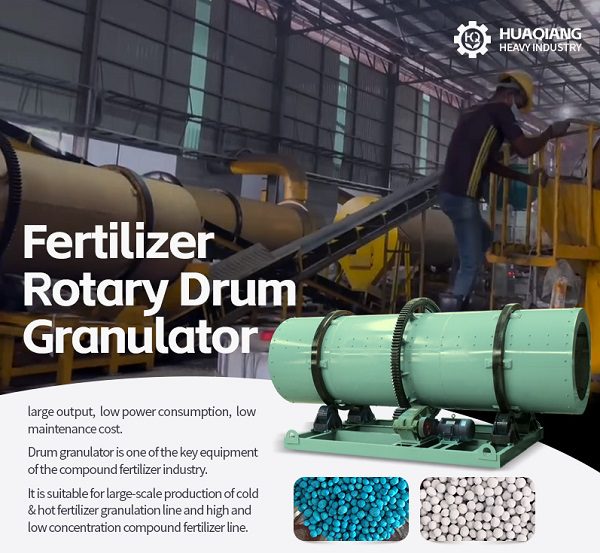
Mobile carbonization vehicle: Suitable for on-site straw processing in fields, reducing transportation costs.
Process control: Carbonization temperature is crucial. Below 400℃, the raw material is “incompletely carbonized” with poor adsorption capacity; above 700℃, ash content increases and yield decreases. The optimal temperature range is 450-550℃, with a residence time of 30-60 minutes.
Post-processing: After carbonization, the material needs to be cooled to below 50℃ by water spraying and then screened by a drum screen to remove incompletely carbonized impurities, obtaining biochar with a particle size of 0.5-5mm.
Mixer: Uniform Combination of Biochar and Fertilizer Biochar has a low density (approximately 0.2-0.4 g/cm³) and a hydrophobic surface, making it prone to stratification when mixed with organic fertilizer (density 0.5-0.8 g/cm³). High-shear mixing equipment is essential.
Recommended Model: Twin-shaft paddle mixer, speed 30-50 rpm, equipped with an internal blade crushing device to force the char particles and organic fertilizer fibers to interweave. Mixing time 3-5 minutes, uniformity coefficient of variation CV ≤ 10%.
Feeding Sequence: First add organic fertilizer (60%-80% of total volume), then add biochar (20%-40%), and finally spray a small amount of water (2%-3%) to increase adhesion. Do not stir the char alone for extended periods, otherwise dust will be generated.
Dust Control Measures: Charcoal powder is easily dispersed; the mixer should be equipped with a pulse bag filter dust collector, and a screw conveyor with a sealed feeder should be installed at the inlet.
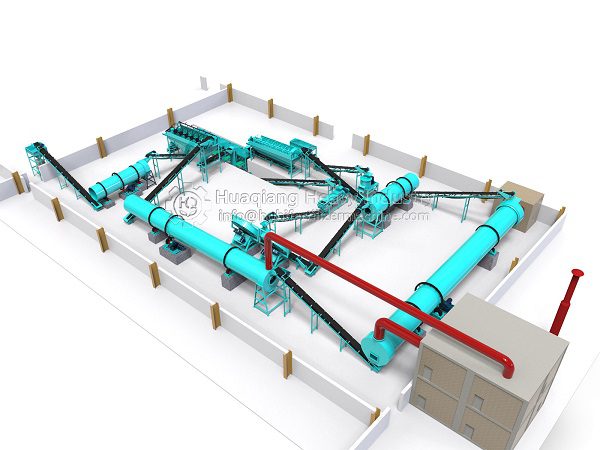
III. Granulation Line Integration: From Powder to Granules
The challenge in granulating biochar-based organic fertilizer lies in the non-stickiness of biochar and the hard texture of the granules, which accelerates mold wear.
Pelletizing Process Selection: Disc granulation or roller extrusion granulation is recommended. Disc granulation requires the addition of 5%-10% bentonite or sodium humate as a binder, and atomized water spraying (water content controlled at 25%-30%) is used to coat the biochar powder with organic fertilizer. Roller extrusion granulation does not require water addition, but the roller skin must be hardened with carbide to resist abrasion from the biochar particles.
Drying and Cooling: When the moisture content of the biochar granules is high, low-temperature drying (inlet air temperature ≤120℃) is required to prevent biochar combustion or oxidation. After cooling to below 40℃, use a double-layer sieve to separate 2-5mm qualified granules.
Packaging and Storage: Biochar-based fertilizer has lower hygroscopicity than ordinary organic fertilizer, but it will still absorb moisture during long-term storage. It is recommended to use moisture-proof woven bags lined with PE film and store in a cool, dry place. IV. Quality Inspection and Product Advantages Qualified carbon-based organic fertilizer should meet the following requirements: organic matter ≥45%, biochar content ≥20%, moisture ≤20%, and particle strength ≥6N. After being applied to the soil, the porous structure of the carbon can adsorb and slowly release nutrients, while simultaneously improving soil aggregate structure, exhibiting a significant remediation effect on acidified, compacted, and heavy metal-contaminated farmland.
Summary: Carbon-based organic fertilizer production is a complete chain of “carbonization—mixing—granulation.” By selecting a suitable carbonization furnace to control pyrolysis at 450-550℃, employing a twin-shaft paddle mixer to overcome density stratification, and then completing the molding process using disc or extrusion granulation, this high-value-added soil remediation fertilizer can be produced on a large scale. We focus on the R&D and manufacturing of complete carbon-based organic fertilizer production lines, providing one-stop equipment and process solutions for the three core links: carbonization furnace, mixer, and granulation line—from precise pyrolysis at 450-550℃ to high-uniformity mixing and wear-resistant granulation molding, helping you seize the new track of soil remediation fertilizers under the “dual-carbon” strategy.
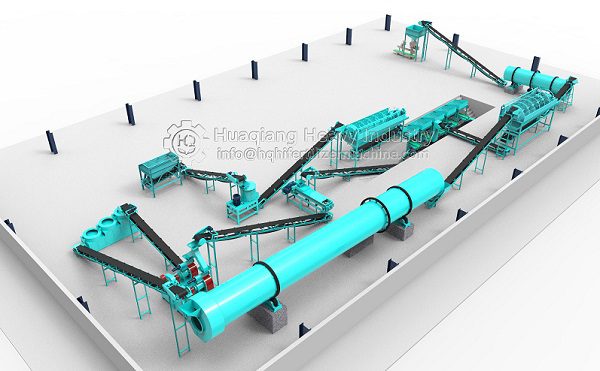
The integrated production of biochar‑based organic fertilizer represents a significant advancement in bio-organic fertilizer production technology, combining carbon sequestration, soil remediation, and nutrient supply in a single product. The entire organic fertilizer production process—from biomass pyrolysis in the carbonization furnace, to high‑shear mixing of char with matured compost, and finally to granulation—requires careful integration of equipment and process control. For producers planning a commercial organic fertilizer production line, the addition of a carbonization unit and a dedicated granulation section (disc or roller extrusion) is a strategic upgrade that adds high value to standard compost. When designing the organic fertilizer plant design and layout, it is essential to allocate space for the carbonization furnace, dust collection system, and separate storage for biochar to prevent cross‑contamination and ensure safety. The cost of organic fertilizer production line increases with the inclusion of carbonization and high‑uniformity mixing equipment, but the premium pricing of biochar‑based products—coupled with their superior soil‑improving properties—typically offers a rapid return on investment. For operations processing poultry litter, a poultry manure fertilizer making machine can be integrated upstream, while large scale compost granulator equipment and bio-organic fertilizer fermentation equipment ensure consistent feedstock quality. Ultimately, mastering this integrated process enables producers to transform agricultural residues into a high‑end soil conditioner that addresses both climate change mitigation and food security—a true win‑win for sustainable agriculture and circular economy.