
The Role of Drum Fertilizer Coolers in Cost Reduction for Organic Fertilizer Production Lines
Within the various stages of an organic fertilizer production line, the drum cooler is often an underestimated key to cost reduction. Many enterprises focus their attention on fermentation and granulation equipment while overlooking the cooling process—a step that appears simple but profoundly impacts overall costs. In reality, a well-designed drum cooler does not merely perform a passive cooling task; through precise control of the heat exchange process, it systematically reshapes the production line’s cost structure across three dimensions: reducing waste, enhancing efficiency, and saving energy.
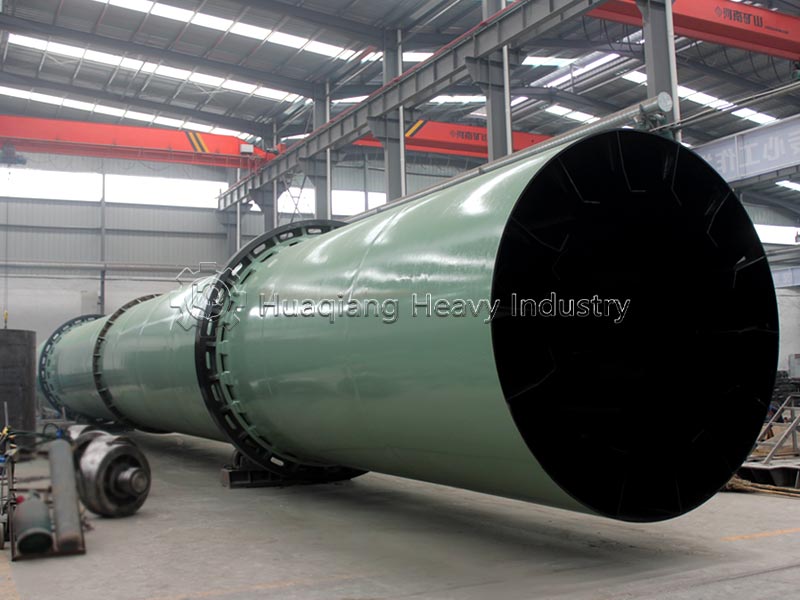
The first cost-reduction benefit of the drum cooler lies in eliminating—at the source—hidden losses caused by material quality issues. Traditional natural cooling or rudimentary cooling methods often result in temperature disparities—such as a cool surface with a hot interior—leading to high rates of material caking. The drum cooler employs a rotating inclined drum and internal lifting flights that continuously scoop and shower the material; this ensures every particle makes full contact with the counter-current flow of cold air, achieving rapid and uniform cooling. This uniform cooling process stabilizes the internal structure of the granules, enhancing their hardness and uniformity. The resulting organic fertilizer granules are close to ambient temperature with stable, controllable moisture content; they are dry, loose, and free from clumping. This allows enterprises to prevent losses from product returns caused by caking or spoilage, significantly extends storage life, and greatly reduces risks associated with long-distance transport and bulk stacking.
The second cost-reduction benefit lies in replacing inefficient traditional methods with high-efficiency continuous operation, thereby significantly boosting the throughput speed and production capacity of the entire line. Traditional natural cooling methods not only require large floor areas and labor-intensive material turning but also severely constrain the operational pace of the entire line—from granulation through to screening and packaging. In contrast, the drum cooler integrates seamlessly with upstream and downstream equipment, supporting 24-hour uninterrupted, automated operation without the need for manual intervention. Its drive system utilizes high-quality, wear-resistant materials, featuring a compact structure, low failure rate, and simple routine maintenance. This capability for efficient, continuous operation not only alleviates the burdens associated with labor costs and spatial requirements but also breaks through production capacity bottlenecks across the entire line.
A third way the drum cooler drives cost savings lies in the optimization of energy consumption during operation and its long-service-life design. Utilizing a counter-flow air-cooling principle, the equipment features a precisely calculated power configuration that ensures relatively low operating power. Certain models are equipped with variable-frequency drive systems, allowing for the flexible adjustment of rotation speed and airflow based on material temperature and feed rate, thereby preventing energy waste. The fully enclosed operational design, combined with an integrated dust removal system, improves the working environment while simultaneously reducing equipment wear caused by dust.